Steam train crossing Glenfinnan Viaduct

Driving tours · Unofficial guide

Poldark filming locations in Cornwall road trip

Photo: Nilfanion · CC BY-SA 3.0 via Wikimedia Commons
Length
4 days
Distance
178 miles
Driving
About 5 hours
Stops
9

The BBC's Poldark, which ran from 2015 to 2019, used real Cornish coast and mine ruins for the world of Ross and Demelza. This route links 9 of those places in 4 days, starting in Charlestown, going west along the south coast to the far tip of Cornwall, and coming back along the north coast to Bodmin Moor.

Much of the series is really about mining, and so are many of these stops. Winston Graham's novels are set in Cornwall in the late 1700s, when deep mining was changing the county, and the engine houses you see on screen are real ruins of that industry. Each stop says what was filmed there and what actually happened in the place.

Best time to go: Spring or early autumn. Kynance Cove and the beaches get very busy in summer and parking is limited. Levant Mine is open by pre booked tours only, so check its dates before you plan.

How it works

  1. 1

    Add your starting point

    Tell us where you are setting off from. A date is optional.

  2. 2

    Save it to your account

    Every stop goes into a trip that you can change however you like.

  3. 3

    Take it on your phone

    Open the PYRT app with the same account and navigate from stop to stop.

The route, day by day

Day 1: Charlestown to the Lizard

37 miles driving. Stay: Helston

Charlestown Harbour
Photo: Mutney · CC BY 4.0 via Wikimedia Commons

Stop 1 · near St Austell

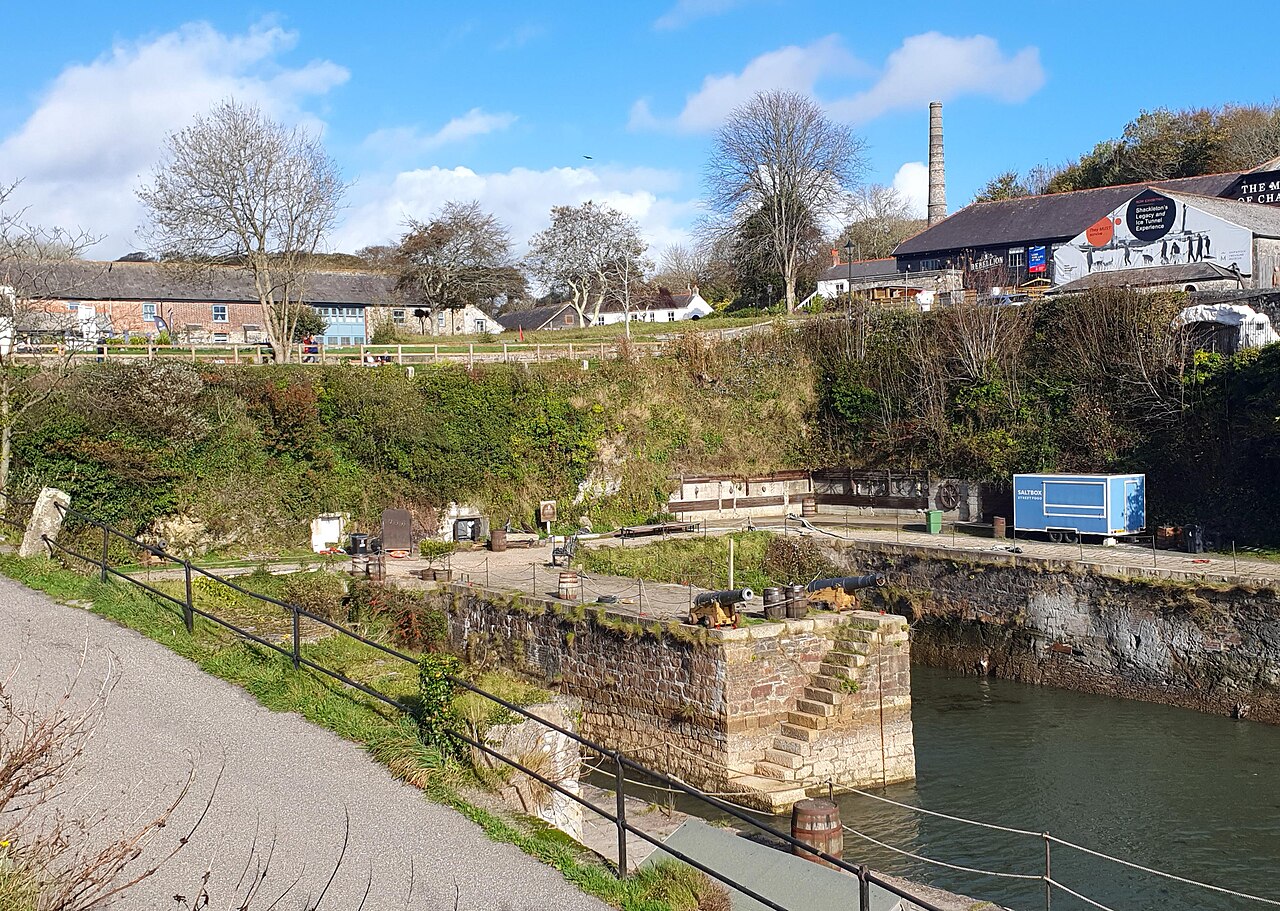
Charlestown Harbour

In the series

Charlestown played Truro, and Falmouth where Captain Blamey lives, and Verity elopes from its inner harbour. In series two the beach and slipway stood in for St Mary's on the Isles of Scilly. The dock was dressed with tall ships and cargo for the harbour scenes.

The real history

The port was planned by the local landowner Charles Rashleigh, with work starting in 1790 and the inner basin dug out in 1798. Copper ore went out to south Wales for smelting, coal came in for the mine engines, and later china clay kept the harbour alive. John Smeaton designed a seven mile leat from the Luxulyan Valley to supply water and flush silt from the basin. In 1790 the cove had nine fishing families. By 1801 it had 300 people.

When you visit

There is a public car park just above the harbour. It is part of the Cornish Mining World Heritage Site, so the quay and dock are worth a slow walk. Check whether any tall ships are in before you go, as the harbour is not always full.
Church Cove, Gunwalloe
Photo: habiloid · CC BY-SA 2.0 via Wikimedia Commons

Stop 2 · The Lizard

Church Cove, Gunwalloe

In the series

The night time shipwreck scenes in series one were filmed on this beach. Visit Cornwall says Dr Dwight Enys's cottage is about two miles along the coast towards Loe Bar.

The real history

The small church of St Winwaloe stands almost on the sand. It was rebuilt in the 14th and 15th centuries, though its tower may be older. The coast here has a long record of wrecks. Dollar Cove next door is named after the San Salvador, a Spanish ship lost in 1669 with a cargo of silver coins, and the National Trust says coins still occasionally wash up after storms.

When you visit

The National Trust car park is a short walk from the beach and the church. Dunes and a reedbed lie behind the cove, so stay on the paths. To see the view towards Dr Enys's cottage, Visit Cornwall suggests the small car park down the lane opposite the Halzephon Inn.

Day 2: Kynance and the far west coves

48 miles driving. Stay: Penzance

Kynance Cove
Photo: Unukorno · CC BY 4.0 via Wikimedia Commons

Stop 3 · The Lizard

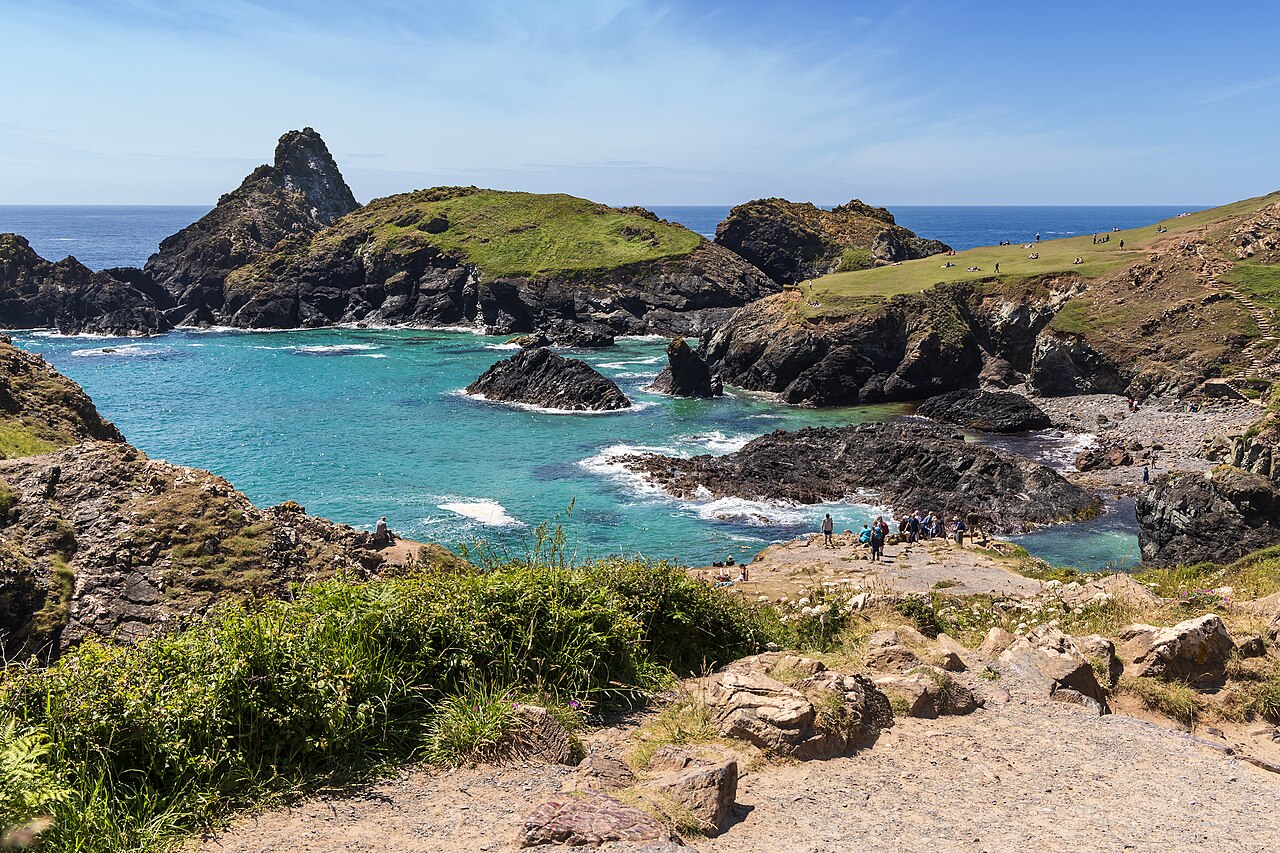
Kynance Cove

In the series

Kynance was used for aerial shots, clifftop riding and the opening sequence of series two, where Ross is taken towards Truro jail after his arrest. The clifftops running north to Predannack Wollas and Mullion were used for many of the horseback scenes.

The real history

The rocks are serpentine, formed deep underground on an ancient ocean ridge, and the cove is a Geological Conservation Review site. The cove became popular with early Victorian visitors, including Queen Victoria, Prince Albert and the poet Tennyson. Asparagus Island, just offshore, is cut off on almost every high tide, and its blowhole, the Devil's Bellows, snorts at about half tide.

When you visit

Access is on foot by the coast path from the National Trust car park. Visit Cornwall says it gets very busy and parking is limited, and suggests going out of season. Check tide times before you go down to the beach.

Stop 4 · West Penwith

Penberth Cove

In the series

Penberth is Sawle, the village where Demelza's brothers Sam and Drake Carne live. A blacksmith's hut was built for the series, and a fisherman's shed served as the outside of Drake and Morwenna's cottage.

The real history

Penberth was recorded as Benberd in 932, so people have lived in this valley for more than a thousand years. Its pilchards were pressed on site for oil, and the village also grew cut flowers that went by train to London. It remains a working cove, with a few boats still catching mackerel, lobster and crab, and a large capstan once used to haul them up the slipway.

When you visit

There is a small roadside parking area on the way down, then about a quarter of a mile to walk. You can also walk here from Porthcurno on a 3.2 mile circular route. This is a working cove, so keep clear of the boats and gear.

Porthcurno Beach
Photo: Geertivp · CC BY-SA 4.0 via Wikimedia Commons

Stop 5 · West Penwith

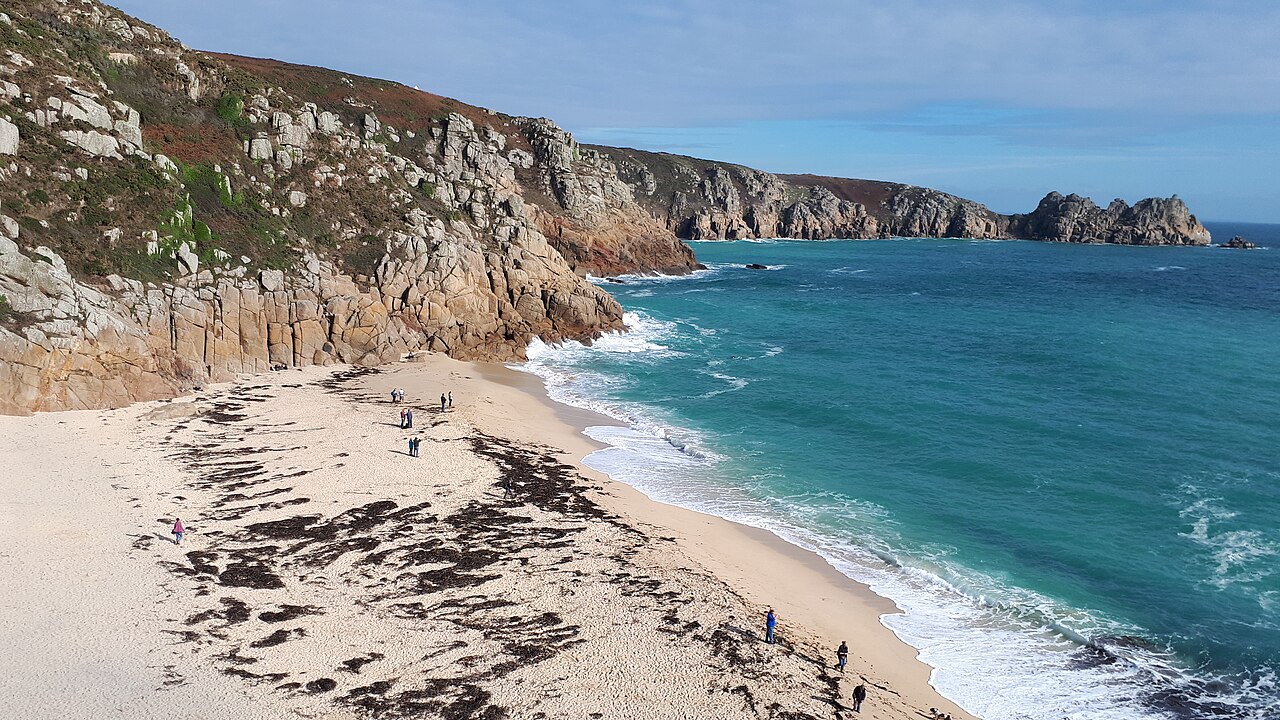
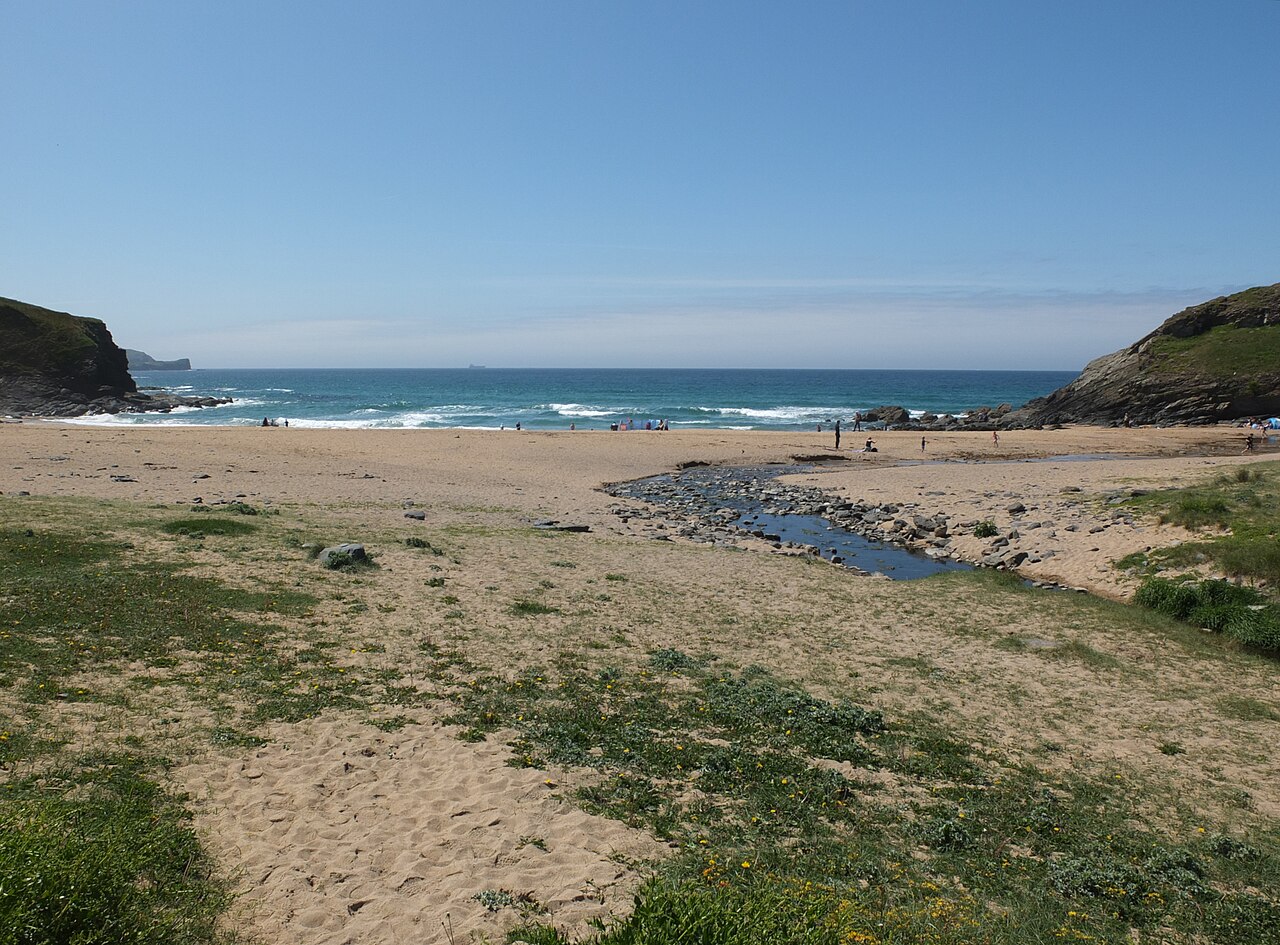
Porthcurno Beach

In the series

Porthcurno stood in for Nampara Cove in series one. In series two, episode two, Ross and Demelza walk this beach in a dream sequence.

The real history

The white sand beach hides an unexpected piece of communications history. The first undersea telegraph cable landed here in 1870, and by 1920 Porthcurno was the most important telegraph station in the world. In 1941 its key equipment was moved into a bunker cut through the granite. The station closed in 1970, exactly 100 years after the first cable arrived.

When you visit

Park in the car park near the museum and follow the path down to the sand. PK Porthcurno, the museum of global communications, includes the wartime tunnels, so check its opening times before you go. Beach lifeguards cover the beach from May to September.

Day 3: The Tin Coast to St Agnes

44 miles driving. Stay: St Agnes

Botallack Mine and the Crowns
Photo: Nilfanion · CC BY-SA 3.0 via Wikimedia Commons

Stop 6 · near St Just

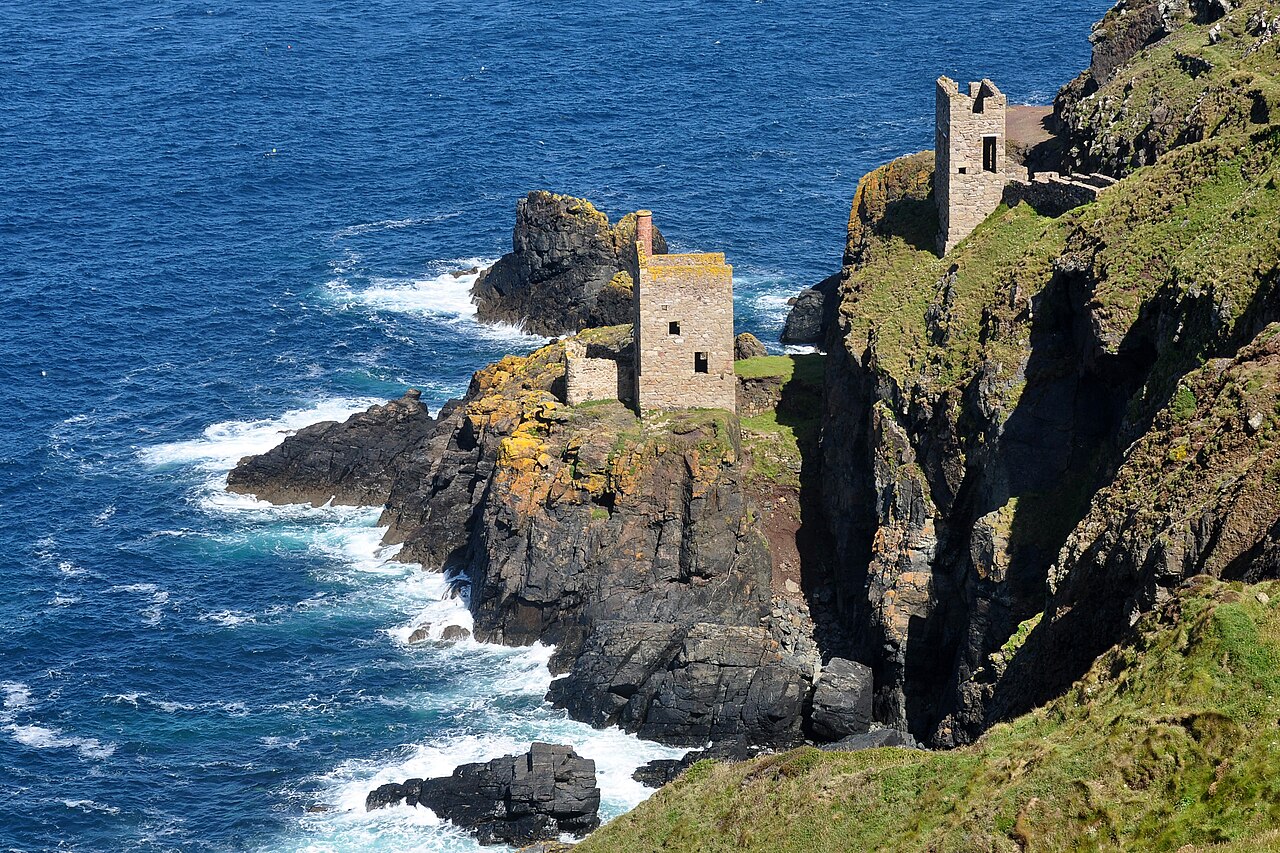
Botallack Mine and the Crowns

In the series

Botallack was the main mine location. The National Trust says Wheal Owles, here on the cliffs, played Wheal Leisure and the Crowns played Grambler, and Visit Cornwall adds Wheal Grace. Wooden huts and workings were built around the ruins for filming. About a mile north, Levant Mine played Tressiders Rolling Mill.

The real history

Copper mining at Botallack was recorded in 1587, and by the late 18th century miners were working under the Atlantic. The lower Crowns engine house dates from 1835 and held a pumping engine made by Harvey's of Hayle. The diagonal Boscawen Shaft ran out 800 yards under the Atlantic, and in 1863 eight men and a boy were killed there when a chain broke. In 1893, 19 men and a boy died when miners at neighbouring West Wheal Owles broke through into flooded old workings.

When you visit

Park at the National Trust car park by the Count House. Location fees helped refurbish the Count House Workshop, which covers how the mines inspired Winston Graham. The Crowns are a walk along the cliffs, so keep to the path. Levant's beam engine is the only one in Cornwall still in steam on its original site. It is open by pre booked tours only, so book ahead.

Wheal Coates and St Agnes Head
Photo: Geertivp · CC BY-SA 4.0 via Wikimedia Commons

Stop 7 · St Agnes

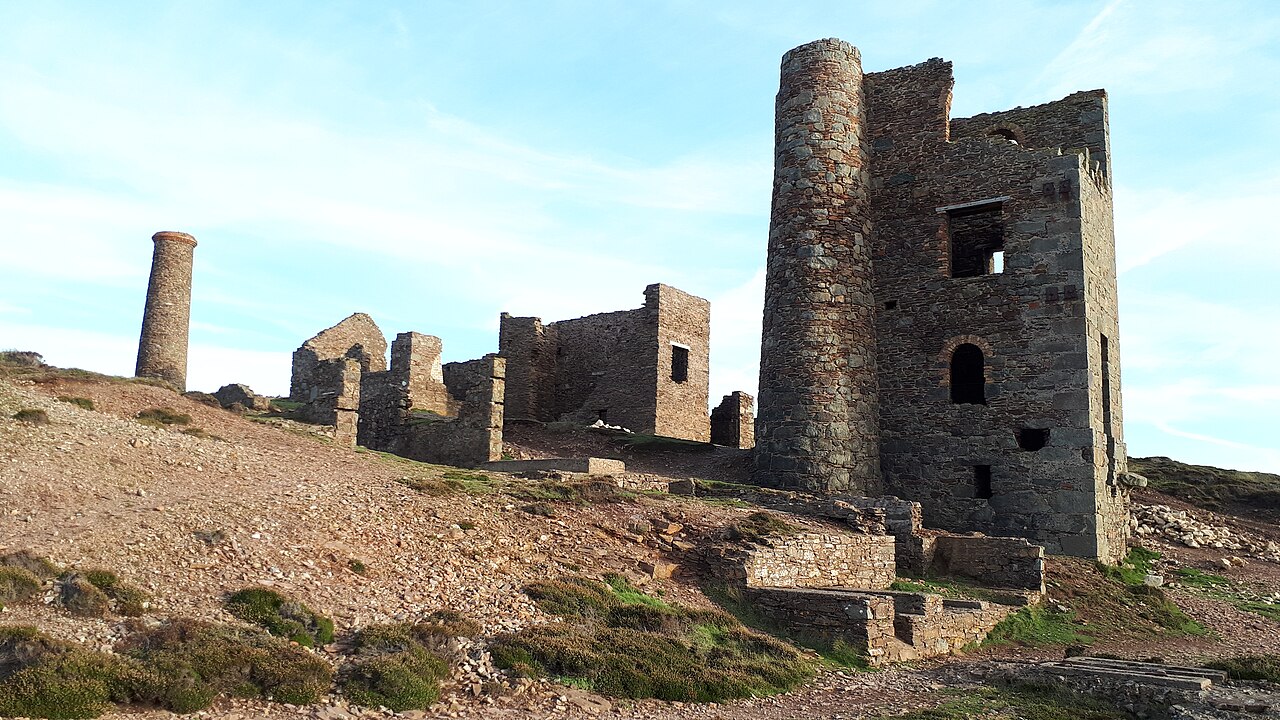
Wheal Coates and St Agnes Head

In the series

St Agnes Head doubled as the Nampara Valley and provided cliffhanger scenes for series one and two. Many of Ross's gallops along the clifftops were filmed between here and Chapel Porth, and the Wheal Coates engine house stands on the cliff edge.

The real history

Wheal Coates goes back at least to 1692 and the present mine opened in 1802. The Towanroath pumping engine house was built in 1872 and pumped from a shaft 600 feet deep, and the mine closed for good in 1914 after several failed revivals. The National Trust cares for the ruins, and the slopes below hold shafts, wheel pits and dressing floors.

When you visit

There is a car park close to the engine houses, and a National Trust car park at Chapel Porth below. The slopes hold old shafts and the ruins are near the cliff edge, so stay on the paths.

Day 4: Holywell Bay and Bodmin Moor

49 miles driving. Stay: Liskeard

Holywell Bay
Photo: Thomas Tolkien from Yorkshire, UK · CC BY 2.0 via Wikimedia Commons

Stop 8 · near Newquay

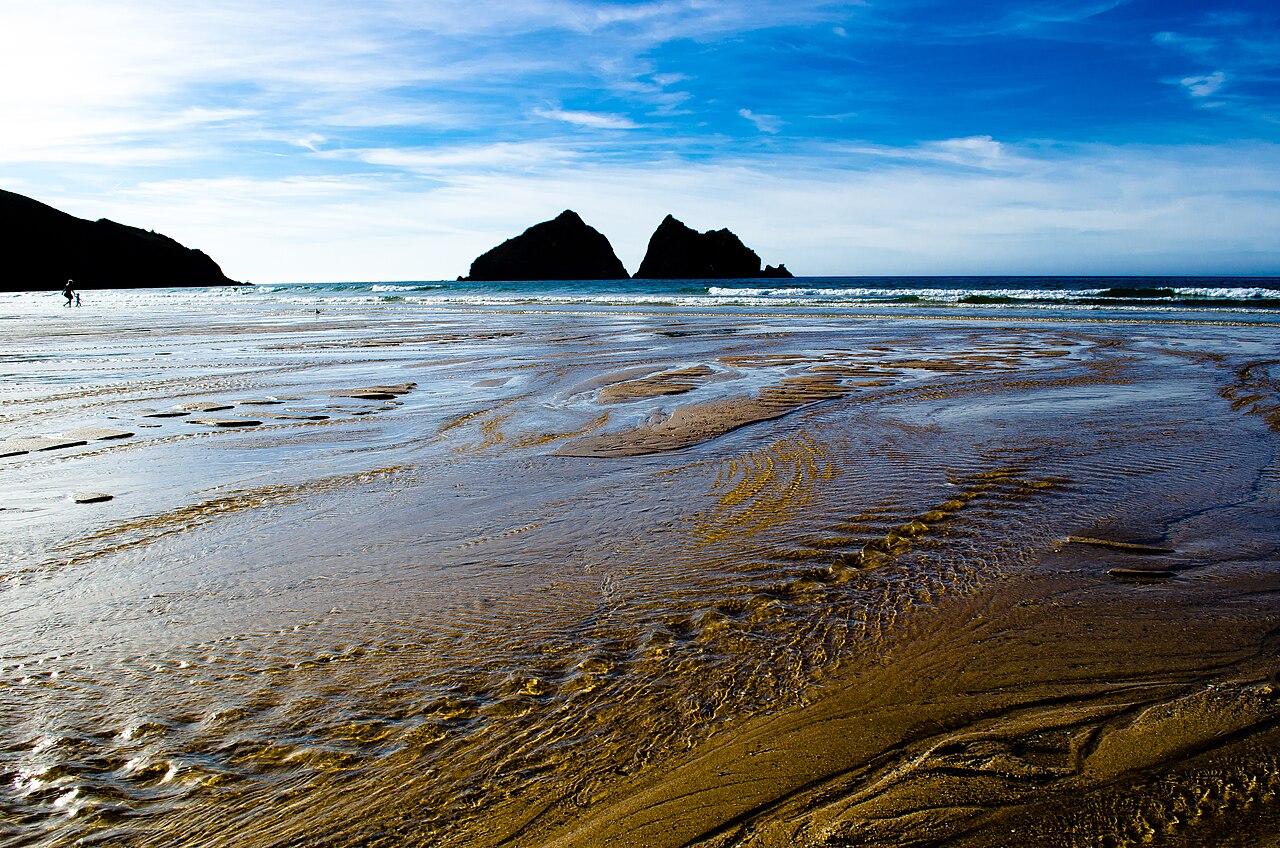
Holywell Bay

In the series

The National Trust says Holywell represented the Warleggans' coastline in series two. Visit Cornwall records encounters between Ross, Demelza and George here, and the horse races between Dr Enys and Caroline. The cave at the end of the beach was used for Drake and Morwenna's wishes.

The real history

The beach is backed by a large dune system, with Carter's and Gull Rocks offshore. The cave held St Cubert's holy well, and folklore said children passed through its cleft were cured of rickets. In late August 2026 a cliff fall sealed the mouth of the cave, and it is no longer accessible.

When you visit

The National Trust car park is behind the dunes, with a walk through to the sand. The cave cannot be reached since the rockfall, so stay well away from that part of the cliff and respect any cordons. The beach itself remains open. Check tide times before you walk out.

Minions, Bodmin Moor
Photo: Gareth James · CC BY-SA 2.0 via Wikimedia Commons

Stop 9 · Bodmin Moor

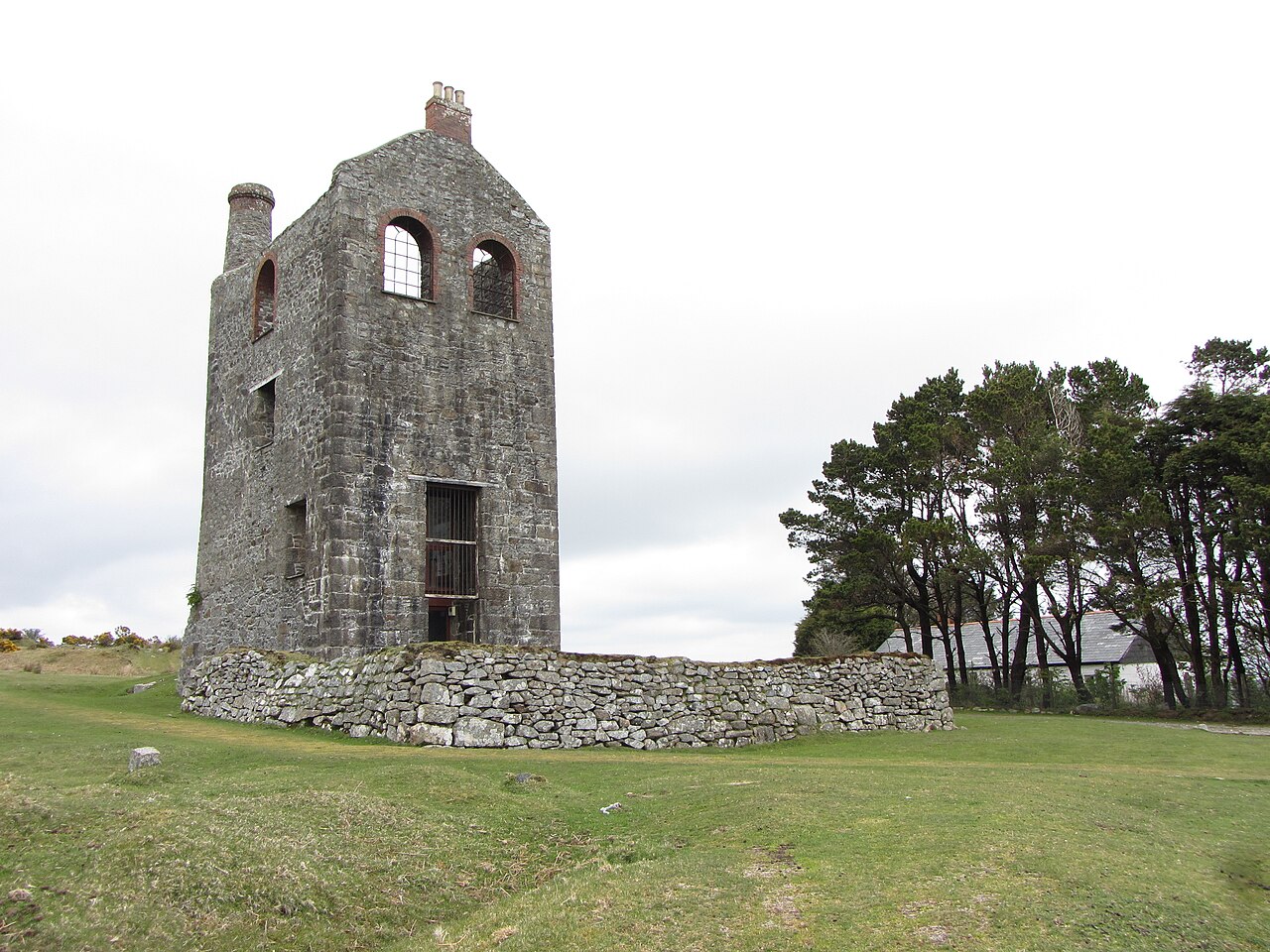
Minions, Bodmin Moor

In the series

Visit Cornwall says Ross first meets Demelza in the opening episode at the meeting of paths just north west of Minions. Bodmin Moor also provided miners' cottages, including the one Ross gives Jim and Jenny Carter, plus many horseback scenes.

The real history

Minions sits among the remains of the Caradon mining boom. South Phoenix Mine began as Wheal Prosper in the 1830s, and Houseman's Engine House was added around 1881 for the last big pumping engine made in Cornwall, built at Holman's Foundry in Camborne. The mine was abandoned in 1893 and its equipment had gone for scrap by 1898.

When you visit

Use the car park in the village or the Hurlers car park. Houseman's Engine House was the Minions Heritage Centre until early 2020 and is closed, but you can see it from the moor. Cornwall Heritage Trust took it on in late 2025 and is working on ways to reopen it. The paths north west of the village lead onto open moor, so take a map.

You will unlock the Poldark Country Explorer badge

  1. Plan the trip

    Add this tour to your account. All 9 stops go in for you.

  2. Drive the trip

    Record your drives in the PYRT app and reach each stop. Any order is fine, and it can take more than one trip.

  3. Get the badge

    Reach the last stop and the Poldark Country Explorer badge is yours.

What we left out, and why

Poldark Mine at Wendron

The name suggests the obvious stop, and scenes for the 1970s and 2015 series were shot at this former tourist mine near Helston. But the site was only named after the novels and the BBC series later on, and it was reported as still closed to the public in March 2026. Check its status if you want to try it.

Trenwith and the Truro streets

Trenwith House was filmed at Chavenage House in Gloucestershire, not in Cornwall. Corsham in Wiltshire doubled for Truro's streets and town hall, Great Chalfield Manor in Wiltshire was Killewarren, and Dyrham Park in Gloucestershire was the Warleggans' town house. Interiors were largely shot at The Bottle Yard Studios in Bristol. They are all too far off this route to include.

Nampara, the house

There is no Nampara to visit. Exteriors were split between a farmhouse on Bodmin Moor near St Breward and sets, with other exteriors shot in the Cotswolds. We found no official source for a public viewing point at the farmhouse, so we have left it out. The Nampara Valley on screen is St Agnes Head.

A 13th century harbour at Charlestown

Some online guides call Charlestown a 13th century harbour. It is not. The Cornish Mining World Heritage Site's own history dates the port to work that started in 1790, built by Charles Rashleigh for copper ore and china clay.

Common questions

Where was Poldark filmed in Cornwall?

Mainly on the coast and moors. Charlestown played Truro, Botallack played the mines, St Agnes Head and Porthcurno played Nampara's valley and cove, Penberth played Sawle, and Bodmin Moor gave the riding scenes and miners' cottages.

Can you visit Nampara, Ross Poldark's house?

No. There is no complete house to visit. Exteriors came from a farmhouse on Bodmin Moor and sets, and interiors were filmed away from Cornwall.

Which mine was Wheal Leisure in Poldark?

The National Trust says Wheal Leisure was played by Wheal Owles at Botallack, and Grambler by the Crowns engine houses. Both are near St Just and you can see them from the coast path.

Was Poldark filmed at Poldark Mine?

Scenes were shot there for the 1970s series and in 2014 for the BBC's 2015 series, but the site was reported as closed to the public in March 2026. Check before you travel.

Where is the beach in Poldark?

Several beaches were used. Porthcurno was Nampara Cove, Church Cove at Gunwalloe was the shipwreck, and Holywell Bay was used for scenes with the Warleggans and the horse races.

How long does the Poldark road trip take?

Four days is comfortable for the 9 stops here, with plenty of time to walk the cliffs and visit the mining sites.