Steam train crossing Glenfinnan Viaduct

Driving tours · Unofficial guide

Outlander filming locations road trip in Scotland

Photo: Michael Garlick · CC BY-SA 2.0 via Wikimedia Commons
Length
4 days
Distance
292 miles
Driving
About 7 hours
Stops
12

Most of Outlander's Scottish locations are in the central belt, Fife and Perthshire, within easy driving of each other. This route links 12 stops in 4 days, from an East Lothian watermill to the battlefield at Culloden.

Some famous places in the story were not filmed where you might expect. Lallybroch is a real tower house you can walk around, but Craigh na Dun was a temporary set and the battle of Culloden was not filmed on the moor. Each stop below says what is on screen and what the place is in its own right.

Best time to go: May to September. Hopetoun House opens from Easter to the end of September, and Drummond Castle Gardens opens in a summer season only.

How it works

  1. 1

    Add your starting point

    Tell us where you are setting off from. A date is optional.

  2. 2

    Save it to your account

    Every stop goes into a trip that you can change however you like.

  3. 3

    Take it on your phone

    Open the PYRT app with the same account and navigate from stop to stop.

The route, day by day

Day 1: East Lothian to Linlithgow

50 miles driving. Stay: Linlithgow

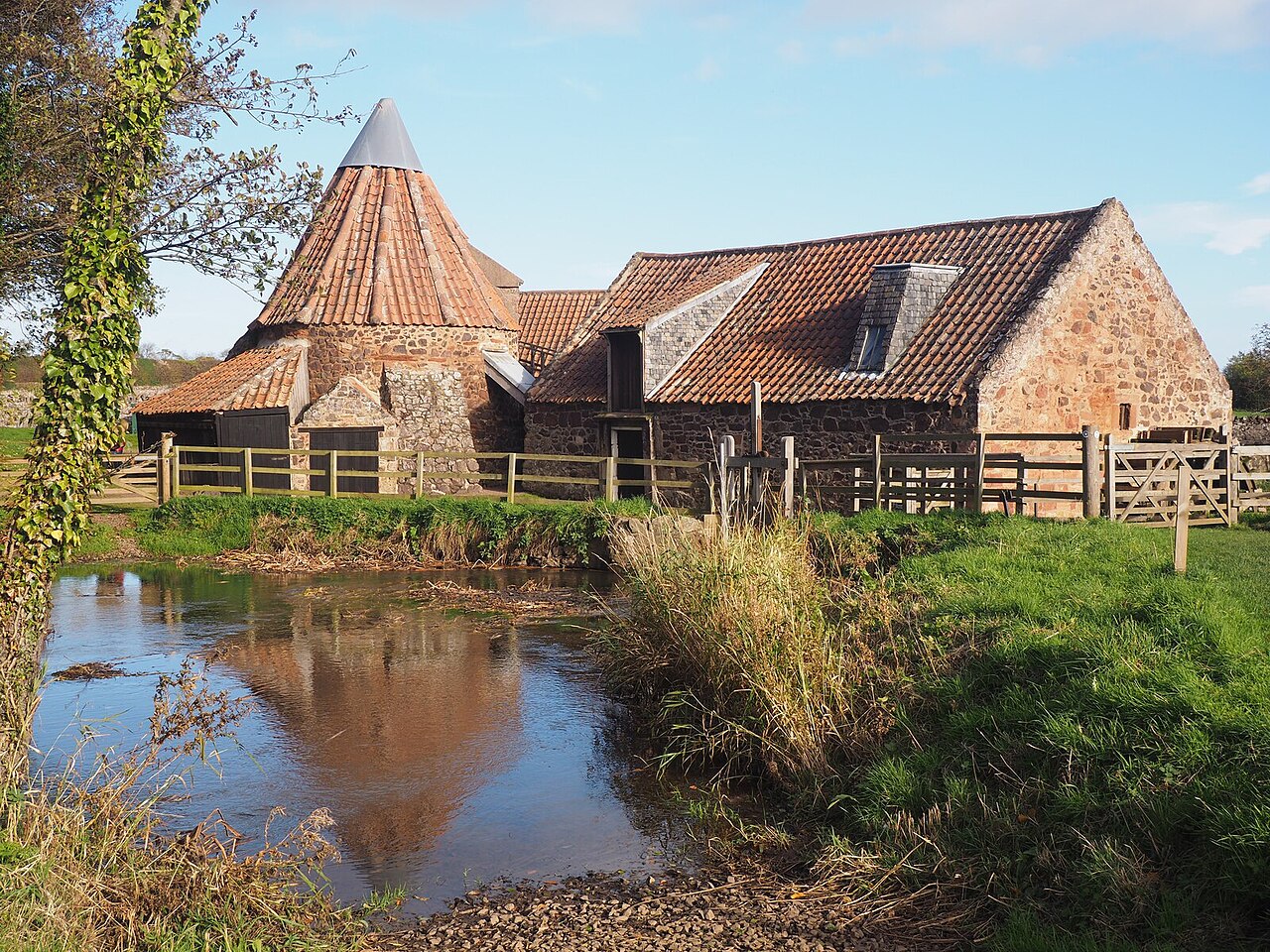
Preston Mill
Photo: Jennifer Petrie · CC BY-SA 2.0 via Wikimedia Commons

Stop 1 · East Linton, East Lothian

Preston Mill

In the series

VisitScotland lists the mill as a Season 1 location, a backdrop for scenes in the Jacobite story. The National Trust for Scotland says it stands in for the Lallybroch mill that Jamie repairs, and that its exhibition room became the court anteroom for the witchcraft hearing of Claire and Geillis.

The real history

The National Trust for Scotland says this was the last working watermill in the region, in commercial use until 1959. Its conical roof looks Dutch, which is unusual in Scotland. Across the River Tyne, Phantassie Doocot is a 16th century dovecote built for 500 pigeons.

When you visit

A National Trust for Scotland property with guided tours, so check tour days before you go. The grounds have short walks along the river.
Midhope Castle and Hopetoun Estate
Photo: Worldfootage · CC BY-SA 4.0 via Wikimedia Commons

Stop 2 · Near South Queensferry, West Lothian

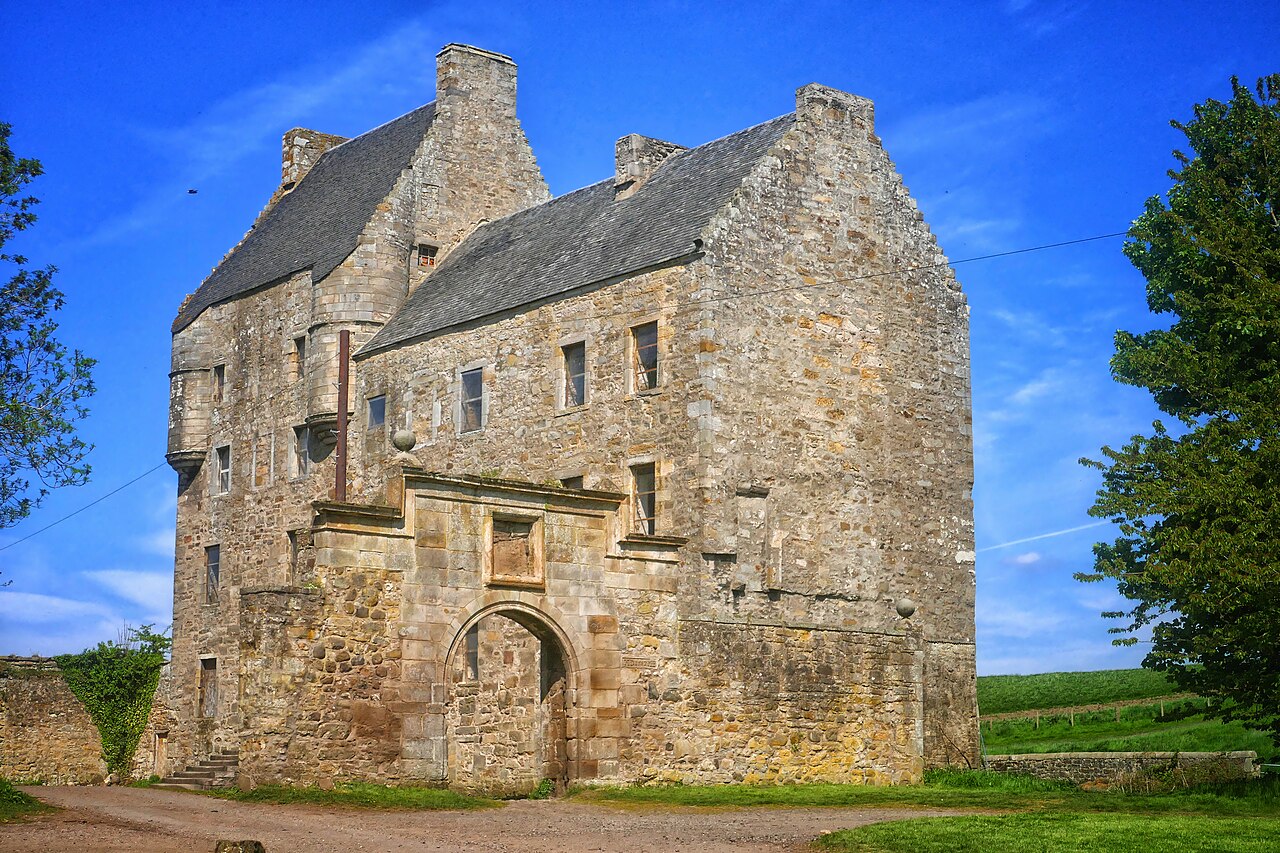
Midhope Castle and Hopetoun Estate

In the series

This tower house is the outside of Lallybroch, the Fraser family home, across several seasons. Hopetoun House, about a mile east on the same estate, is where the production filmed the home of the Duke of Sandringham, Paris streets and more. Hopetoun counts 24 filming locations across Seasons 1, 2, 3, 7 and 8.

The real history

VisitScotland dates the tower to the 16th century and describes it as the exterior of Lallybroch. It also says the site was used for North Carolina and for the New York battlefields, so it appears in the story more than once.

When you visit

A ticket is needed, and it covers the grounds, drive, archway, courtyard and castle steps, not the inside of the tower. Access can be restricted for filming, farming or estate work, and the site closes on some winter days. Follow the brown signs from South Queensferry and ignore any sat nav route along the A904 Bo'ness road. Hopetoun House itself opens from Easter to the end of September only.

Blackness Castle
Photo: Godot13 · CC BY-SA 4.0 via Wikimedia Commons

Stop 3 · Blackness, Falkirk

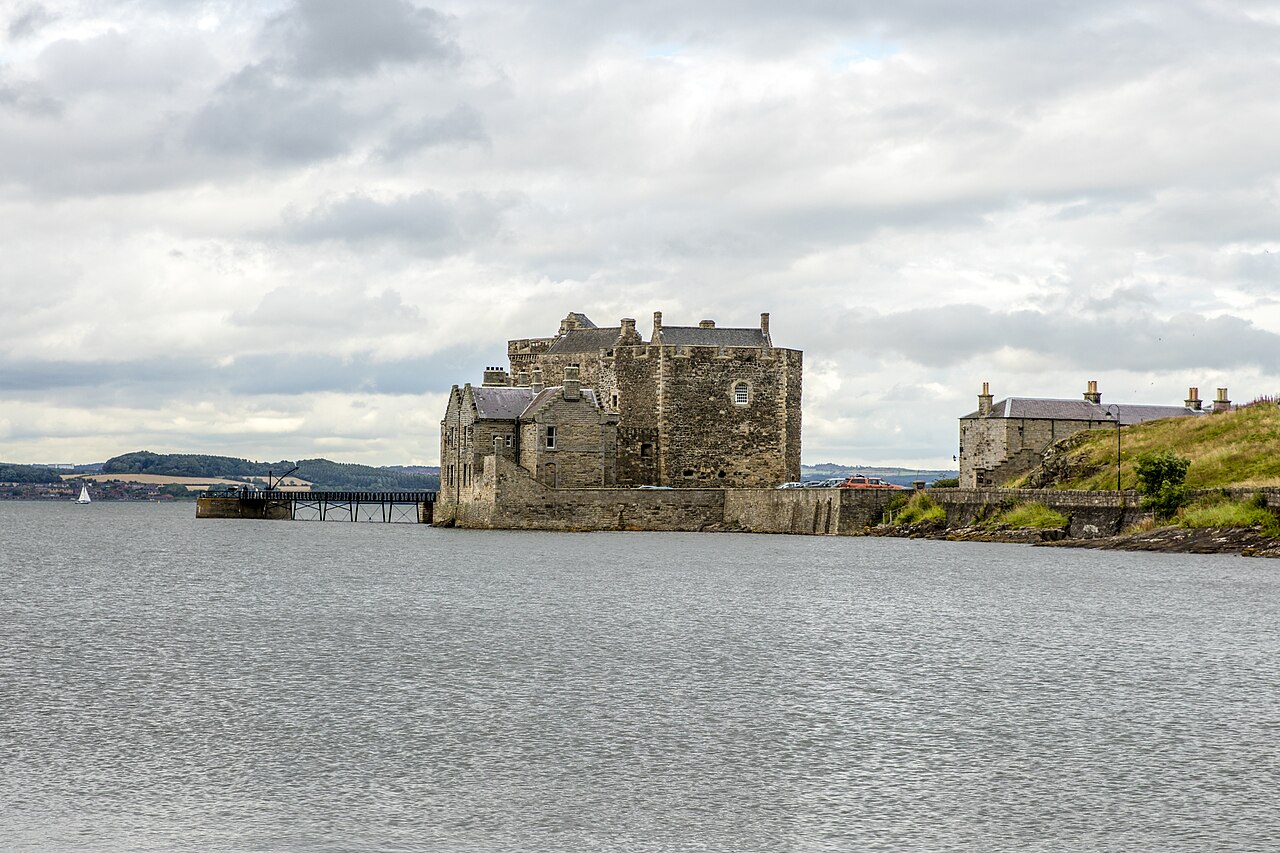
Blackness Castle

In the series

The castle plays the Fort William headquarters of Black Jack Randall in Season 1. VisitScotland says it also appears in the scene of Jamie's imprisonment.

The real history

The Crichton family built it in the 15th century, on the shore that served as the port of Linlithgow. James V began turning it into a state prison and artillery fort in 1537. Cromwell's guns forced its surrender in 1650, Covenanters were locked up here in the 1670s and 1680s, and in the later 19th century it was an ammunition depot.

When you visit

Run by Historic Environment Scotland, with timed tickets booked online for standard entry. Climb the towers and the curtain wall for views of the Firth of Forth and its bridges. Its ship-like shape is why it is called the ship that never sailed.

Linlithgow Palace
Photo: Alistair McMillan · CC BY-SA 2.0 via Wikimedia Commons

Stop 4 · Linlithgow, West Lothian

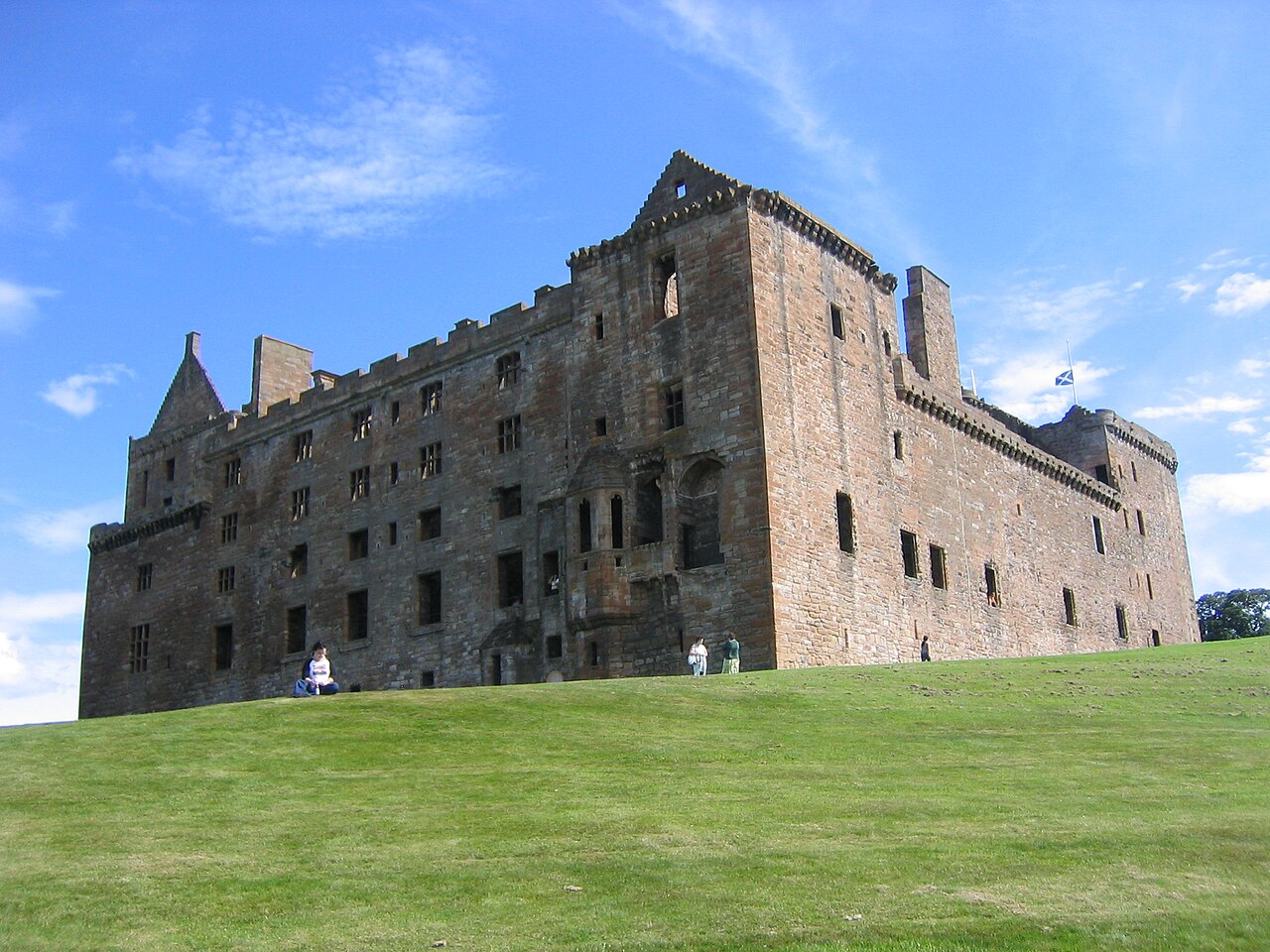
Linlithgow Palace

In the series

VisitScotland says the entrance and corridors of the palace were used as Wentworth Prison, where Jamie is held in Season 1.

The real history

James I ordered a new palace here in 1424 after fire badly damaged the older residence, and the Stewart kings extended it for two centuries. Mary Queen of Scots was born here in 1542. It declined after James VI moved the royal court to London in 1603.

When you visit

Historic Environment Scotland sells timed tickets for standard entry. The king's bedchamber and the court kitchen were closed for conservation work when this guide was checked, so look at the site's notices first. The loch beside the palace is a Site of Special Scientific Interest and makes a good short walk.

Day 2: The Fife coast and Falkland

54 miles driving. Stay: Falkland

Culross
Photo: HARTLEPOOLMARINA2014 · CC BY-SA 4.0 via Wikimedia Commons

Stop 5 · Fife

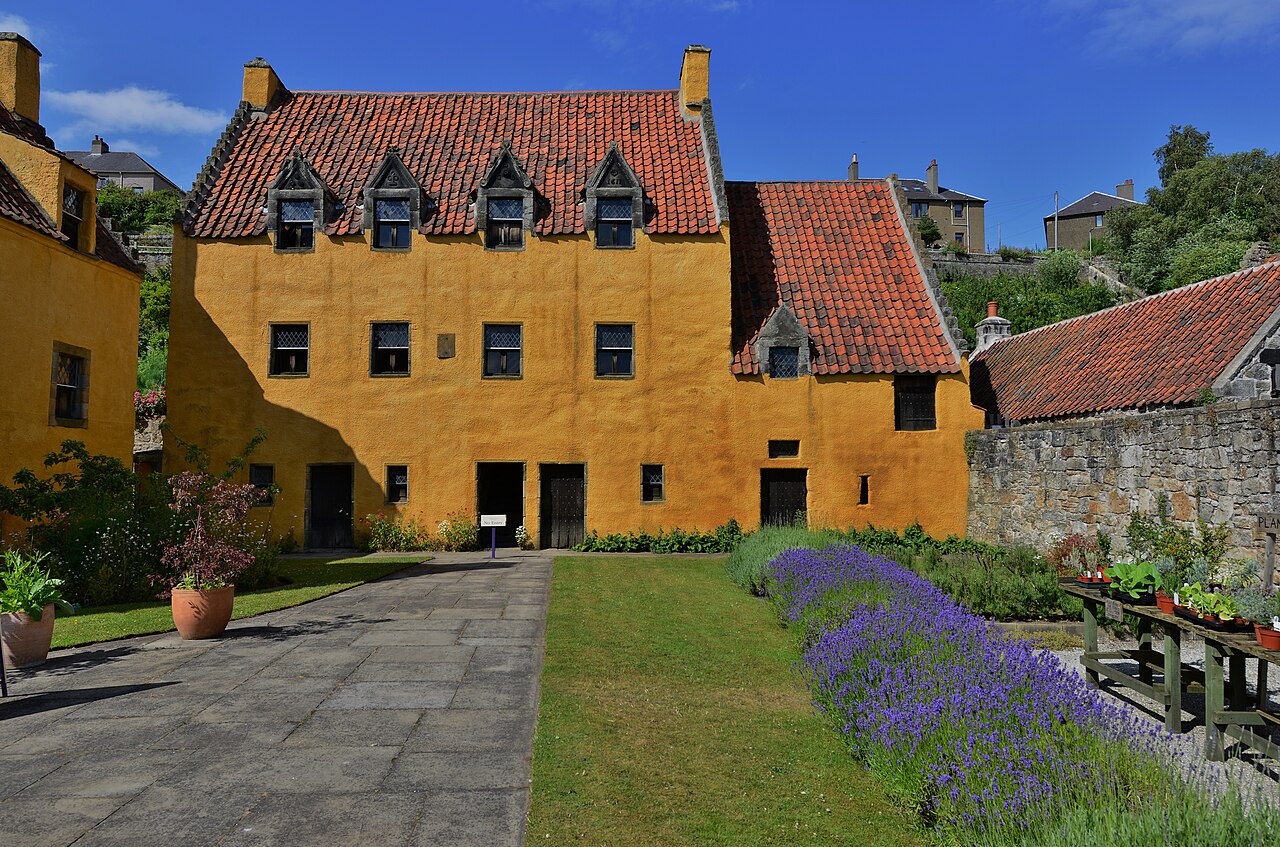
Culross

In the series

The village square and Mercat Cross became Cranesmuir, the home of Geillis Duncan, in Season 1. The National Trust for Scotland says the palace garden was the herb garden at Castle Leoch and a room in the palace was Geillis's parlour. Culross came back as a Jacobite camp and field hospital in Season 2, as Balriggan Cottage in Season 4 and again in Season 7.

The real history

Sir George Bruce paid for Culross Palace, finished in 1611, with money from coal and salt. From 1590 he built the Moat Pit, a shaft in the Firth of Forth reaching coal under the sea, until a severe storm flooded the mine in 1625. Historic Environment Scotland says these moated mine entrances were, as far as it knows, the first of their kind in Britain.

When you visit

The National Trust for Scotland runs the palace and garden, so check open days. The streets are steep and cobbled, and people live here. The remains of the Moat Pit lie about 400 metres out in the tidal zone and are not a place to walk to.

Aberdour Castle
Photo: Andy Hawkins · CC BY-SA 2.0 via Wikimedia Commons

Stop 6 · Aberdour, Fife

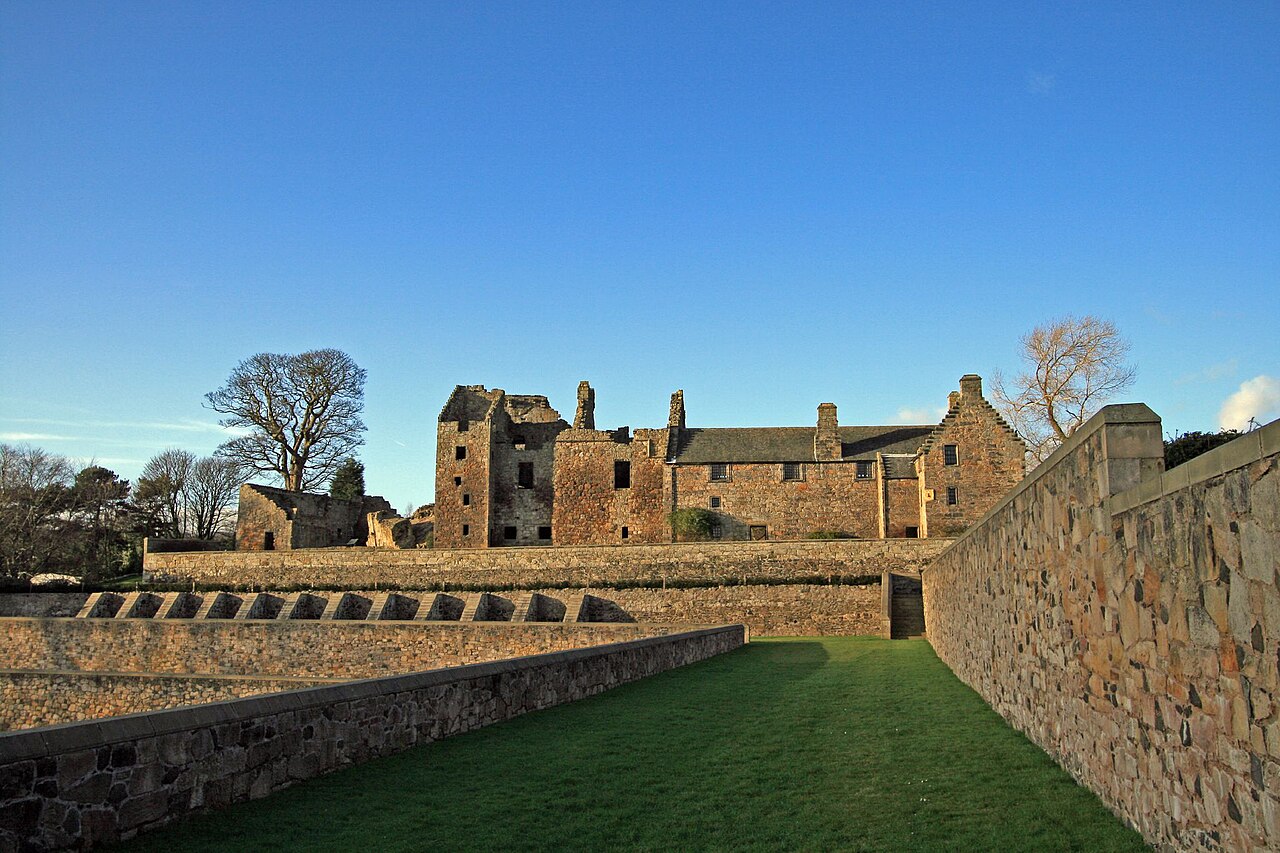
Aberdour Castle

In the series

In Season 1 this is the monastery in France where Claire and Murtagh take Jamie to recover after Wentworth. VisitScotland says the old kitchen and long gallery were used.

The real history

The earliest part may be a two storey hall house of the early to mid 1100s. Robert the Bruce granted Aberdour to his nephew Thomas Randolph in 1325, and it passed to the Douglases in 1342. James Douglas, 4th Earl of Morton, added the central range while Regent of Scotland in the later 1500s.

When you visit

Historic Environment Scotland site, with timed tickets. Allow time for the terraced garden and the beehive shaped dovecot. The gallery is in the east range, added in the early 1600s.

Dysart Harbour
Photo: FHL2 · CC BY-SA 4.0 via Wikimedia Commons

Stop 7 · Dysart, Kirkcaldy, Fife

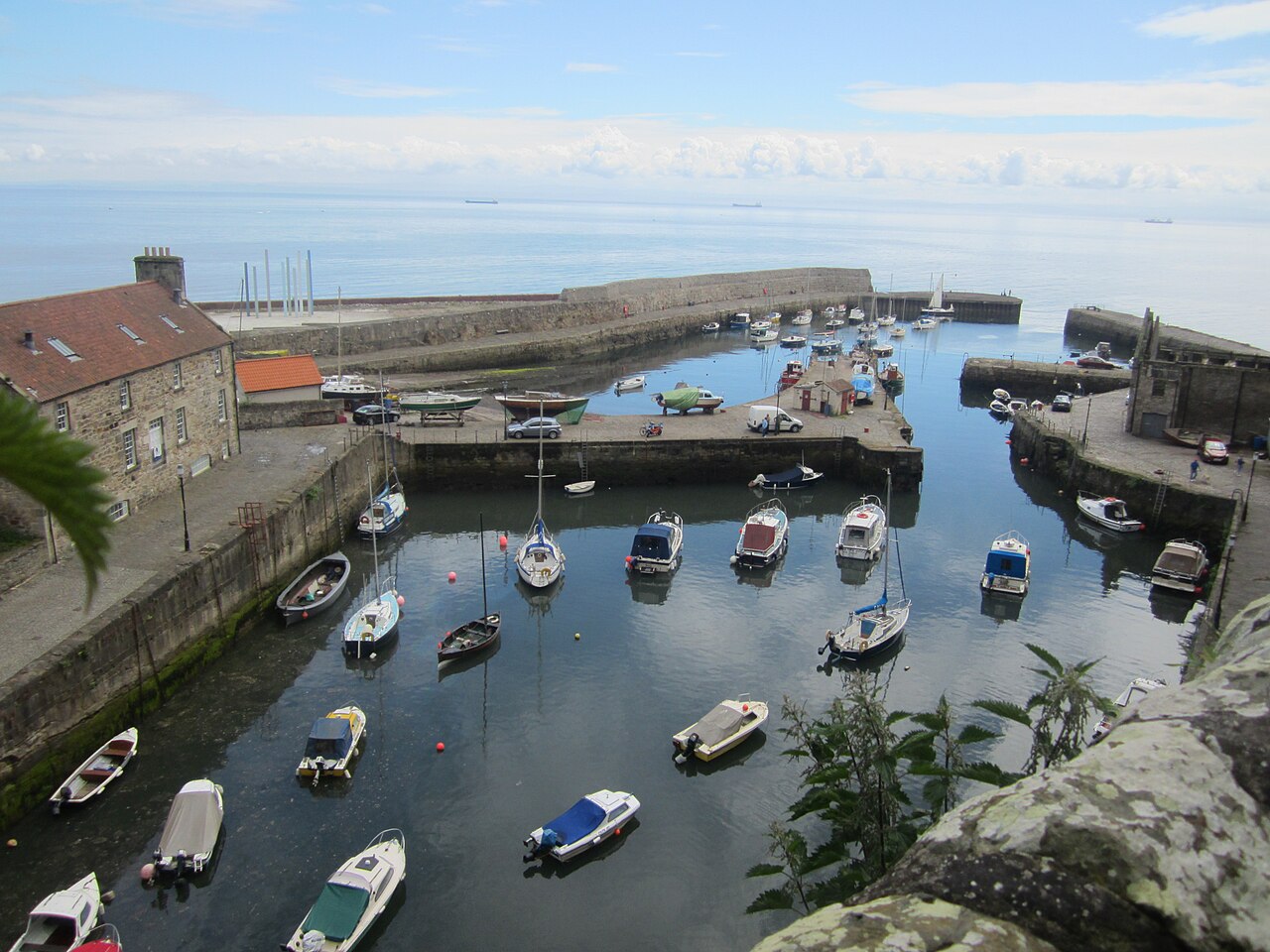
Dysart Harbour

In the series

The harbour became the French port of Le Havre in Season 2, where Jamie and Claire land after escaping to France, and the site of St Germain's warehouse. One of the boats seen in those scenes, a fishing vessel called the Reaper, is cared for by the Scottish Fisheries Museum in Anstruther.

The real history

Dysart exported salt and coal from at least 1450. The Fife Coast and Countryside Trust says that before there was a harbour, ships were grounded in the bay at the Pan Ha' and loaded at low tide. Today it is used for pleasure boats.

When you visit

The Fife Coastal Path passes the harbour, so you can walk around it. Boats are kept here, so stay clear of moorings and equipment.

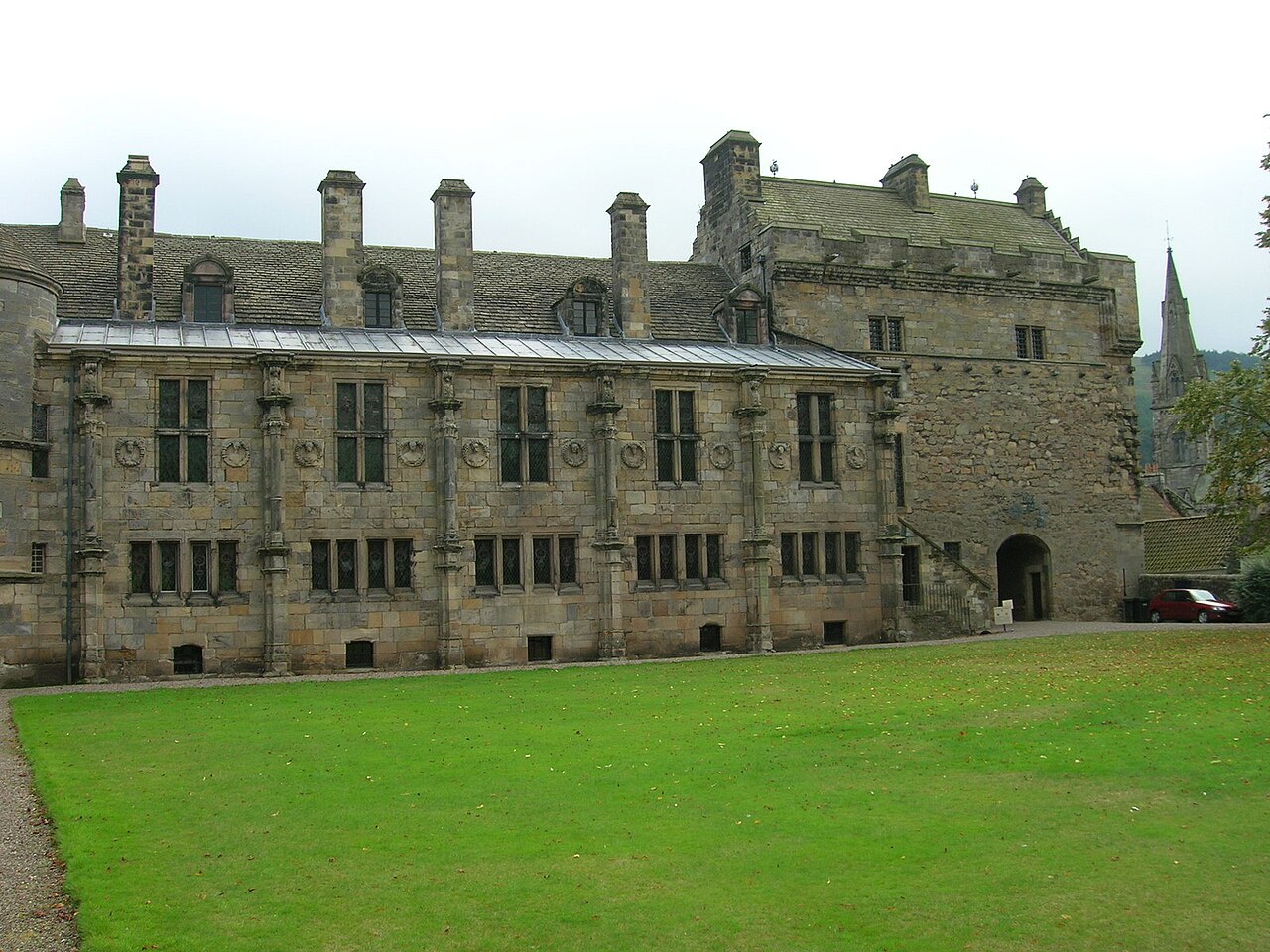
Falkland
Photo: JThomas · CC BY-SA 2.0 via Wikimedia Commons

Stop 8 · Fife

Falkland

In the series

The town was dressed as 1940s Inverness in Season 1 and 1960s Inverness in Seasons 2 and 4. The Covenanter Hotel became Mrs Baird's guesthouse, and the Bruce Fountain is where Jamie's ghost looks up at Claire's window. The National Trust for Scotland says a cellar in the palace served as an apothecary's room.

The real history

James IV and James V transformed Falkland Palace, drawing on French chateau design, and Mary Queen of Scots came here to hunt and play tennis. The palace fell into disrepair after 1660 and was rescued by the 3rd Marquess of Bute in the 19th century. Its real tennis court is described by the Trust as the oldest surviving in the world.

When you visit

The palace and garden belong to the National Trust for Scotland, so check open dates. The filming spots in the town are on public streets, and people live here, so park with care.

Day 3: Castle Leoch and Versailles

62 miles driving. Stay: Crieff

Doune Castle
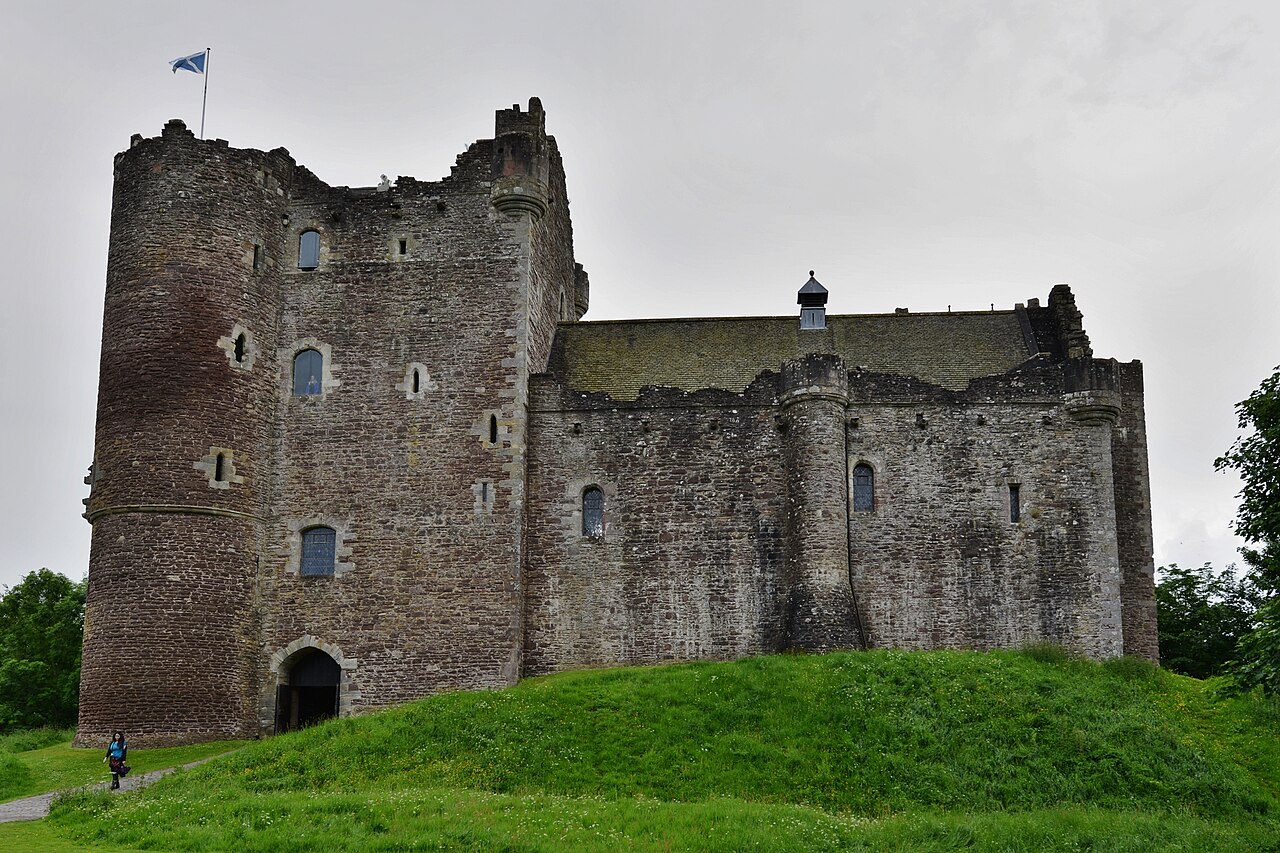
Photo: Michael Garlick · CC BY-SA 2.0 via Wikimedia Commons

Stop 9 · Doune, Stirling

Doune Castle

In the series

Doune plays Castle Leoch, home of Colum MacKenzie and his clan, and appears as a ruin when Claire and Frank visit it in the 20th century scenes. The audio guide covers the filming with Sam Heughan. Monty Python and the Holy Grail and Game of Thrones also filmed here.

The real history

Robert Stewart, 1st Duke of Albany, acquired it in 1361 and acted as Scotland's ruler for most of the years from 1386 until his death in 1420. James I executed Albany's son Murdoch in 1424, and Doune became a royal castle. The Earl of Moray restored the Duke's Hall in 1883.

When you visit

Historic Environment Scotland, with timed tickets, so book ahead in summer. VisitScotland reports visits up 168 per cent since 2014, which gives a good idea of how busy it can be. There is a woodland walk, and views over the River Teith from the castle.

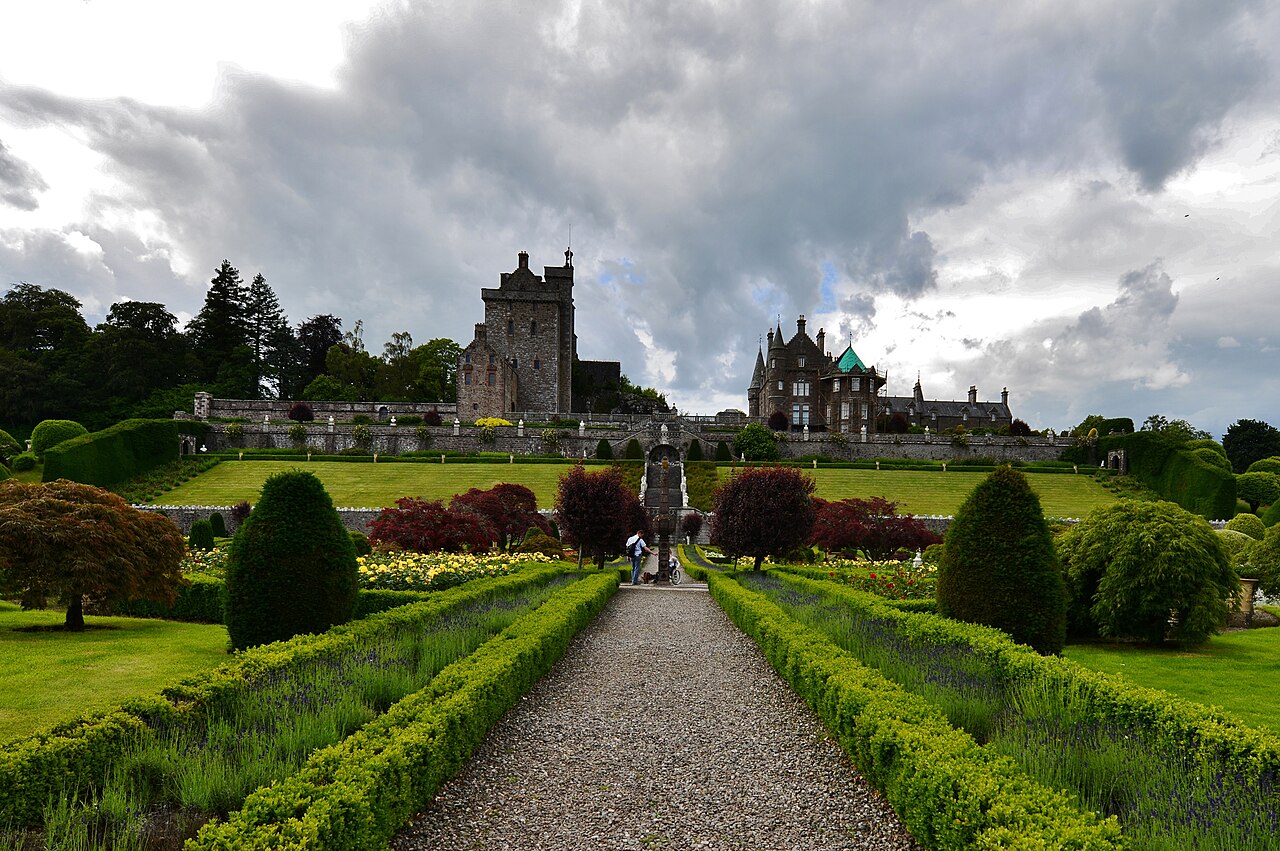
Drummond Castle Gardens
Photo: Michael Garlick · CC BY-SA 2.0 via Wikimedia Commons

Stop 10 · Muthill, near Crieff, Perth and Kinross

Drummond Castle Gardens

In the series

The formal parterre gardens stood in for the Palace of Versailles in Season 2. VisitScotland lists the gardens against Seasons 1, 2 and 3, though it only describes the Versailles role.

The real history

The gardens date from the 17th century and were terraced in the 19th century. They were replanted in the 1950s but keep features such as the old yew hedges, and a beech marks Queen Victoria's visit in 1842. They are reached by a mile long drive of beech trees.

When you visit

Gardens only: the castle is not open to the public. The gardens open for a summer season, which ran from 1 May to 31 October in 2026, so check the dates for your trip.

Day 4: Rannoch to Culloden

126 miles driving. Stay: Inverness

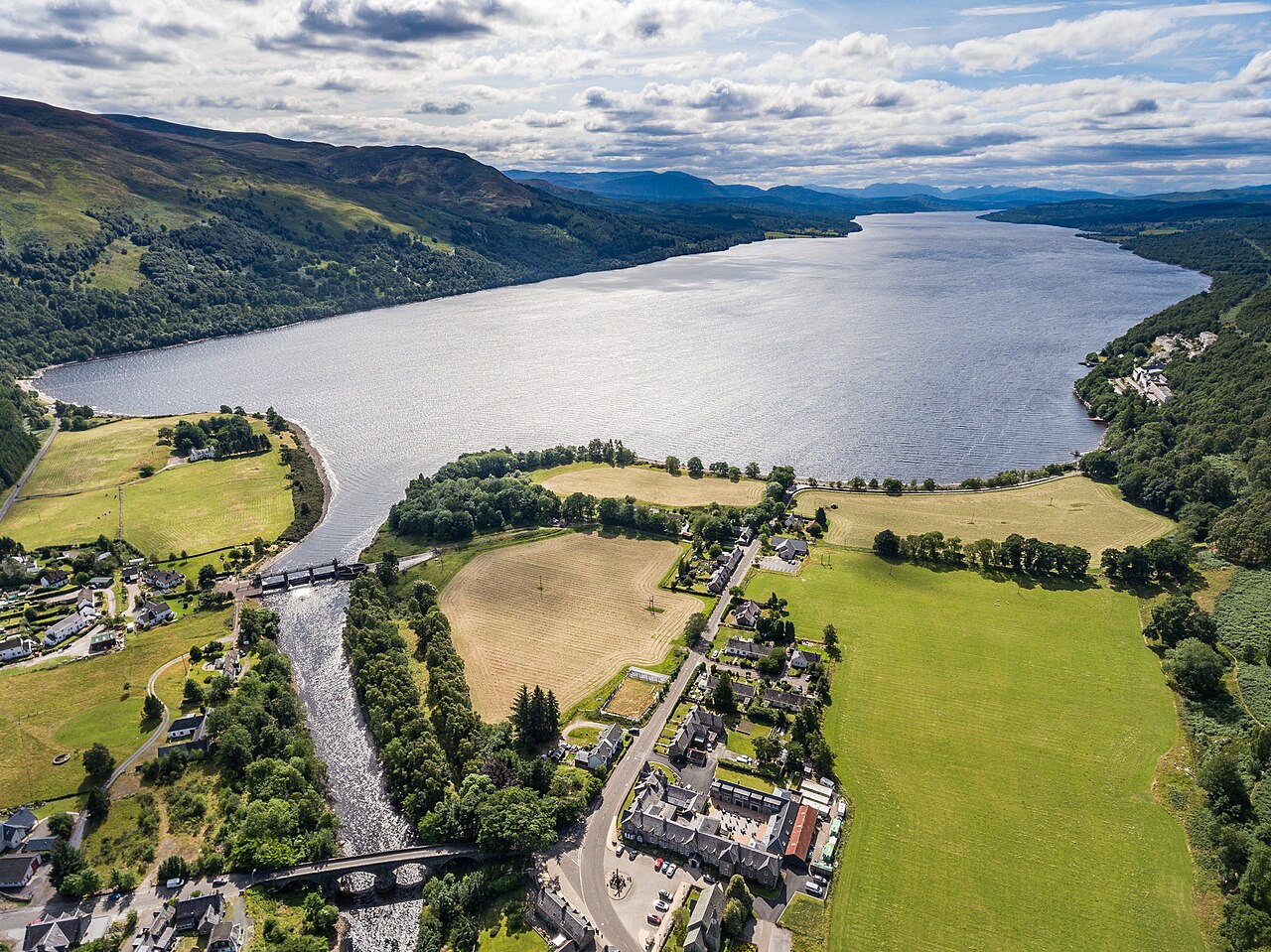
Kinloch Rannoch
Photo: Carlwestwood101 · CC BY-SA 4.0 via Wikimedia Commons

Stop 11 · Perth and Kinross

Kinloch Rannoch

In the series

VisitScotland says this area is seen behind Claire and Frank on their second honeymoon in the first episode. The stones of Craigh na Dun were a temporary set built near here on a private working farm, according to Countryfile, so there is no stone circle to visit. Treat this stop as the scenery of the opening episode.

The real history

Above the loch stands Schiehallion, where a Royal Society team under Nevil Maskelyne camped in 1774 to measure how far the mountain pulled a plumb line. National Museums Scotland says the team made 337 observations of 43 stars, and the result gave an estimate of the Earth's average density within 20 per cent of the figure accepted today.

When you visit

The village sits at the east end of Loch Rannoch, and the road along the loch makes a good short drive. Wilderness Scotland says the filming hill is on private land and that access depends on the landowner, so do not enter unless it is clearly permitted.

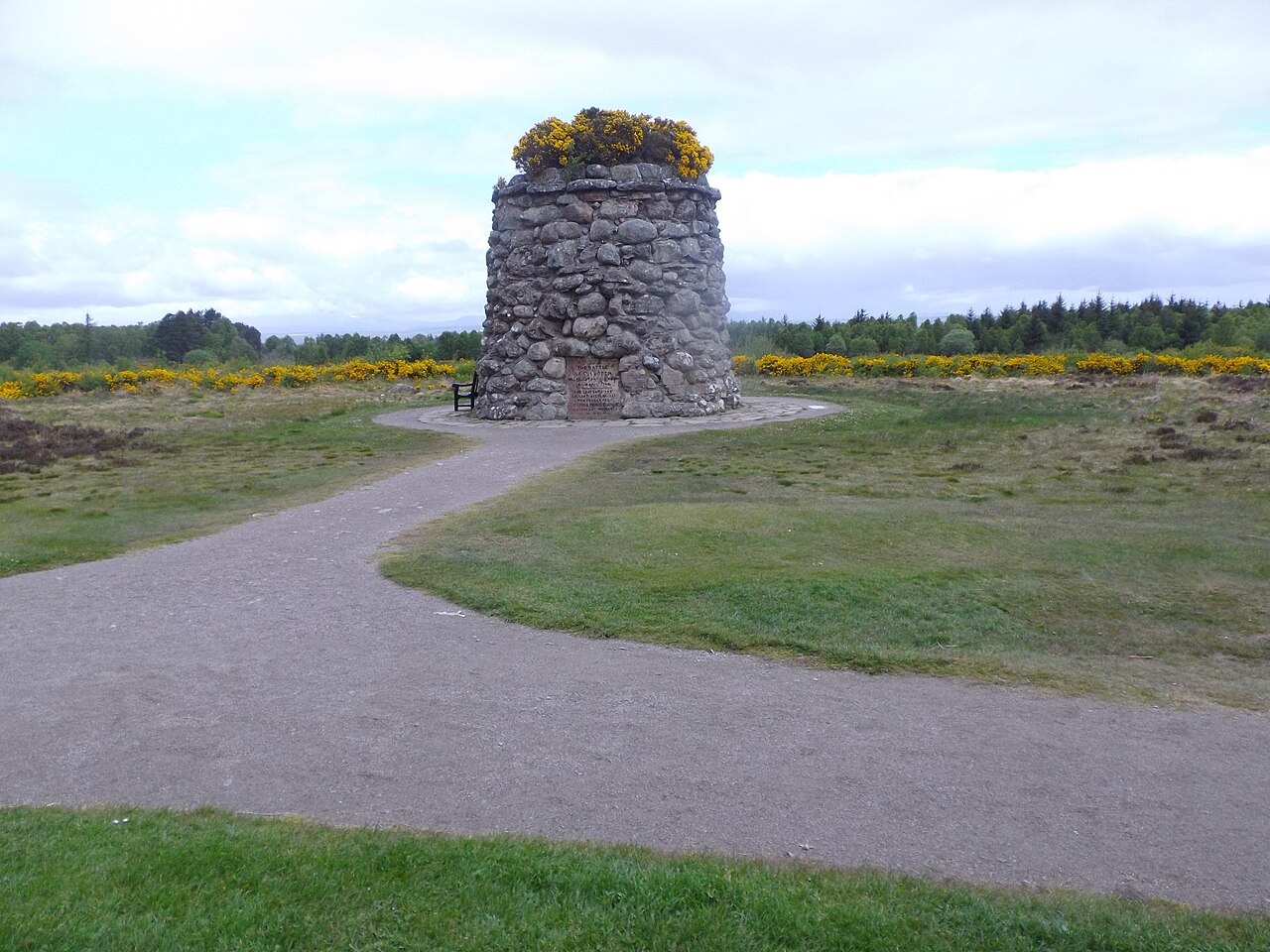
Culloden Battlefield
Photo: Stanley Howe · CC BY-SA 2.0 via Wikimedia Commons

Stop 12 · East of Inverness, Highland

Culloden Battlefield

In the series

The battle is the turning point of the story, but it was not staged on this moor, and Culloden is not among the 48 locations in VisitScotland's official guide. The National Trust for Scotland says Culloden features in both timelines: Claire comes here with Frank in 1946 and with Jamie in 1746. Press accounts of where the battle was filmed differ, naming Torbrex Farm and the Cumbernauld area, and no official source we opened settles it.

The real history

The Jacobite army faced government troops under the Duke of Cumberland here on 16 April 1746, the last pitched battle on British soil. VisitScotland gives about 5,000 Jacobites against about 8,000 government soldiers, with the fighting over in under an hour. Death tolls vary by source, but all agree most of the dead were Jacobites.

When you visit

The National Trust for Scotland runs the visitor centre beside the field. Many people died on this ground, so please keep to the paths and treat it with respect. Leanach Cottage, on the field, is mentioned in the books as a hiding place for survivors.

You will unlock the Outlander Locations Explorer badge

  1. Plan the trip

    Add this tour to your account. All 12 stops go in for you.

  2. Drive the trip

    Record your drives in the PYRT app and reach each stop. Any order is fine, and it can take more than one trip.

  3. Get the badge

    Reach the last stop and the Outlander Locations Explorer badge is yours.

What we left out, and why

Craigh na Dun

There is no real stone circle to visit. VisitScotland calls the stones fictional, inspired by Clava Cairns near Inverness and the Calanais stones on Lewis. Countryfile reports the stones on screen were a temporary set on a private farm near Kinloch Rannoch, so Clava Cairns is worth a visit for its own sake but is not a filming location.

Culloden as a battle location

The real moor is on this route because it matters to the story, but the battle was not staged there. Accounts of the actual location differ: Cheat Sheet names Torbrex Farm, and War History Online says near Cumbernauld and a field at Greengairs. We found no official statement, and we could not confirm claims that the present day memorial scenes were shot on the real battlefield.

Wardpark Studios, Cumbernauld

Screen Scotland lists this as the studio used for all eight seasons, and VisitScotland says the production created its own studio in Cumbernauld. It is a production facility rather than a visitor attraction, so it is not a stop.

Glen Coe and Glencorse Old Kirk

VisitScotland credits Glen Coe with the opening titles only, and it would pull the route far to the west. Glencorse Old Kirk, where Claire and Jamie marry, is on private grounds and visits are by appointment only with Glencorse House.

Common questions

Was Outlander filmed at Culloden?

The battle was not staged on the real moor. Culloden is in the story in both timelines, but it is not one of the 48 locations in VisitScotland's official filming guide. Reports name Torbrex Farm and the Cumbernauld area for the battle scenes, and they do not agree in detail.

Can you go inside Midhope Castle?

The ticket covers the grounds, drive, archway, courtyard and castle steps, and does not list the inside of the tower. VisitScotland describes the building as the exterior of Lallybroch.

Is Craigh na Dun a real place?

No. The name and the stones are fictional. VisitScotland says they were inspired by Clava Cairns near Inverness and the Calanais stones on Lewis, and the stones on screen were a temporary set.

Where is Castle Leoch?

Castle Leoch is fictional. Doune Castle, near Stirling, played it on screen, and Pollok Country Park in Glasgow doubled as its grounds.

Which Outlander location is used for Lallybroch?

Midhope Castle, on the Hopetoun Estate in West Lothian, is the outside of Lallybroch. Preston Mill in East Lothian was used for the Lallybroch mill.

How many days do you need for an Outlander road trip?

This route takes 4 days with overnight stops in Linlithgow, Falkland, Crieff and Inverness. VisitScotland's guide lists 48 locations in total, so a longer trip could add Edinburgh, Glasgow and Ayrshire.