Steam train crossing Glenfinnan Viaduct

Driving tours · Unofficial guide

Dracula's Transylvania road trip

Photo: www.bdmundo.com · CC BY-SA 2.0 via Wikimedia Commons
Length
8 days
Distance
544 miles
Driving
About 17 hours
Stops
11

Two different Draculas are mixed together in Romania, and this route keeps them apart. One is Vlad III, the 15th century prince of Wallachia called the Impaler. The other is Count Dracula, a vampire invented in 1897 by Bram Stoker, an Irish writer who never visited Romania.

The 11 stops run from the Tihuța Pass in the north to Comana south of Bucharest, in 8 days and about 540 miles. Each stop says which Dracula it belongs to, what is on record, and what is only tradition. That includes Bran Castle, which has very little to do with either.

Best time to go: May to October. The hairpins of the high Transfăgărășan are closed for most of the year, but this route does not need them.

How it works

  1. 1

    Add your starting point

    Tell us where you are setting off from. A date is optional.

  2. 2

    Save it to your account

    Every stop goes into a trip that you can change however you like.

  3. 3

    Take it on your phone

    Open the PYRT app with the same account and navigate from stop to stop.

The route, day by day

Day 1: The Borgo Pass and Stoker's Bistritz

32 miles driving. Stay: Bistrița

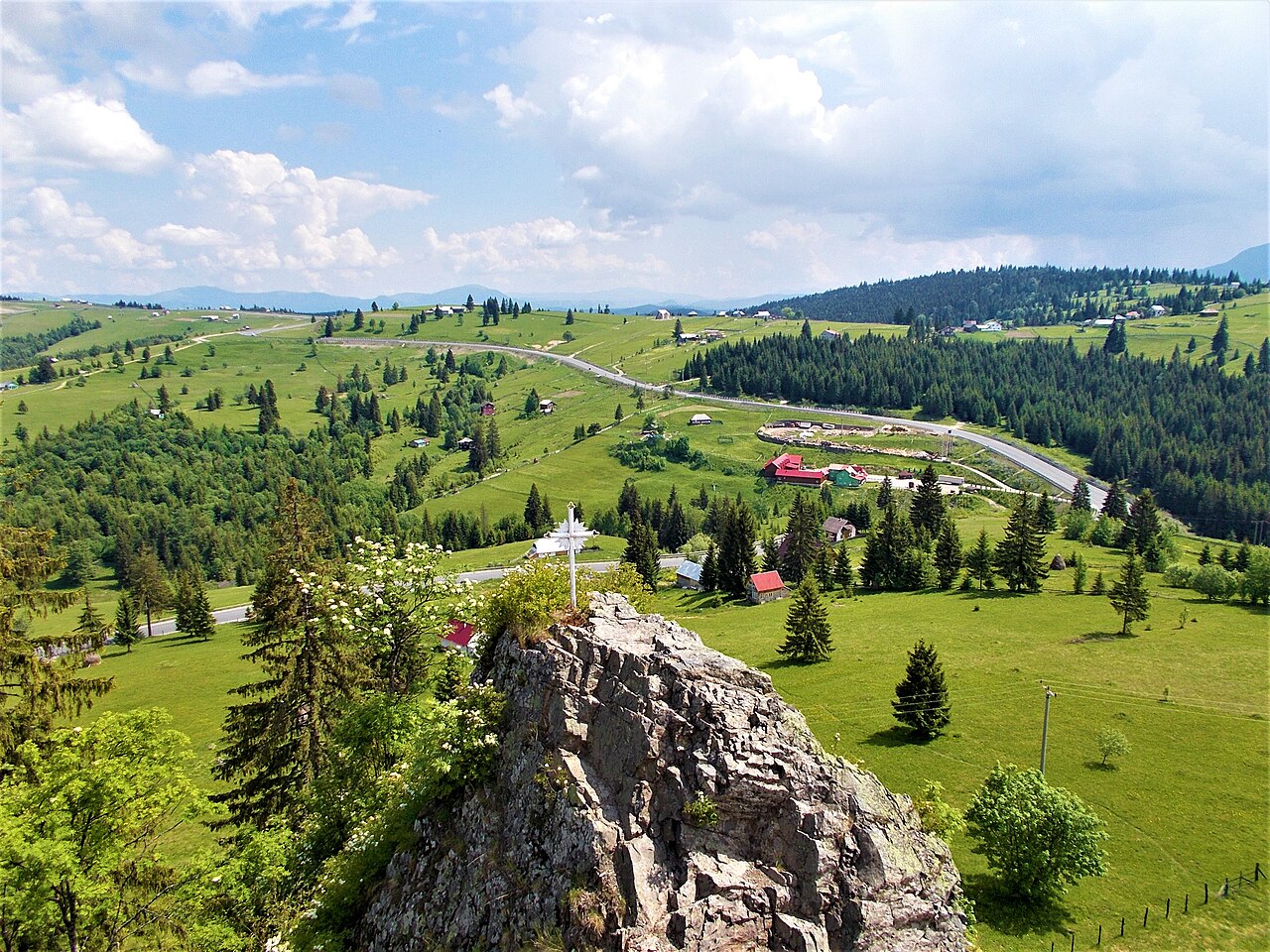
Tihuța Pass (the Borgo Pass)
Photo: Nicu Farcaș · CC BY-SA 4.0 via Wikimedia Commons

Stop 1 · Bistrița-Năsăud

Tihuța Pass (the Borgo Pass)

The Dracula link

Fiction only. This is the Borgo Pass of the novel, where Jonathan Harker leaves the coach in Chapter 1 and is collected for the last stretch to the castle. Stoker never came here and probably took the name from a map. Vlad III has no known link to this pass.

The real history

The DN17 crosses here between Transylvania and Bukovina, at about 1,200 metres. The Hotel Castel Dracula at the pass was built in the 1970s under the communist government, and it took its present name only after 1989. Sources differ on the exact building date.

When you visit

You can drive over the pass at any time of year, though winter brings snow. Check whether the hotel is open if you want to go inside or stay. The views from the roadside are the reason to stop.
Bistrița, the Bistritz of the novel
Photo: Țetcu Mircea Rareș · CC BY-SA 4.0 via Wikimedia Commons

Stop 2 · Bistrița-Năsăud

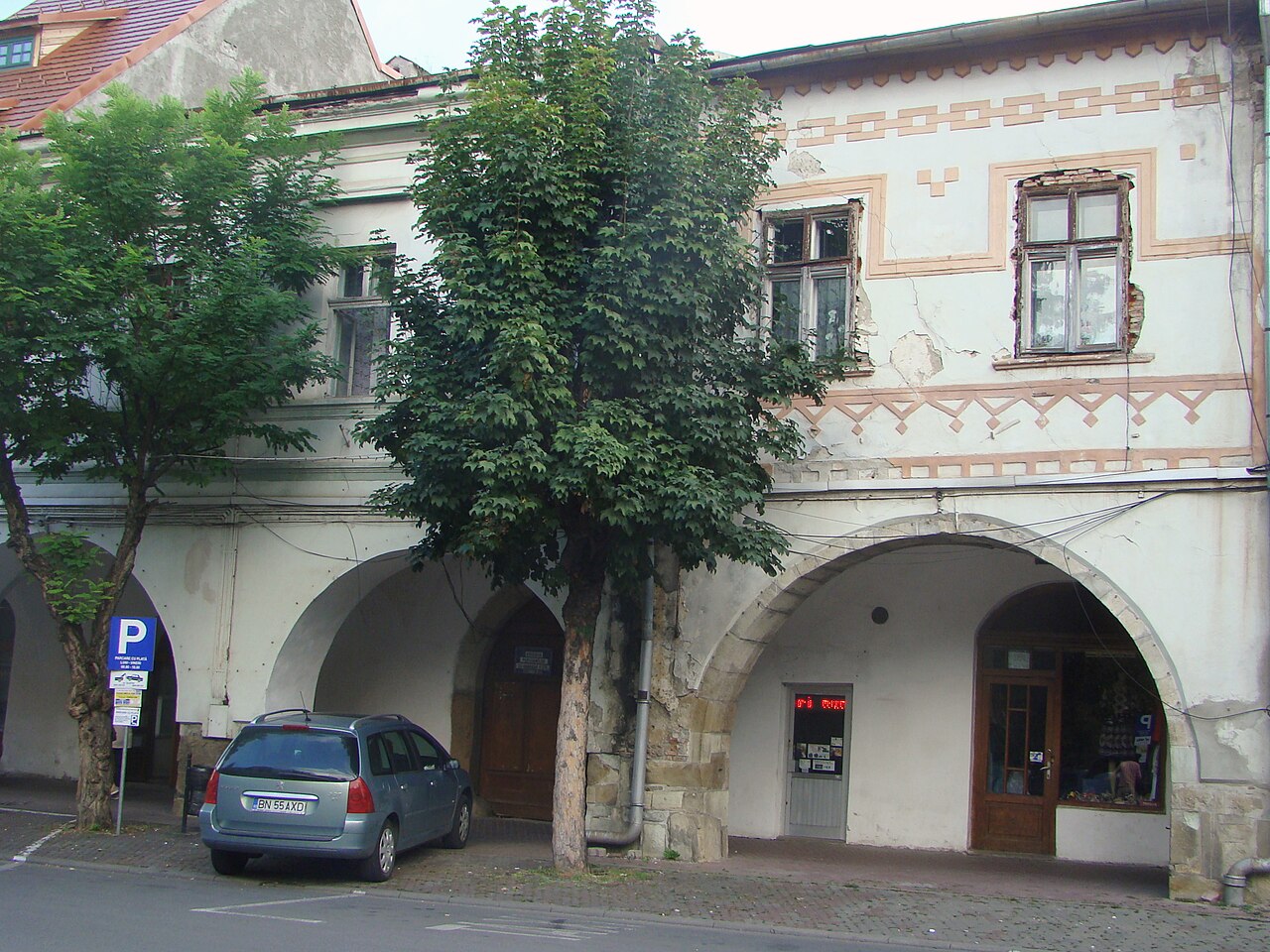
Bistrița, the Bistritz of the novel

The Dracula link

Fiction only. Harker stops here in Chapter 1, at the Golden Krone Hotel, on the eve of St George's Day. Stoker invented the hotel. No such place existed when he wrote, and the Coroana de Aur (Golden Crown) on Piața Petru Rareș took the name later because of the book.

The real history

Saxon colonists settled here and the town is first recorded in 1264 as Villa Bistiche. Bistritz, the spelling Stoker uses, is the town's German name. The arcaded Sugălete row on the central square is worth a walk.

When you visit

The old centre is compact and easy to walk. The hotel is a working business, so you can see the outside freely. Staying there is the one way to copy Harker's itinerary.

Day 2: South to Vlad's birthplace

87 miles driving. Stay: Sighișoara

Casa Vlad Dracul, Sighișoara
Photo: Cezar Suceveanu · CC BY-SA 4.0 via Wikimedia Commons

Stop 3 · Mureș

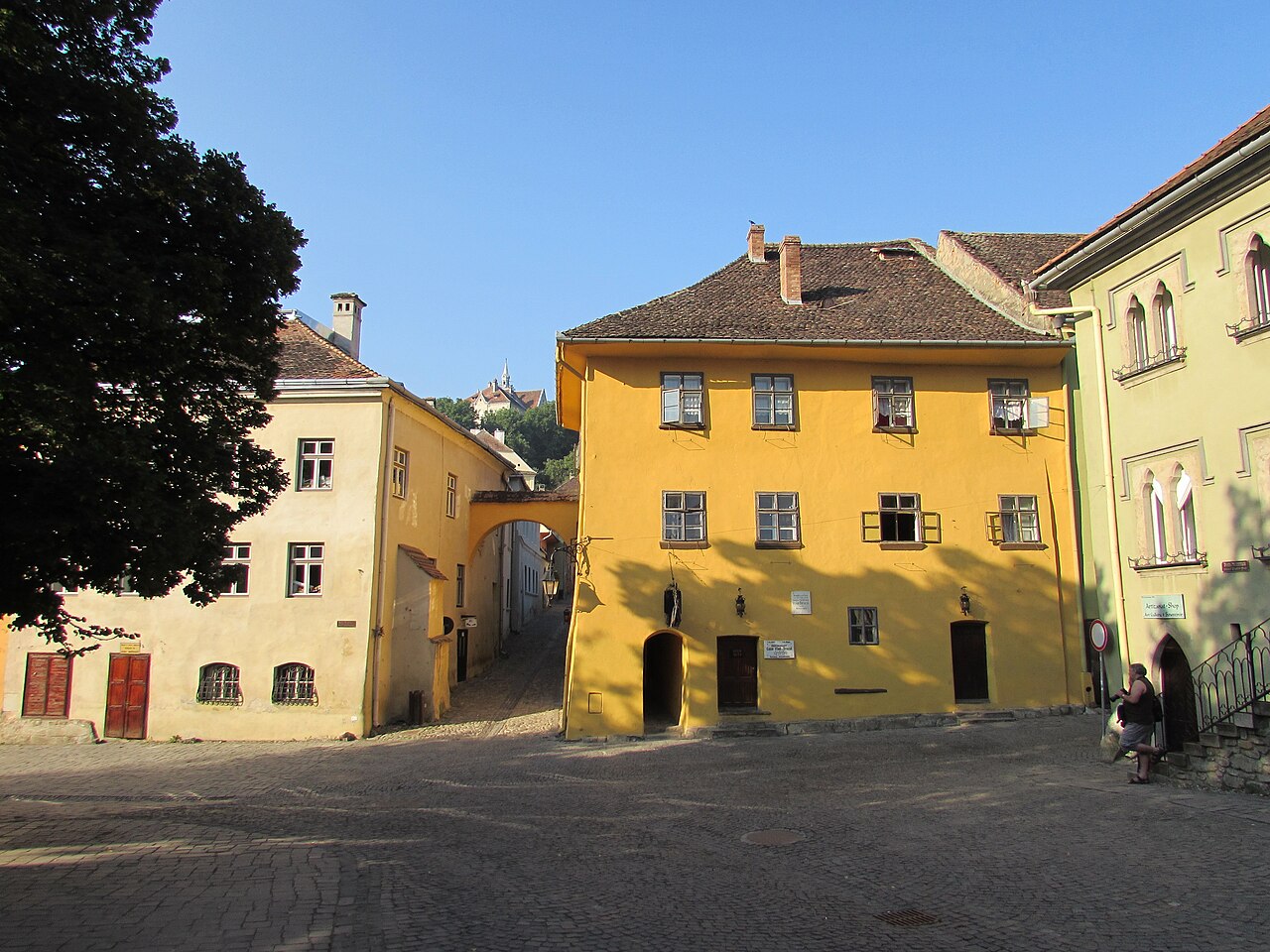
Casa Vlad Dracul, Sighișoara

The Dracula link

Historical Vlad. A plaque on this house says his father, Vlad Dracul, lived here from 1431 to 1435, and tradition makes it the birthplace of Vlad III. Historians date his birth to between 1428 and 1431, and the Sighișoara birthplace rests largely on the account of historian Radu Florescu. Stoker's novel never comes here.

The real history

Vlad Dracul lived in exile in the town and minted coins here. A document he issued is the first to record the Romanian name Sighișoara. His nickname came from the Order of the Dragon, which he joined in 1431, so Dracula means son of the Dragon. The citadel, built by Saxon settlers and first recorded in 1280 as Castrum Sex, has been a UNESCO World Heritage Site since 1999.

When you visit

The house is now a restaurant, on Strada Cositorarilor near the Clock Tower. Park below the citadel and walk up. Allow half a day for the walls, towers and the covered school stairs.

Day 3: Sibiu and the grave of Vlad's son

60 miles driving. Stay: Sibiu

Evangelical Cathedral, Sibiu
Photo: Superchilum · CC BY-SA 4.0 via Wikimedia Commons

Stop 4 · Sibiu

Evangelical Cathedral, Sibiu

The Dracula link

Historical Vlad, through his son. Mihnea cel Rău, Mihnea the Bad, is the illegitimate son of Vlad III and is buried in this church. He was stabbed outside a church in Sibiu on 12 March 1510, after attending Mass. Hostile sources of the time denied he was Vlad's son at all.

The real history

Building began in 1371 on the site of a 12th century church and finished in 1520. For about three centuries it was the burial place of Sibiu's mayors and leading citizens, until burials were banned in 1796. Sibiu's Saxon burghers backed a rival claimant against Vlad in 1457 and 1458.

When you visit

The cathedral is on Piața Huet in the upper town. Guides place the Mihnea stone in different spots, so ask inside, and check opening before you go. Park outside the old centre and walk in.

Day 4: Along the mountains to Brașov

89 miles driving. Stay: Brașov

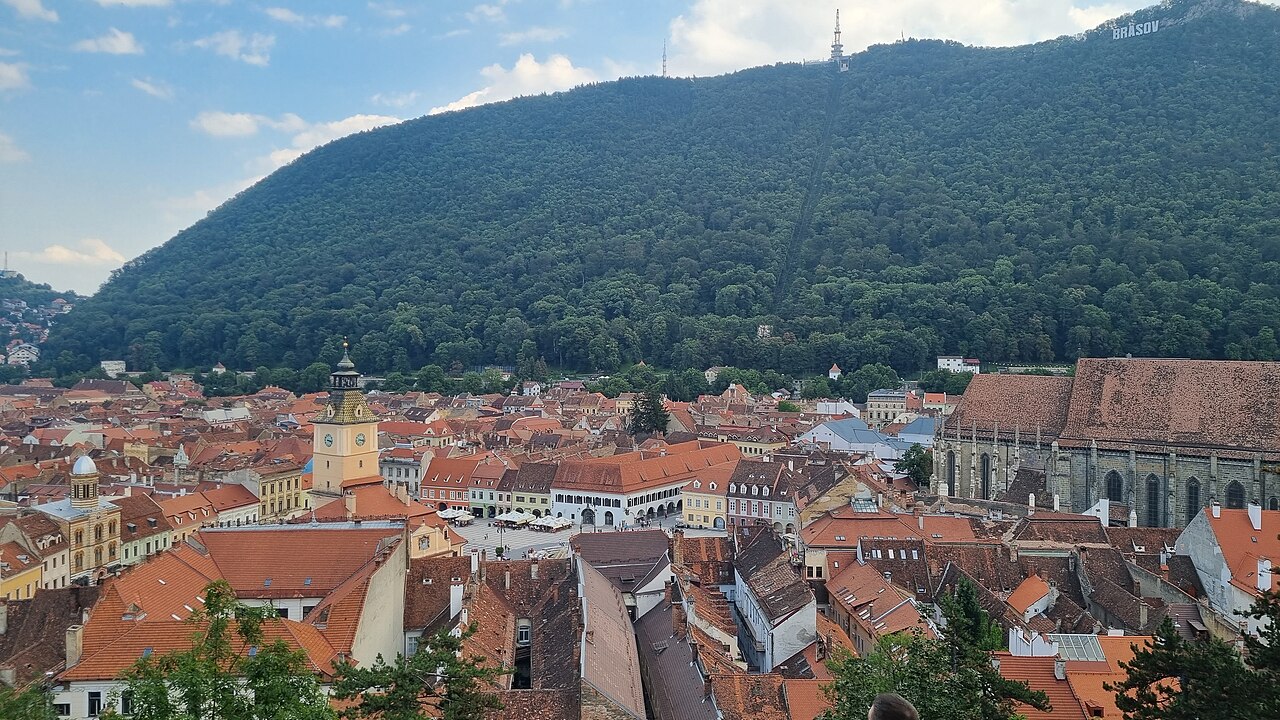
Black Church and old town, Brașov
Photo: Paul Colin Hennig firstdorsal.eu · CC BY-SA 4.0 via Wikimedia Commons

Stop 5 · Brașov

Black Church and old town, Brașov

The Dracula link

Historical Vlad. Brașov's Saxon merchants traded with him and fought him. He wrote to them in 1456 as prince, then attacked the town's suburbs around 1459 and 1460 in a dispute over trade and customs, and impaled captives. Sources give the date and numbers differently, and Romania's tourist board says 41 merchants died on 29 April 1459.

The real history

Much of Vlad's reputation for cruelty comes from German stories, and historians warn that the Saxons may have exaggerated or invented some of them. Even so, he confirmed the Brașov merchants' privileges on 7 October 1476, a few months before his death. Treat individual horror stories with care.

When you visit

Park outside the pedestrian centre and walk to Piața Sfatului and the Black Church. Tradition places a house of Vlad on Strada Constantin Lacea, but this is only believed, not proven. Brașov is the natural base for Bran, 19 miles away.

Day 5: Bran Castle and Poenari

96 miles driving. Stay: Curtea de Argeș

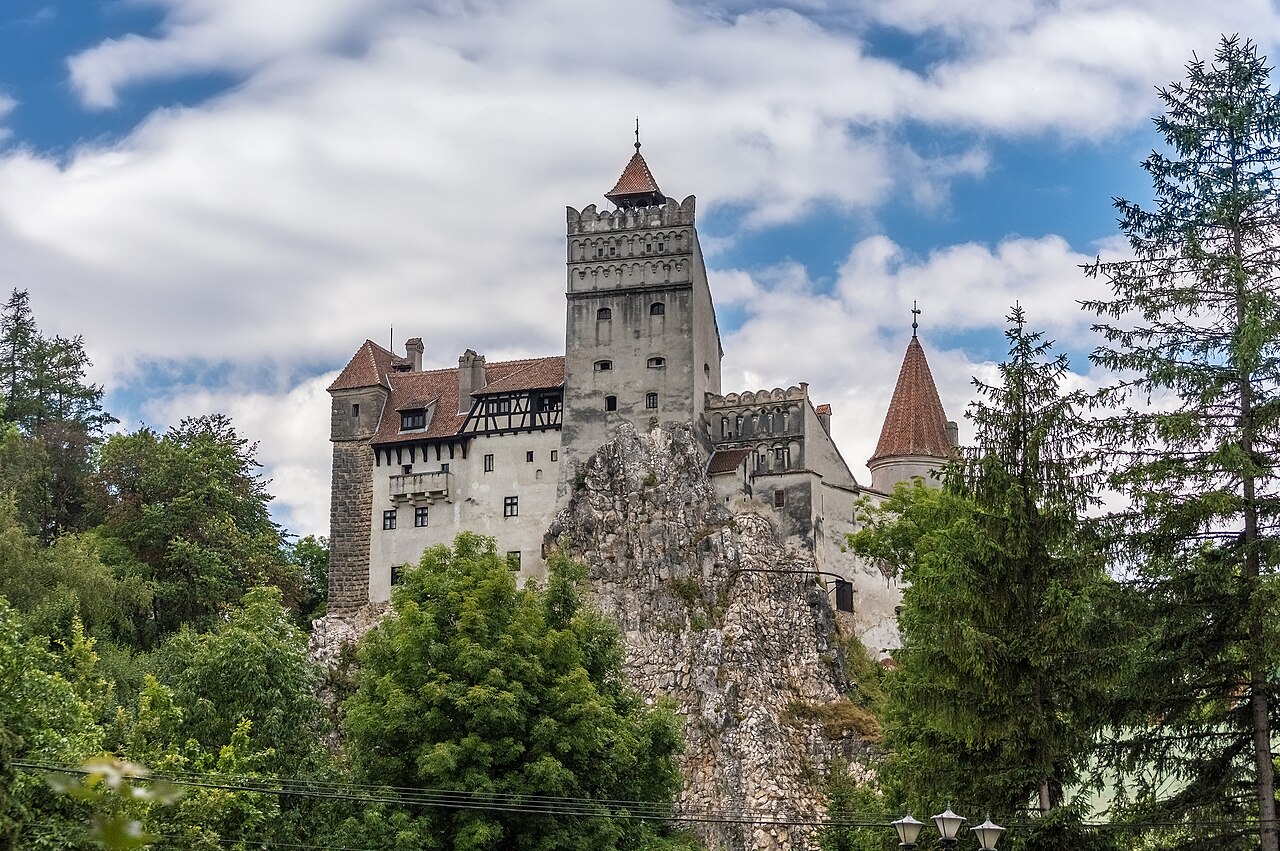
Bran Castle
Photo: www.bdmundo.com · CC BY-SA 2.0 via Wikimedia Commons

Stop 6 · Brașov

Bran Castle

The Dracula link

The main myth on this route. Most historians agree that Vlad never lived here, and the novel never mentions Bran. The castle's own website says Vlad may have been held here for two months in 1462, but other accounts have him held at Alba Iulia and then Visegrád. What links Bran to Dracula is tourism, promoted from the 1960s because the place looked Gothic.

The real history

A royal charter of 19 November 1377 let the people of Brașov build a fortress here, finished in 1388 as a customs post on the road to Wallachia. Vlad's army passed through in 1459 on the way to attack Brașov. In 1920 the citizens of Brașov gave it to Queen Marie of Romania, and the castle's interest today is largely hers. It became a museum in 1956 and was returned to her descendants in 2009.

When you visit

This is the busiest stop on the route, so go early and check tickets before you travel. The rooms of Queen Marie, who made this her favourite home, are the real story of the house.

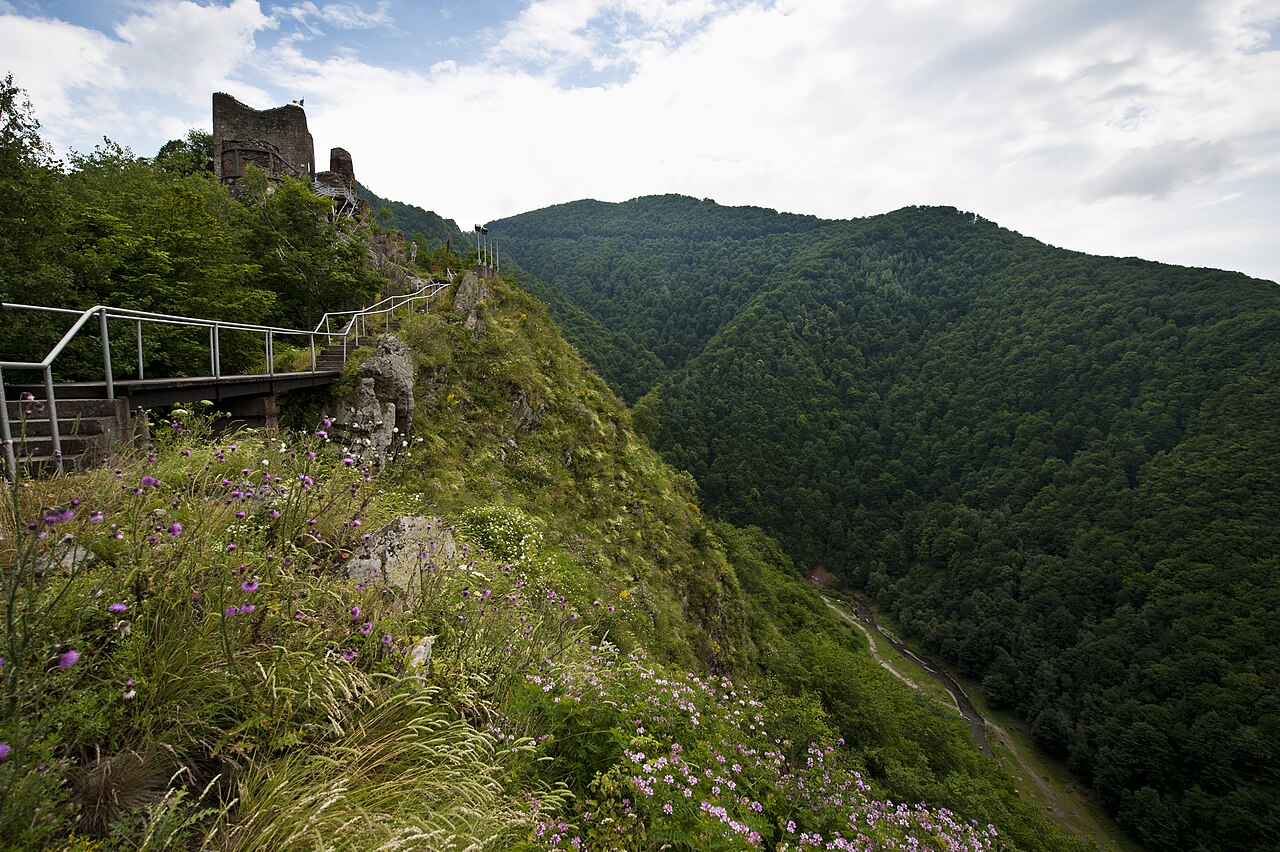
Poenari Citadel
Photo: Diana Popescu · CC BY-SA 3.0 ro via Wikimedia Commons

Stop 7 · Arefu, Argeș

Poenari Citadel

The Dracula link

Historical Vlad, and the strongest candidate for a real Dracula castle. Vlad strengthened this existing fortress when he took the throne. Ottoman forces took it in 1462 and tradition says he escaped through a secret passage. Its link to the novel is only by association, as Stoker never used it.

The real history

The fortress dates from around the start of the 13th century and stands on a cliff above the Argeș. It was abandoned in the first half of the 16th century, and a landslide in 1888 brought part of it down. A three year conservation project ended with a reopening on 14 April 2025.

When you visit

Reaching it means climbing 1,480 steps from the car park on the Transfăgărășan. Bears have closed the site several times, including on 29 April 2025, and in 2025 visits were limited to organised groups at set times. Check with the Argeș County Museum first and never feed bears along this road.

Day 6: Vlad's capital

83 miles driving. Stay: Târgoviște

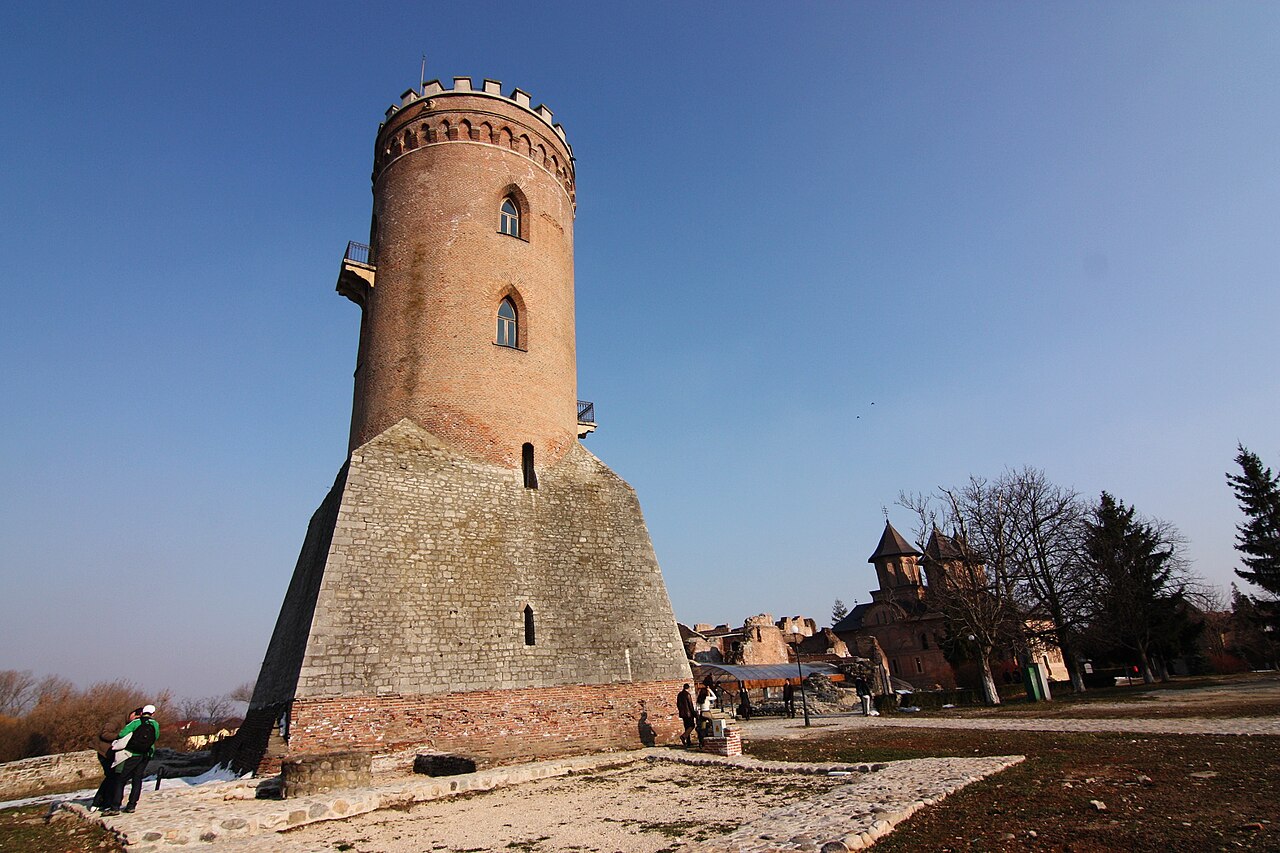
Chindia Tower and Princely Court, Târgoviște
Photo: Nicubunu · CC BY-SA 3.0 via Wikimedia Commons

Stop 8 · Dâmbovița

Chindia Tower and Princely Court, Târgoviște

The Dracula link

Historical Vlad, and the seat of his power. Târgoviște was his main court. Mehmed II marched in at the end of June 1462 to find the forest of impaled corpses outside the city, a number reported as more than 23,000. Tradition says he impaled disloyal boyars after a feast here, a story better treated as legend than record.

The real history

Târgoviște was the capital of Wallachia from 1396 to 1714. The tower was begun in the second half of the 15th century, during Vlad's second reign, but it took its present form when Gheorghe Bibescu restored it between 1847 and 1851 and added 5 metres to its height. So much of what you see is 19th century.

When you visit

The tower and the court ruins are run together by the National Museum Curtea Domnească, and the tower holds an exhibition on Vlad. Check opening times before going. The ruins of the palace lie around the tower.

Day 7: Snagov and Bucharest

75 miles driving. Stay: Bucharest

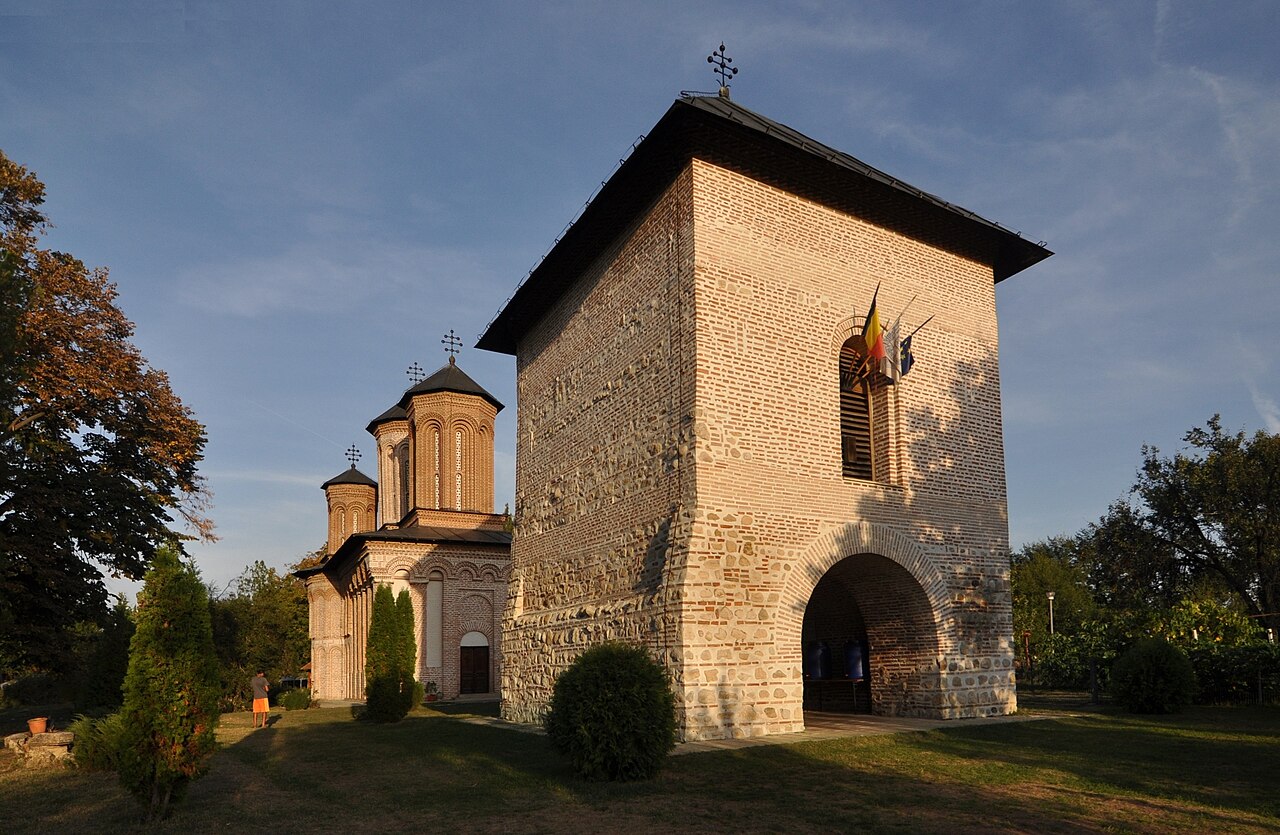
Snagov Monastery
Photo: fusion-of-horizons (changes by Rabanus Flavus) · CC BY 2.0 via Wikimedia Commons

Stop 9 · Ilfov

Snagov Monastery

The Dracula link

Historical Vlad, and the disputed grave. Tradition says monks buried him here after his death around the end of 1476. Excavations in 1933 and 1934 found the tomb before the altar empty. Stoker's novel has no link here.

The real history

The monastery is first documented in 1408, before Vlad was born, so he did not found it, though he may have built here. In the 1690s and after it was a major printing centre, producing books in Romanian, Greek, Arabic and Georgian. It stands on an island in Lake Snagov.

When you visit

A pedestrian bridge from Siliștea Snagovului crosses to the island, built in 2009 to replace one lost in 1821. It is a working monastery, so dress and behave accordingly. A plaque marks the presumed grave, which you should treat as a tradition, not a fact.

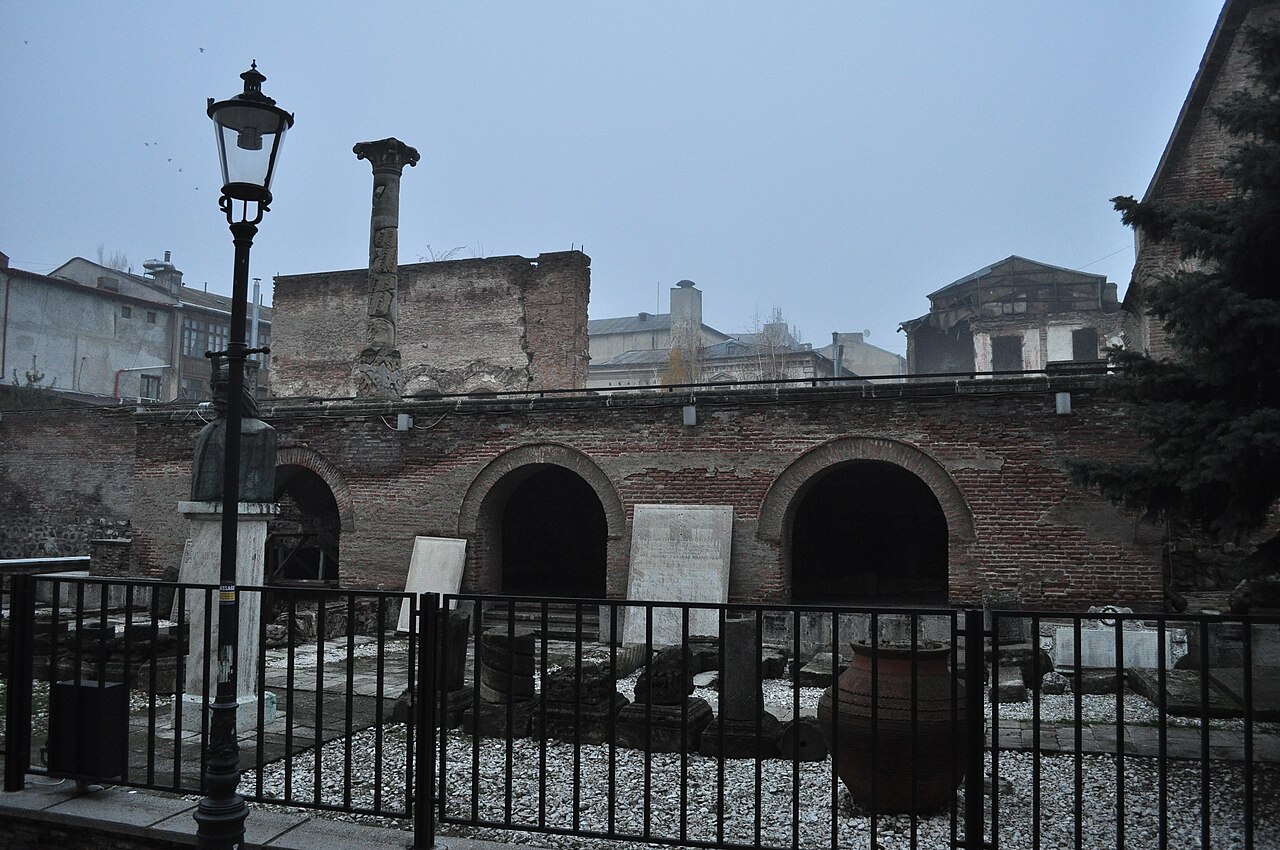
Old Princely Court, Bucharest
Photo: Joe Mabel · CC BY 3.0 via Wikimedia Commons

Stop 10 · Bucharest

Old Princely Court, Bucharest

The Dracula link

Historical Vlad. On 20 September 1459 he signed the oldest known document to name Bucharest, so the city's written history begins with him. He built a court here, one of his main residences alongside Târgoviște. Local lore says prisoners were held below the palace.

The real history

The remains were excavated and the museum set up in 1972. What survives is low walls and foundations beside the Old Court Church of 1559. The dungeon stories are lore, not record.

When you visit

The site is in the Old Town, and recent reports say it has been closed for restoration, so check before you go. Street views of the ruins and church are still worth a stop if it is shut. Avoid driving into the Old Town and park nearby.

Day 8: Comana, the other grave

23 miles driving. Stay: Bucharest

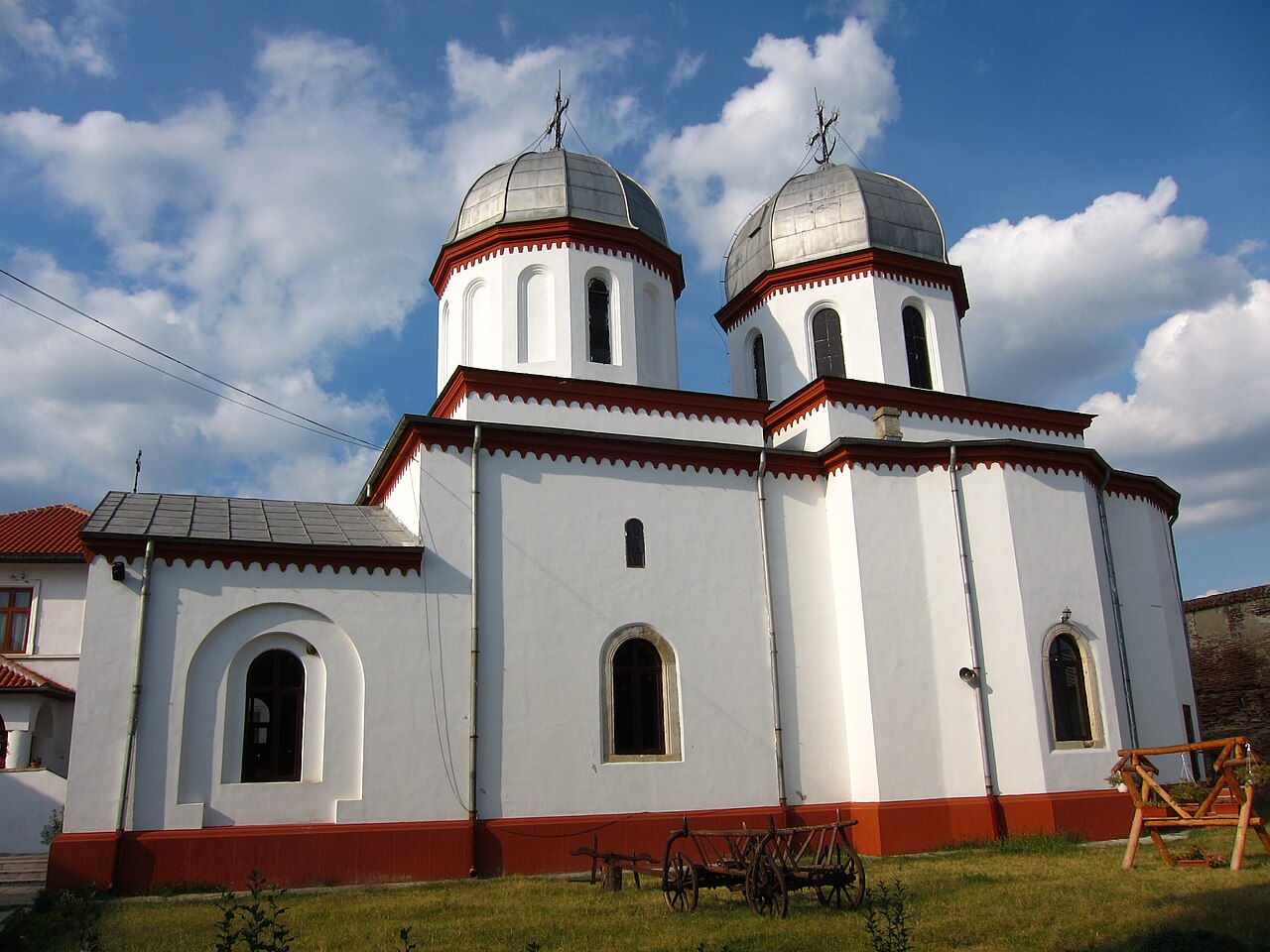
Comana Monastery
Photo: Radu Ana Maria · CC BY-SA 3.0 via Wikimedia Commons

Stop 11 · Giurgiu

Comana Monastery

The Dracula link

Historical Vlad, and the other candidate for his grave. He founded a fortified monastery here in 1461. Historian Constantin Rezachevici argues he was buried here, near his last battle, and excavations in the 1970s found a headless skeleton. Nothing has been proven, and sources disagree on how strong the case is.

The real history

Vlad's church did not survive, as the monastery was demolished and rebuilt in 1589 by Radu Șerban and restored between 1699 and 1703 under Șerban Cantacuzino. Foundations of the original were found in 1861. The buildings you see are later than Vlad.

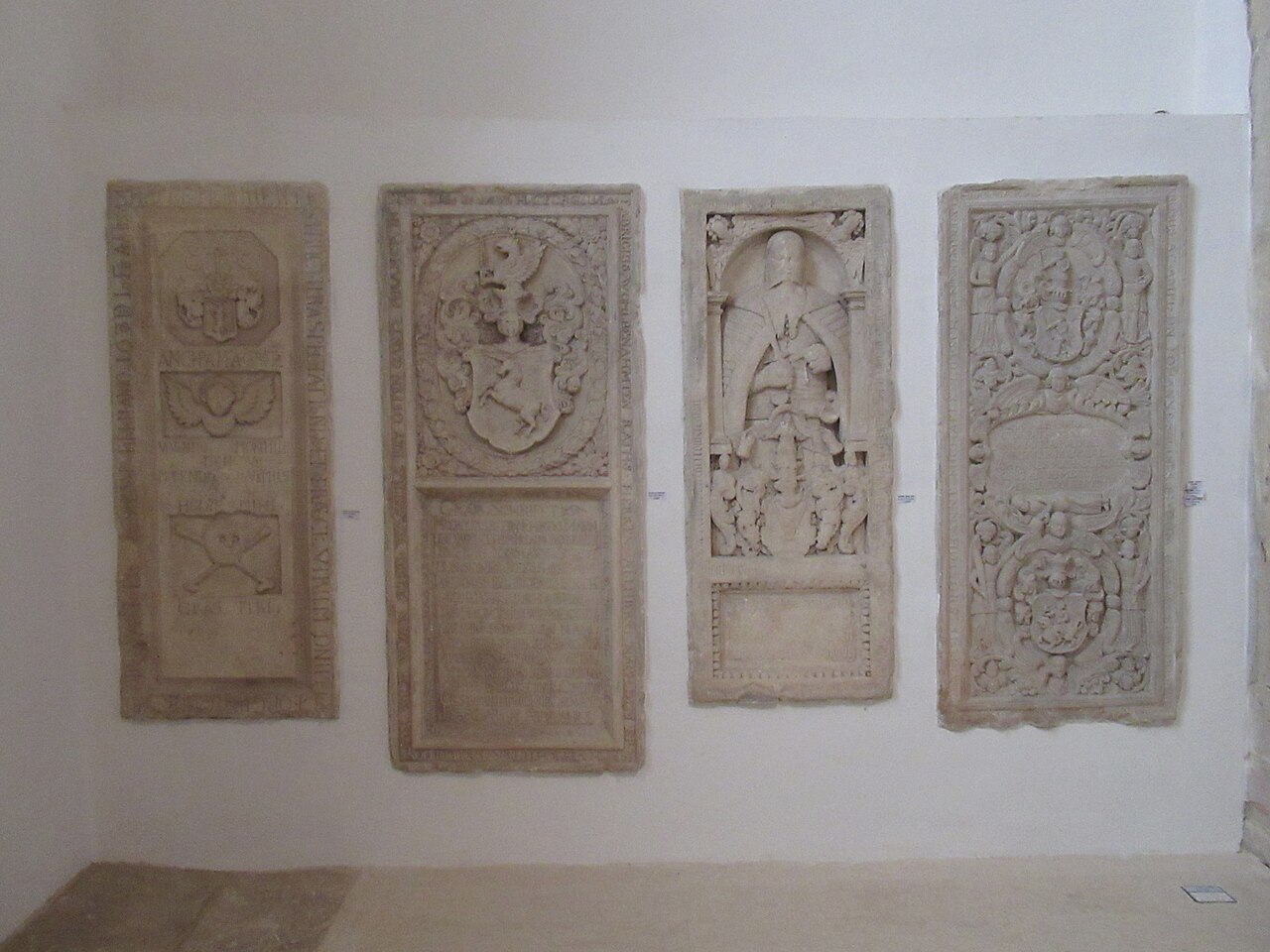
When you visit

It is a working monastery about 23 miles south of Bucharest, so dress and behave accordingly. There is no confirmed grave to see, and the case for Comana remains unproven.

You will unlock the Dracula's Trail Explorer badge

  1. Plan the trip

    Add this tour to your account. All 11 stops go in for you.

  2. Drive the trip

    Record your drives in the PYRT app and reach each stop. Any order is fine, and it can take more than one trip.

  3. Get the badge

    Reach the last stop and the Dracula's Trail Explorer badge is yours.

What we left out, and why

Bran Castle as Dracula's home

Bran is on this route because everyone goes, but the name Dracula's Castle does not stand up. Most historians agree Vlad never lived there, and the novel never mentions it. The castle's own site claims a two month imprisonment in 1462 and that the castle matches Stoker's description, suspecting an illustration in Charles Boner's book as his source, but it calls this a suspicion. Stoker put his castle far to the north, beyond the Borgo Pass, about 120 miles away.

Corvin Castle, Hunedoara

Tourists are told Vlad was held in the dungeons here for years. No good historical support turned up. Wikipedia's only citation for the claim is a travel site, and accounts place his long captivity under Matthias Corvinus at Visegrád in Hungary, from 1463 to 1475. It is a fine castle but not a Dracula site.

The Transfăgărășan over the Făgăraș mountains

Poenari is on this road, so it is tempting to drive it from Sibiu. The high section is closed for most of the year. Its 2026 season ran from 12 June to 28 October, and the normal window is about July to October, with dates set each year by the weather. The southern approach to Poenari stays below the high section, so this route goes via Câmpulung. If you travel in season, it is a good detour, but it adds a long day.

Stoker's Romanian research trip

Stoker never visited Romania. He researched in libraries, and the London Library has confirmed 26 books he used. He found the name Dracula in William Wilkinson's book while on holiday in Whitby in 1890. His notes do not name Vlad the Impaler, only hint at a 15th century prince who crossed the Danube, so the popular idea that the Count is simply Vlad is too neat.

Common questions

Did Bram Stoker ever go to Romania?

No. Stoker never travelled to Eastern Europe. He worked from books and maps, and found the name Dracula during a holiday in Whitby in 1890.

Was Count Dracula based on Vlad the Impaler?

Only loosely. Stoker took the name, and the novel's voivode who crossed the Danube and beat the Turk echoes Vlad, but his notes do not name Vlad. The vampire is Stoker's invention.

Did Vlad the Impaler live in Bran Castle?

Most historians say no. The castle's own site suggests he may have been a prisoner there for two months in 1462, but that is presented with hedging and is not generally accepted.

Where is Vlad the Impaler buried?

Nobody knows. Snagov Monastery is the tradition, but the supposed grave was found empty in the 1930s. Comana Monastery, which he founded, is the other candidate.

Is the Transfăgărășan open all year?

No. The high section is usually open from about the start of July to the end of October, sometimes from June. In 2026 it opened on 12 June and closed on 28 October. Check Romanian road notices before relying on it.

Can you visit Poenari Castle?

Yes, by climbing 1,480 steps. Bears have closed it several times, and in 2025 visits were limited to groups at set times, so check with the Argeș County Museum before you go.