Steam train crossing Glenfinnan Viaduct

Driving tours · Unofficial guide

D-Day beaches of Normandy road trip

Photo: Myrabella · CC BY-SA 3.0 via Wikimedia Commons
Length
3 days
Distance
95 miles
Driving
About 3 hours
Stops
12

This route follows the Normandy coast from Pegasus Bridge, where the first British troops landed by glider, to Sainte-Mère-Église, where American paratroopers came down in the dark. It passes all five landing beaches in geographic order. The drive is about 95 miles, spread over three days, with short hops between the stops.

About 156,000 Allied troops landed by sea and air on 6 June 1944. Research by the US National D-Day Memorial Foundation found that 4,436 of them were killed that day. Four of the twelve stops are cemeteries or memorials to the dead, and the route includes the German cemetery at La Cambe as well as the Allied ones. Each stop below says what happened there and what to know before you go.

Best time to go: April to October. The Commonwealth War Graves Commission suggests April, May or September for quieter visits, as June is busy with anniversary events.

How it works

  1. 1

    Add your starting point

    Tell us where you are setting off from. A date is optional.

  2. 2

    Save it to your account

    Every stop goes into a trip that you can change however you like.

  3. 3

    Take it on your phone

    Open the PYRT app with the same account and navigate from stop to stop.

The route, day by day

Day 1: Pegasus Bridge to Gold Beach

21 miles driving. Stay: Arromanches-les-Bains

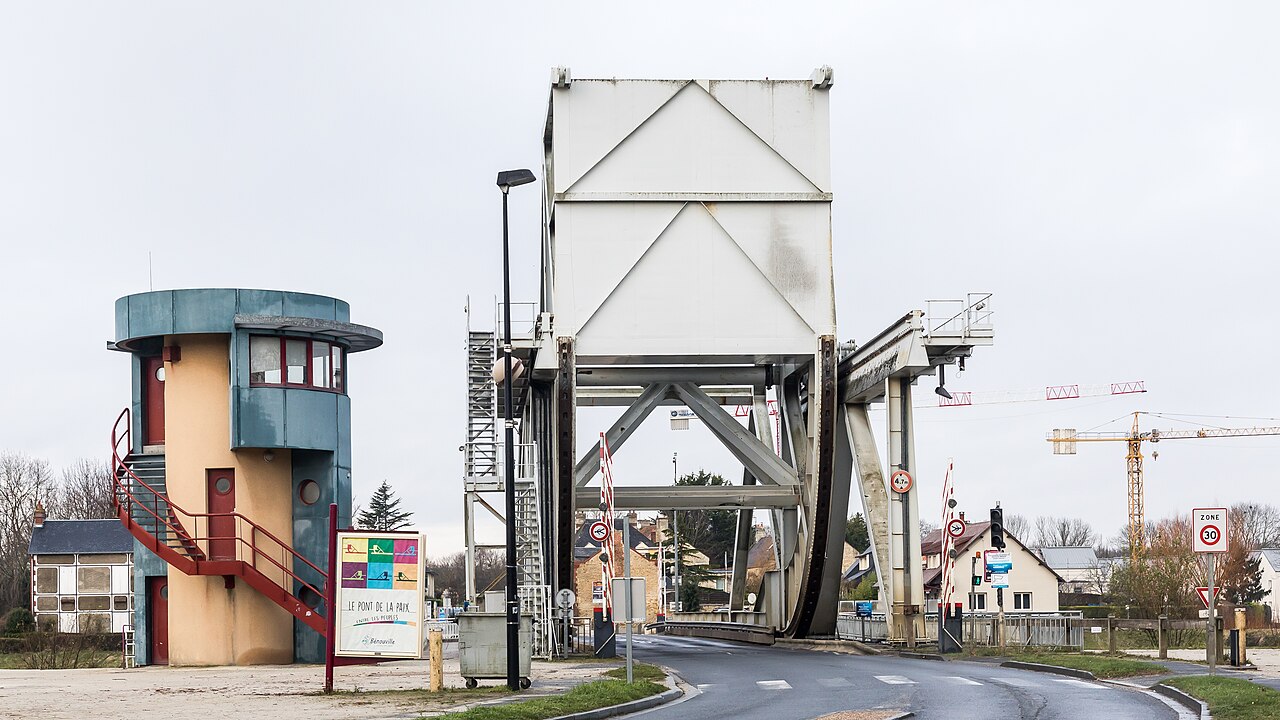
Pegasus Bridge and Memorial Pegasus
Photo: Raimond Spekking · CC BY-SA 4.0 via Wikimedia Commons

Stop 1 · Bénouville and Ranville, Calvados

Pegasus Bridge and Memorial Pegasus

On D-Day

Just after midnight, six Horsa gliders carried 181 men under Major John Howard to the bridges over the Caen Canal and the River Orne. Five of the gliders landed as planned, and the bridges were taken in about 10 minutes. Lieutenant Den Brotheridge was shot leading the attack on the canal bridge and died of his wounds. He is often described as the first Allied soldier killed by enemy fire on D-Day.

The real history

The canal bridge took the name Pegasus from the winged horse emblem of the British airborne forces. Commandos who had landed on Sword Beach reached it soon after 1pm. The original span was replaced in 1994 by one of the same design and now stands in the grounds of the Memorial Pegasus, between the two crossings.

When you visit

The bridge still lifts for boats on the canal, so expect a short wait at times. The Memorial Pegasus is across the water on the Ranville side, so check its opening dates before you go. Brotheridge is buried in Ranville churchyard, close to the Orne crossing.
Stop 2 · Colleville-Montgomery, Calvados

Sword Beach and the Piper Bill Millin statue

On D-Day

The British 3rd Infantry Division landed here at 7.25am, on the most easterly of the five beaches. Almost 29,000 troops were ashore by nightfall, and the division had 630 killed, wounded or missing that day. Lord Lovat's commandos landed near Colleville, with Piper Bill Millin playing as they came ashore, then pushed inland to the bridges.

The real history

Sword runs about 5 miles from Lion-sur-Mer to Ouistreham. Millin carried his pipes and a small knife in his hose, and no other weapon. His life-size bronze statue was unveiled at Colleville-Montgomery on 8 June 2013. Caen, about 9 miles inland, was not in British hands until the end of July.

When you visit

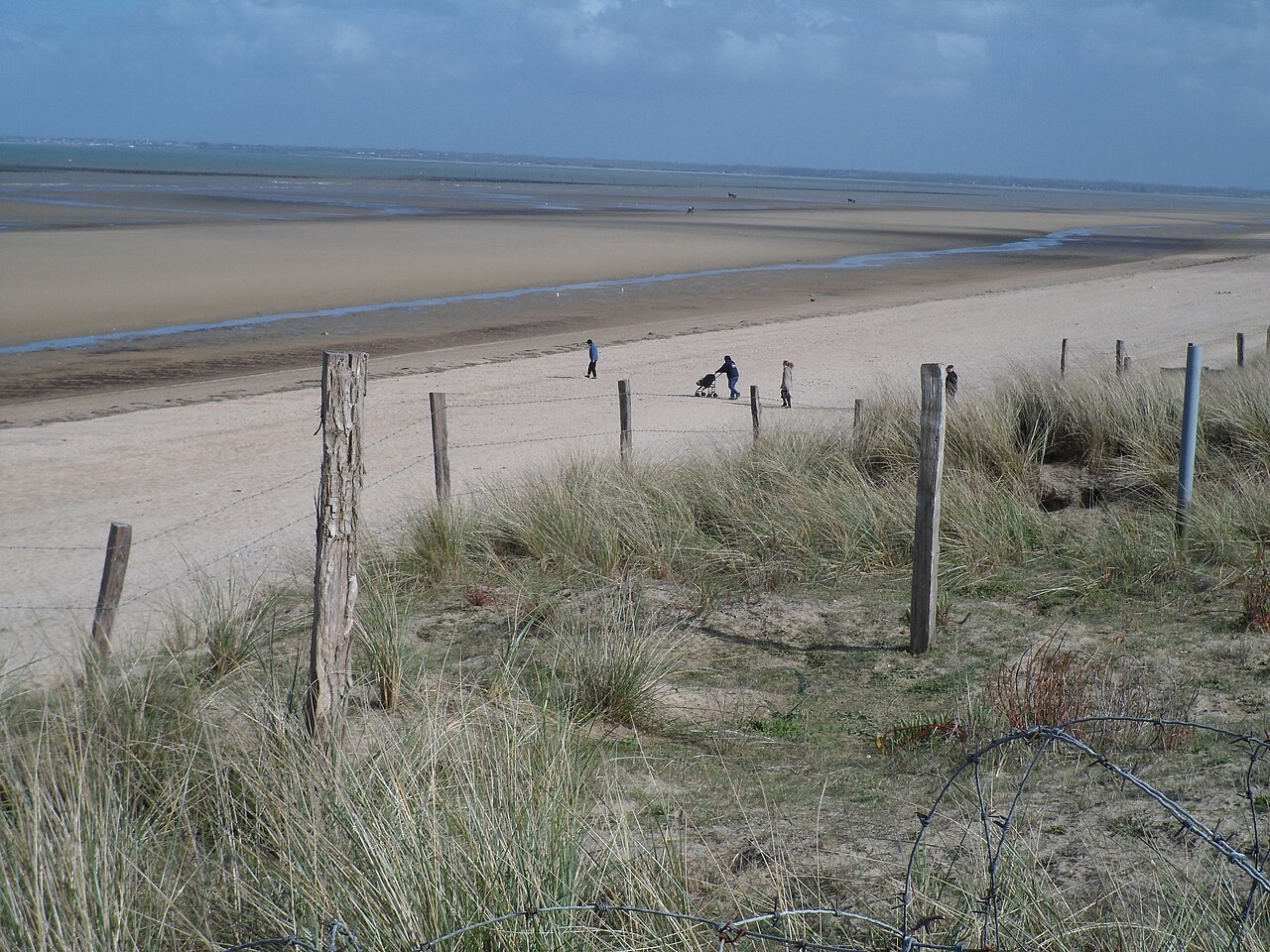
The beach is public and holidaymakers use it today, alongside what is left of the Atlantic Wall. Hermanville War Cemetery, with just over 1,000 graves, is less than a mile inland and worth the short detour. Ouistreham, at the eastern end of the beach, is the Portsmouth ferry port.

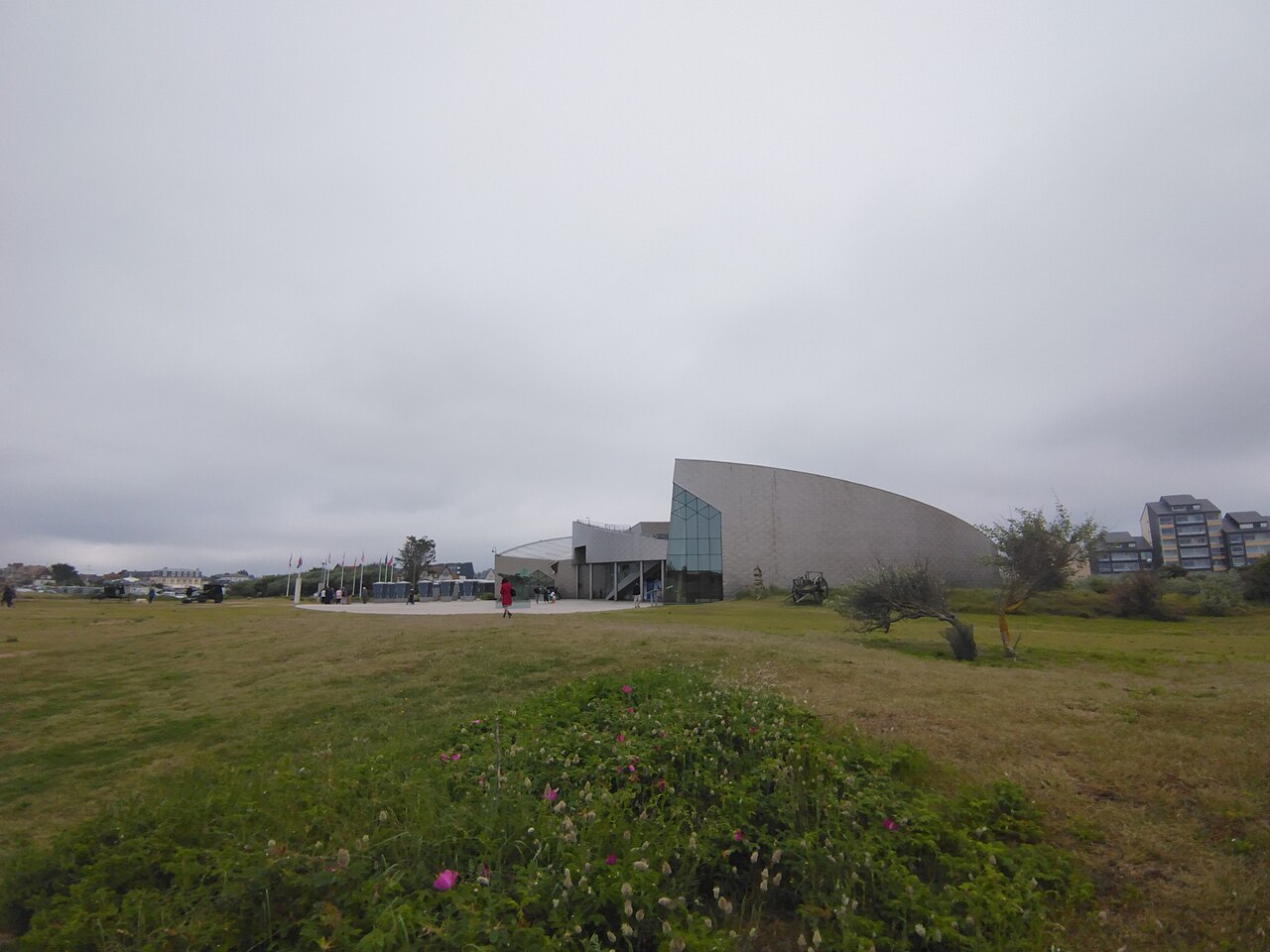
Juno Beach Centre
Photo: remiforall · CC BY-SA 4.0 via Wikimedia Commons

Stop 3 · Courseulles-sur-Mer, Calvados

Juno Beach Centre

On D-Day

The 3rd Canadian Division landed around Courseulles at about 7.55am, delayed by the tide and by offshore reefs. About 30 per cent of the landing craft were damaged or destroyed, many by mines, and the first wave came under heavy fire. Of 21,400 men landed, about 1,200 became casualties, 340 of them killed. By nightfall the Canadians had advanced further inland than any other Allied force that day.

The real history

The centre stands on the site of a strongpoint the Canadians had to clear on the morning of 6 June. It opened in 2003 and tells the story of Canada's war, including the more than one million Canadians mobilised during it. Bény-sur-Mer Canadian War Cemetery, a few miles inland, holds over 2,000 graves.

When you visit

Check the centre's opening dates before you go. The beach and dunes in front of it can be walked freely. Allow time for Bény-sur-Mer if you have a Canadian connection.

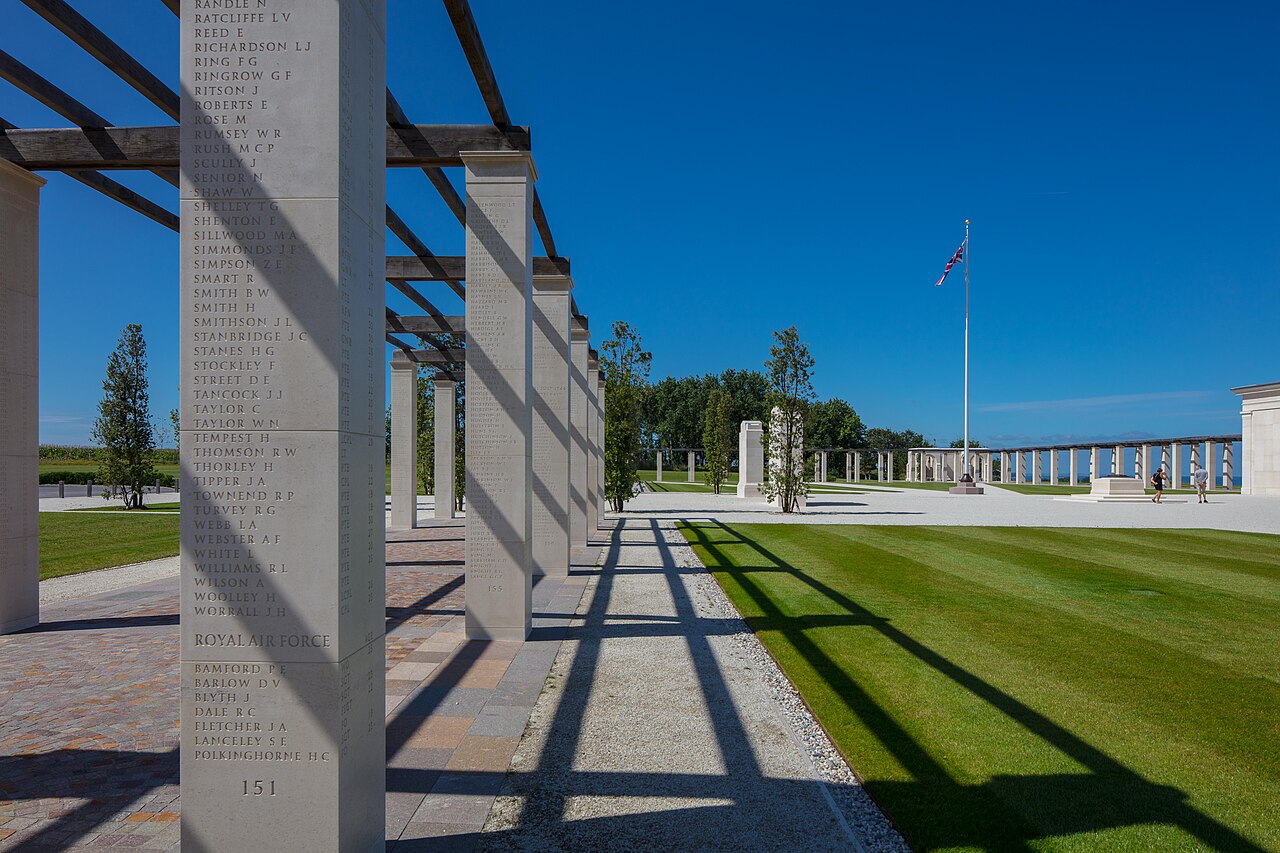
British Normandy Memorial
Photo: Lightandshady · CC BY-SA 4.0 via Wikimedia Commons

Stop 4 · Ver-sur-Mer, Calvados

British Normandy Memorial

On D-Day

The memorial stands on the rise of Mont Fleury above Gold Beach, assaulted by the British 50th (Northumbrian) Division from 7.25am. Company Sergeant Major Stanley Hollis of the Green Howards attacked German positions here that morning, and received the only Victoria Cross awarded for D-Day.

The real history

It carries the names of the men and women who died under British command on D-Day and through the Battle of Normandy, more than 22,000 in all. They are cut into 160 stone columns in the order of their deaths, so those who fell on the same day stand together. British veterans chose this site, and it was inaugurated on 6 June 2021. Merchant seamen are also named.

When you visit

The memorial is open all year and free, with a charge for the car park. Approach along the D514 coast road, from Courseulles or from Arromanches, as roadworks closed the main road through the village in 2026 and may still affect your route. A free app helps you find a name.

Day 2: Arromanches, Bayeux and Longues

18 miles driving. Stay: Port-en-Bessin-Huppain

Arromanches and the Mulberry harbour
Photo: Andy Li · CC0 via Wikimedia Commons

Stop 5 · Arromanches-les-Bains, Calvados

Arromanches and the Mulberry harbour

On D-Day

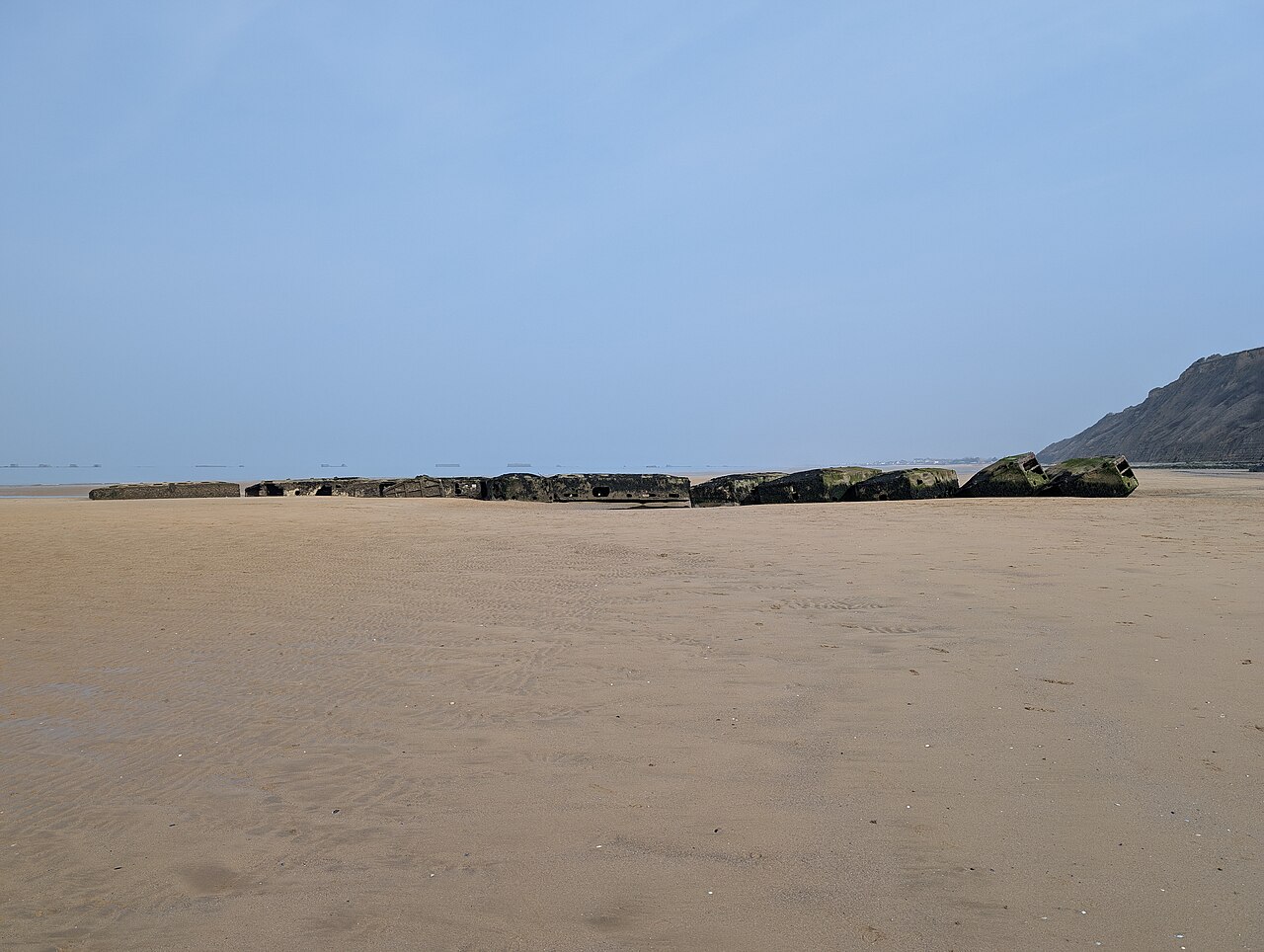
British 50th Division troops took Arromanches on 6 June, and the next day work began on sinking old ships to form a breakwater. Prefabricated concrete caissons followed, towed across the Channel. The first floating roadway was working by 14 June, and the harbour became known as Port Winston.

The real history

Two harbours were built, and the Dieppe raid of 1942 was the reason: it showed how costly it was to attack a defended port. A storm from 19 to 22 June wrecked the American harbour off Omaha, and parts of it were used to repair this one, which stayed open until November 1944. Liberation Route Europe calls it a technical feat that was ultimately unnecessary and very costly, as much also came through smaller ports and over the beaches.

When you visit

Sections lie on the sand and more can be seen out to sea. If you walk out to them, check the tide times first and watch for the incoming water. The Musée du Débarquement, on the seafront, explains how the harbour worked.

Bayeux War Cemetery and Memorial
Photo: DennisPeeters (talk) · Public domain via Wikimedia Commons

Stop 6 · Bayeux, Calvados

Bayeux War Cemetery and Memorial

On D-Day

The British did not reach the Caen to Bayeux road on 6 June, though Bayeux itself saw little fighting and became the first significant French town to be liberated. The cemetery did not exist yet. The men of No. 32 Grave Registration Unit marked it out on 1 July 1944, and about 500 of those buried here died on D-Day.

The real history

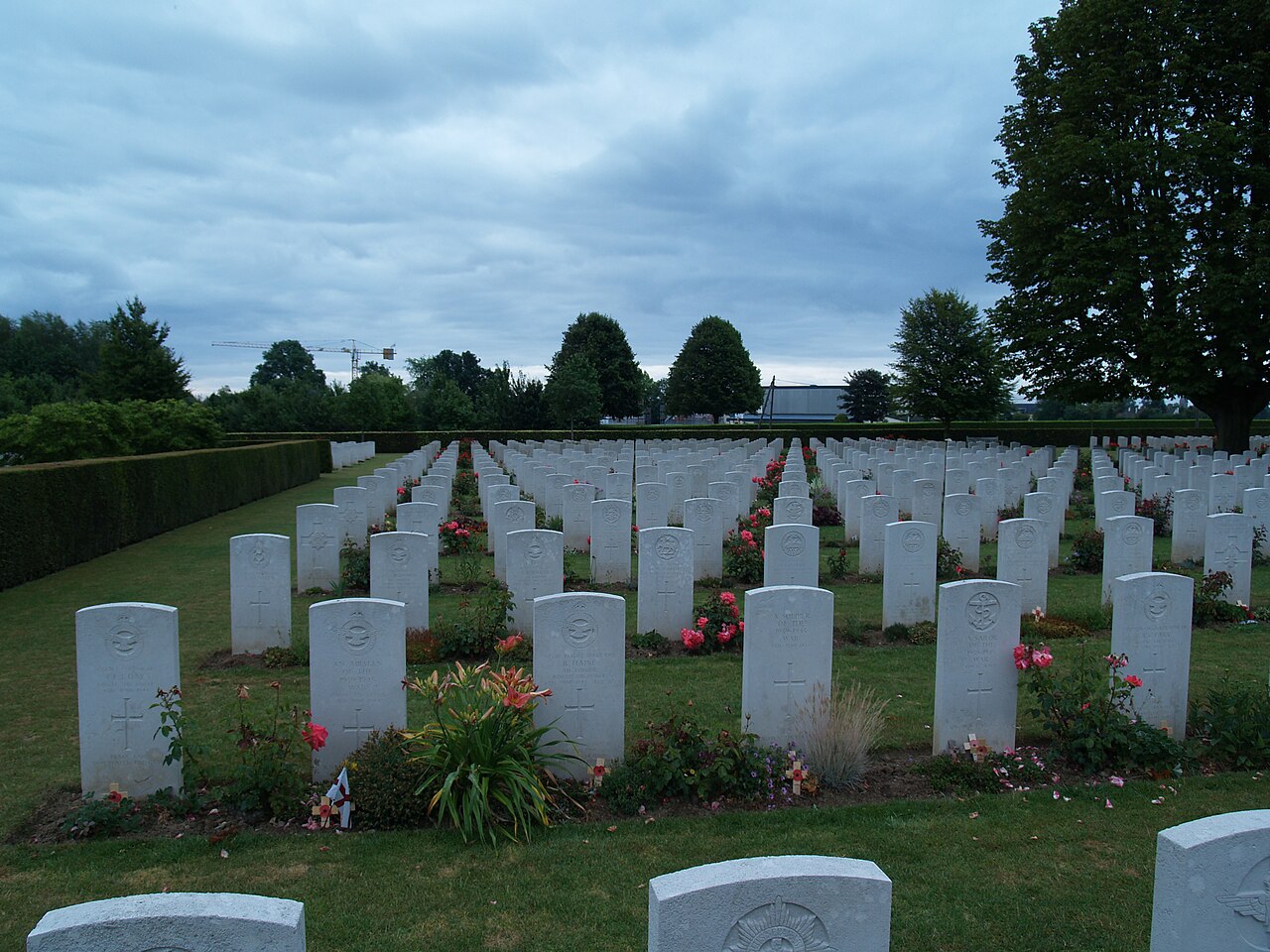
This is the largest Commonwealth cemetery of the Second World War in France, with 4,144 Commonwealth burials, 338 of them unidentified, and over 500 graves of other nationalities, mostly German. Across the road, the Bayeux Memorial names more than 1,800 men of the Commonwealth land forces who have no known grave. It was unveiled by the Duke of Gloucester on 5 June 1955.

When you visit

The cemetery is always open, but you cannot park in front of it. Use the car park at the Musée de la Bataille de Normandie, about 300 metres away. CWGC asks visitors not to sit, stand or climb on headstones or memorials, not to walk on graves or plant borders, to fix nothing to a headstone, and to take litter away. Fresh flowers and poppy crosses are acceptable.

Longues-sur-Mer battery
Photo: Zairon · CC BY-SA 4.0 via Wikimedia Commons

Stop 7 · Longues-sur-Mer, Calvados

Longues-sur-Mer battery

On D-Day

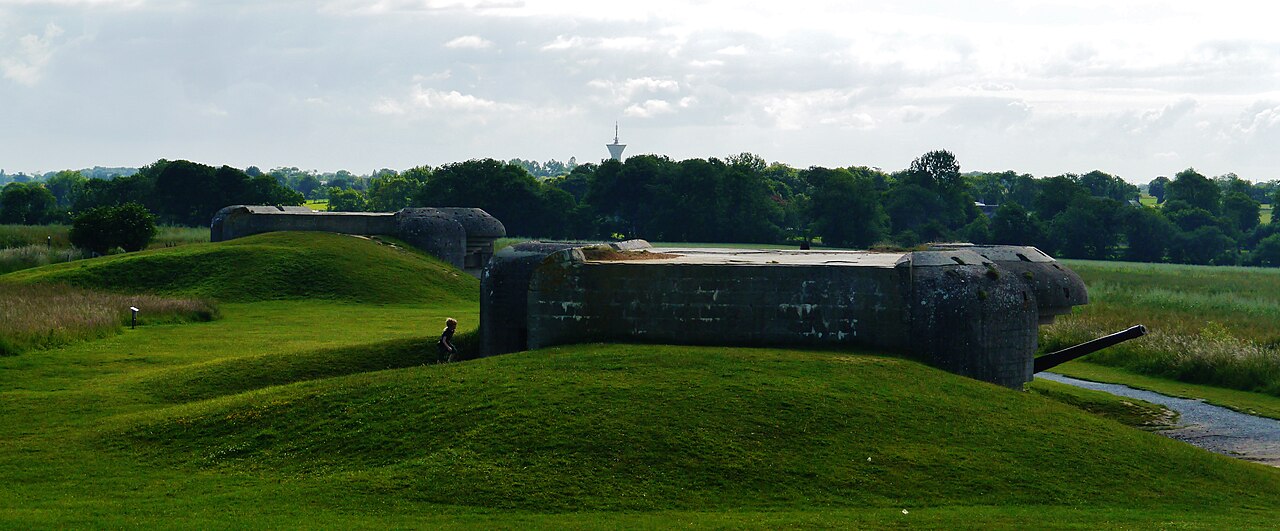
Four German naval guns of 15 cm in concrete casemates faced the fleet between Gold and Omaha. The cruiser HMS Ajax opened fire at 5.37am and the battery replied about half an hour later, firing over 100 rounds that day. It was fought to a standstill by British, French and American ships, and accounts differ on which ship did the most damage.

The real history

The garrison of 184 men surrendered to C Company of the 2nd Battalion, the Devonshire Regiment, on 7 June, after a second air attack. Naval guns are still in the casemates. The site has been a listed historical monument since 2001.

When you visit

The site is owned by the Conservatoire du littoral and you can walk around the casemates. Please keep to the paths and do not climb on the structures.

Day 3: Omaha, Pointe du Hoc and Utah

55 miles driving. Stay: Sainte-Mère-Église

Normandy American Cemetery, overlooking Omaha Beach
Photo: Myrabella · CC BY-SA 3.0 via Wikimedia Commons

Stop 8 · Colleville-sur-Mer, Calvados

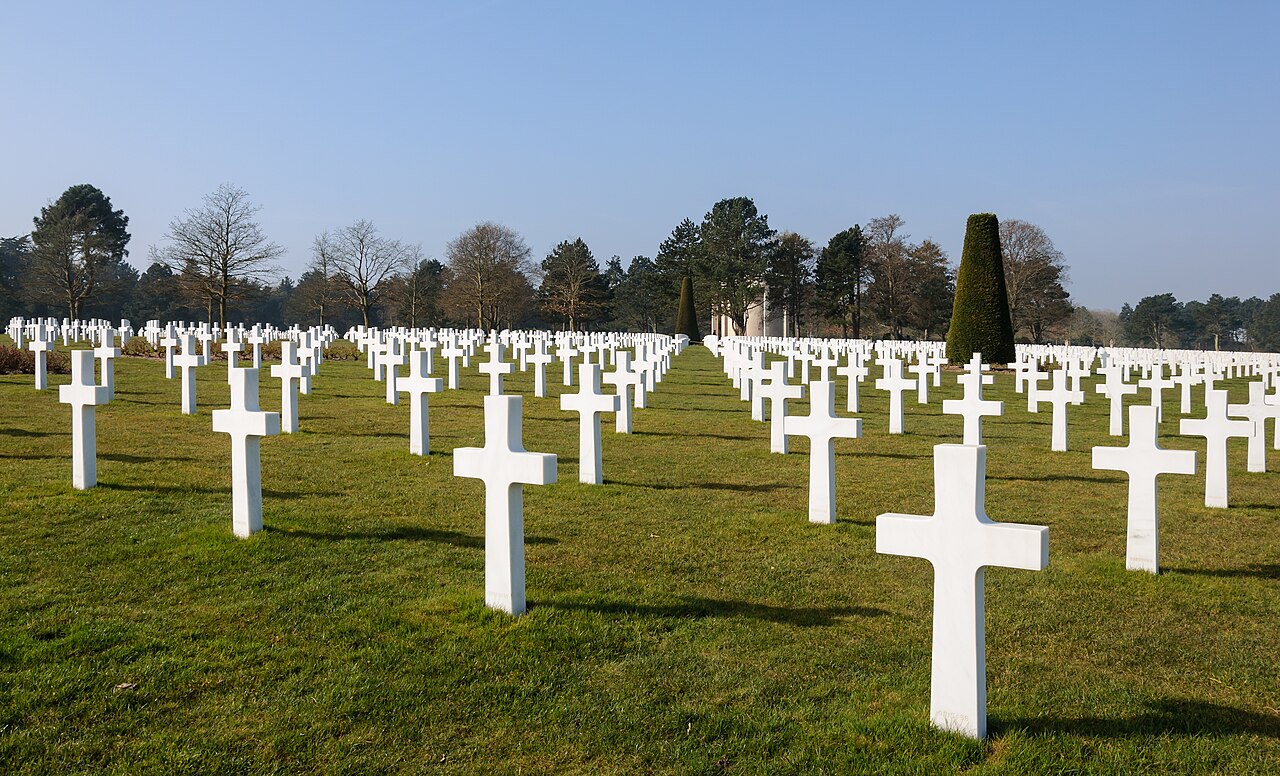
Normandy American Cemetery, overlooking Omaha Beach

On D-Day

The US 1st Infantry Division began landing on Omaha at 6.30am. Rough seas pushed craft off course, and by 8.30am the landings had stopped, with men sheltering behind the beach obstacles until small groups climbed the bluffs. Destroyers fired on the German positions at close range. The US Army lists about 34,000 men landed that day and about 2,400 American casualties.

The real history

The cemetery covers 172.5 acres and holds 9,389 American war dead. The Walls of the Missing carry 1,557 names. An orientation table overlooking the beach shows the landings, and the visitor centre was dedicated on 6 June 2007.

When you visit

Open daily except 25 December and 1 January, and free, with no booking at present. The American Battle Monuments Commission describes the site as a sacred burial ground and asks visitors to behave with respect and solemnity. The path down to the beach has been closed for security since 2016; public access to Omaha Beach is nearby. The flag is lowered one hour before closing.

Pointe du Hoc
Photo: Jebulon · CC0 via Wikimedia Commons

Stop 9 · Cricqueville-en-Bessin, Calvados

Pointe du Hoc

On D-Day

Three companies of the 2nd Ranger Battalion under Lt Col James Rudder were ordered to land at 6.30am, climb 100 foot cliffs and disable German 155mm guns that could reach Omaha and Utah. They were delayed and started up the cliffs at about 7.10am. By 9.30am they had found the guns, moved inland from their prepared positions, and destroyed them. After two days of counterattacks only about 90 Rangers were still standing when relief arrived.

The real history

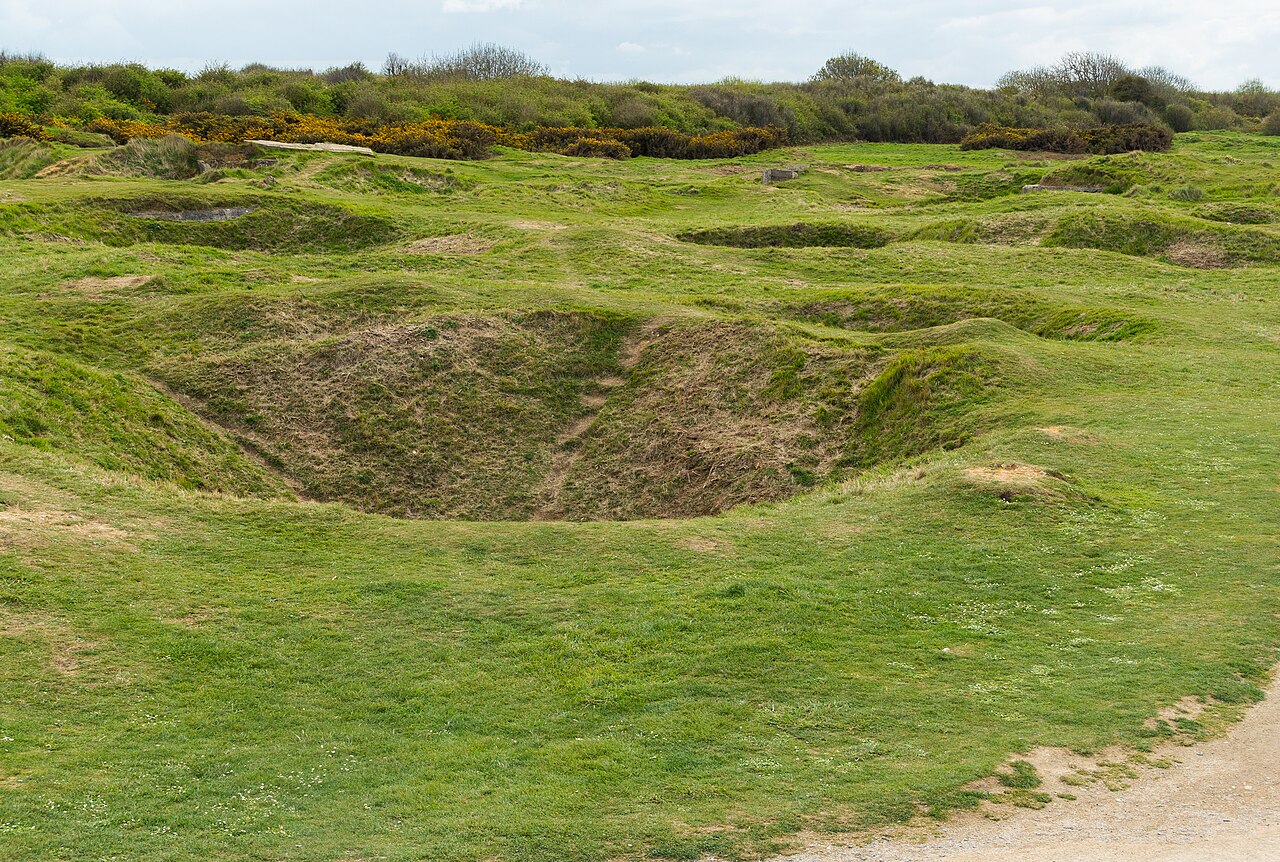
The ground is still cratered from the bombardment, which began at 5.50am and included the guns of USS Texas. The granite pylon on top of a German bunker was put up by the French, who passed the site to the American Battle Monuments Commission on 11 January 1979.

When you visit

A major restoration runs until mid 2027. The visitor centre and parts of the site are closed, some car parks are shut, and access is limited to marked routes, so check the latest notice before you go. Stay on the path: the commission warns of bomb craters and uneven ground, and asks for respect and solemnity here too.

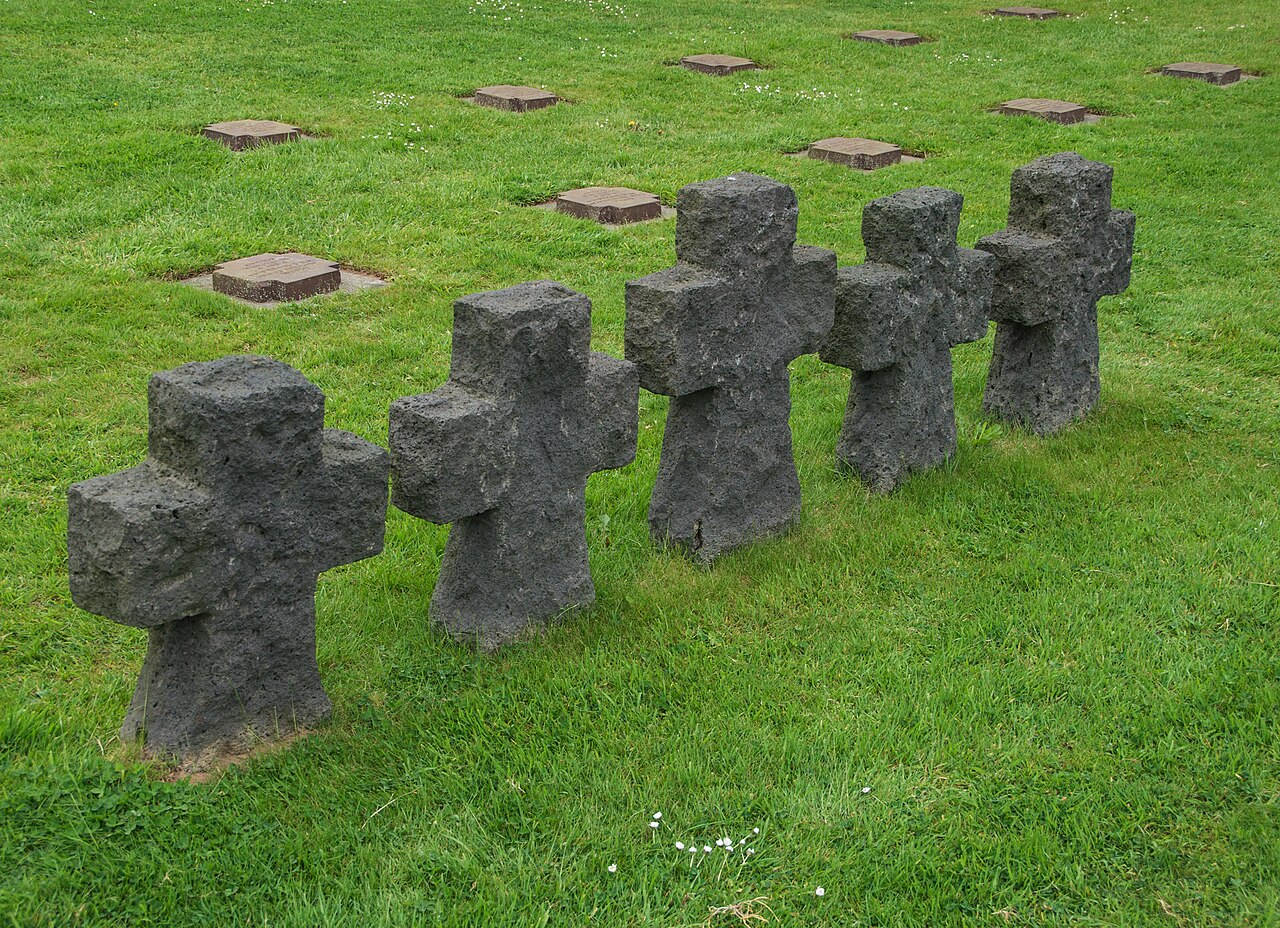
La Cambe German War Cemetery
Photo: Jebulon · CC0 via Wikimedia Commons

Stop 10 · La Cambe, Calvados

La Cambe German War Cemetery

On D-Day

La Cambe was inland behind the American beaches. During the fighting that followed the landings, the American graves service set up two large burial grounds here for American and German dead. After the war the American dead were moved to St Laurent, about 9 miles away.

The real history

The Volksbund, the German war graves commission, took over and the site was dedicated on 21 September 1961. It holds 21,245 German soldiers, some in a central burial mound. Among them are members of the SS, including Michael Wittmann. The Volksbund notes that over 100,000 people died in the Normandy fighting, at least 14,000 of them French civilians.

When you visit

The cemetery is just off the N13 and has an information centre and a Peace Park of 1,200 maples, opened in 1996. The site is step-free. The same respect applies here as at any other cemetery on this route.

Utah Beach Landing Museum
Photo: Xfigpower · CC BY-SA 3.0 via Wikimedia Commons

Stop 11 · Sainte-Marie-du-Mont, Manche

Utah Beach Landing Museum

On D-Day

The US 4th Infantry Division landed from 6.30am, about 2,000 metres from the planned place, because of currents and smoke. Brigadier General Theodore Roosevelt Jr, ashore with the first wave, is recorded as deciding: "We'll start the war from right here." The ground proved lightly defended. The US Army lists 167 casualties, the lowest figure of the five beaches.

The real history

The museum, first opened in 1962, stands on the site of the German strongpoint at La Madeleine and was extended and reopened in 2011. Its centrepiece is a Martin B-26 Marauder bomber. A monument to the 1st Engineer Special Brigade was dedicated at La Madeleine on 11 November 1944, and is described as the first war memorial on the landing beaches.

When you visit

Check the museum's opening dates before you go. The beach in front of it is public. The low ground behind the dunes could be flooded, which is why the airborne troops were sent to clear the beach exits inland.

Sainte-Mère-Église
Photo: Jebulon · CC0 via Wikimedia Commons

Stop 12 · Manche

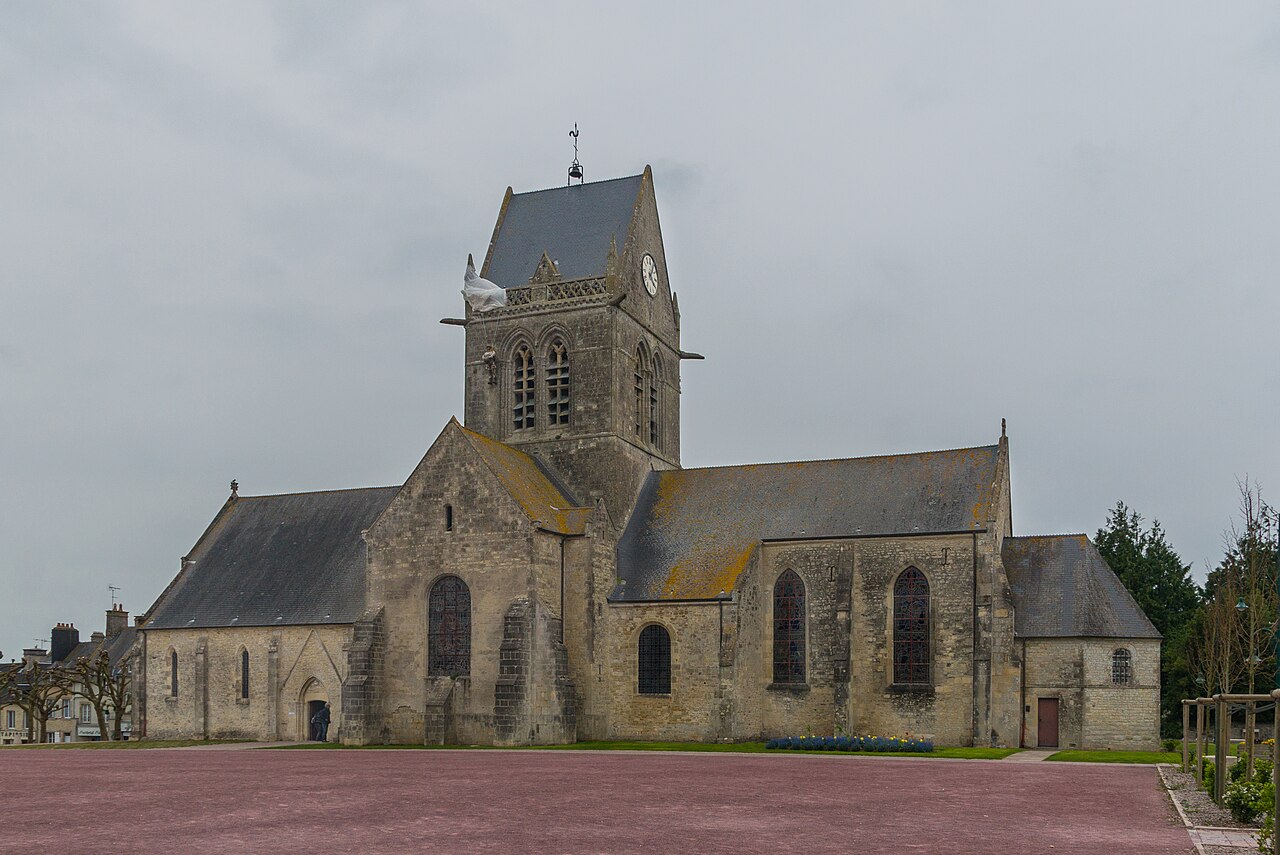
Sainte-Mère-Église

On D-Day

Paratroopers of the 82nd Airborne Division dropped around the town in the early hours. The US Army records it as liberated at about 4.30am, with fighting nearby until 7 June. Private John Steele's parachute caught on the church steeple. Shot in the foot, he hung there for about two hours, feigning death, before German soldiers cut him down and took him prisoner.

The real history

A uniformed mannequin now hangs from the steeple in Steele's memory. Inside the church, a stained glass window designed in 1945 by Paul Renaud, who was 14 when the paratroopers landed, shows the Virgin and Child above the burning town. A second window, given in 1972 by veterans of the 505th Parachute Infantry Regiment, shows Saint Michael.

When you visit

The Airborne Museum is opposite the church, and covers the 82nd and 101st Airborne Divisions. Check its hours before you go. The church is a working parish church, so keep quiet during services.

You will unlock the Normandy Landings Route badge

  1. Plan the trip

    Add this tour to your account. All 12 stops go in for you.

  2. Drive the trip

    Record your drives in the PYRT app and reach each stop. Any order is fine, and it can take more than one trip.

  3. Get the badge

    Reach the last stop and the Normandy Landings Route badge is yours.

What we left out, and why

Merville Battery

The German battery east of the Orne was attacked in the early hours of D-Day by the 9th Parachute Battalion. Lt Col Terence Otway could gather only about 150 of his roughly 700 men after the scattered drop, and CWGC records 50 killed and 25 wounded in about 20 minutes of fighting. It is a serious site but lies beyond the eastern end of this line, so it is a detour from Pegasus Bridge rather than a stop on it.

Café Gondrée as the first house liberated in France

The French heritage register describes the café beside Pegasus Bridge as the first house in France to be liberated. Historians Neil Barber and Marc Laurenceau conclude other buildings near the bridge were freed first, including the Picot café and a tramway station that no longer stands. So we mention the bridge and not the claim.

Saving Private Ryan at Omaha Beach

The landing scenes were shot at Curracloe in County Wexford, Ireland, as RTÉ's archive records. If you come to Omaha expecting the landscape of the film, it will look different.

The idea that the Rangers climbed Pointe du Hoc for nothing

It is often said the guns had gone and the assault was wasted. The American Battle Monuments Commission's account is that the Germans had moved the guns inland, and that the Rangers found and destroyed them on the morning of 6 June.

Common questions

How many days do you need for the D-Day beaches?

Three days allows time at each stop on this route. CWGC says two days is enough for the beaches themselves and advises against rushing.

Can you visit the D-Day beaches for free?

Yes. The beaches are public, and the cemeteries and the British Normandy Memorial are free to enter, though the memorial has a paid car park. Most museums on the route charge for entry.

How should you behave at a war cemetery in Normandy?

Quietly and respectfully. At Commonwealth sites do not sit, stand or climb on headstones or memorials, do not walk on graves or plant borders, attach nothing to a headstone, and take your litter away. American cemeteries ask for respect and solemnity, and the American Battle Monuments Commission calls them sacred burial grounds. Photography is allowed, but be mindful of other visitors, some of whom may be visiting a relative's grave.

Where is the best place to start a D-Day road trip?

From the UK, the Portsmouth ferry docks at Ouistreham, a few miles from Pegasus Bridge and at the eastern end of Sword Beach. From Cherbourg, start at Sainte-Mère-Église and drive the route in reverse.

Is Pointe du Hoc open?

Yes, but a restoration is under way until mid 2027. The visitor centre and parts of the site are closed and access is by marked routes only, so check the American Battle Monuments Commission's latest notice before you go.

How many soldiers died on D-Day?

Research by the US National D-Day Memorial Foundation found 4,436 Allied personnel were killed on 6 June 1944, as cited by The D-Day Story in Portsmouth. Older books often give about 2,500. German losses are estimated at 4,000 to 9,000 killed, wounded and captured.