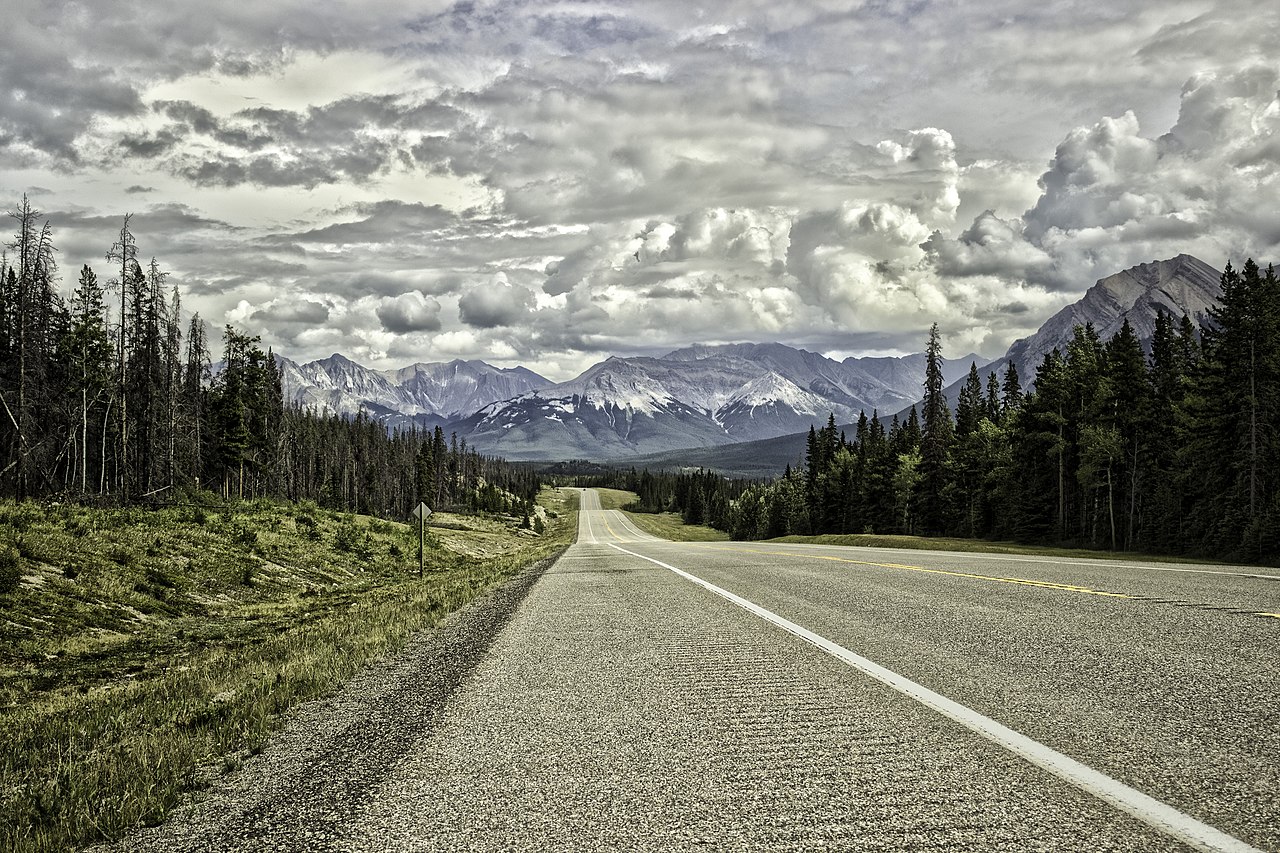
Asia is a continent of extremes, and its road trips reflect that magnificently. You can drive from sea level to over 4,500 metres in a single day, cross ancient trade routes that connected civilisations for millennia, or wind through rice terraces that have barely changed in centuries. The infrastructure varies wildly, from perfectly smooth Japanese expressways to barely-there mountain tracks in the Himalayas, but that range is precisely what makes Asian road trips so rewarding. Here are twelve drives that showcase the continent's staggering diversity.
1. Karakoram Highway, Pakistan to China
The Karakoram Highway (KKH) is often called the Eighth Wonder of the World, and driving it makes that claim feel like an understatement. Running 1,300 kilometres from Islamabad in Pakistan to Kashgar in China's Xinjiang province, it crosses the Kunjerab Pass at 4,693 metres, making it the highest paved international border crossing on Earth.
The highway follows ancient Silk Road trade routes through the Karakoram, Hindu Kush, and Pamir mountain ranges. The Pakistani section is the most dramatic, passing through the Hunza Valley where apricot blossoms frame views of Rakaposhi (7,788 metres) and Ultar Sar (7,388 metres). The road was blasted through some of the most geologically active terrain on the planet, and landslides are a regular occurrence.
Key stops on the KKH
- Besham - Gateway to the Karakoram, where the Indus River thunders through a deep gorge
- Chilas - Ancient petroglyphs scattered across rocks along the roadside, some dating back 10,000 years
- Karimabad (Hunza) - The jewel of the KKH, with the 700-year-old Baltit Fort overlooking the valley
- Attabad Lake - A turquoise lake formed by a massive landslide in 2010, now crossed by boat
- Khunjerab Pass - The highest point, marked by a gate on the Pakistan-China border
Pro tip: The best time to drive the KKH is May to October, with June and September being ideal for the Hunza Valley when either apricot blossoms (spring) or autumn colours (fall) transform the landscape. A 4WD vehicle is recommended but not essential for the main highway.
2. Ho Chi Minh Road, Vietnam
Not to be confused with the famous Ho Chi Minh Trail (a network of military supply routes through the jungle), the Ho Chi Minh Road (QL15 / Duong Ho Chi Minh) is a modern highway that runs roughly 1,600 kilometres through the mountainous interior of Vietnam, parallel to the coast. The road connects Hanoi in the north to Ho Chi Minh City in the south, passing through some of the most spectacular and least-visited landscapes in Southeast Asia.
The northern section through Ha Giang province is the most celebrated stretch, where the road clings to limestone karst mountains above deep valleys dotted with ethnic minority villages. The Dong Van Karst Plateau, a UNESCO Global Geopark, features landscapes so dramatic they seem computer-generated: vertical limestone pillars, terraced rice paddies cascading down mountainsides, and narrow roads carved into cliff faces.
Start your Vietnamese road trip from Hanoi, the perfect base for exploring the northern highlands. Plan this trip to map out the route through Ha Giang and beyond.
3. Leh-Manali Highway, India
The Leh-Manali Highway is a 479-kilometre mountain road connecting Leh in Ladakh to Manali in Himachal Pradesh, crossing some of the highest motorable passes in the world. The road climbs over Tanglang La (5,328 metres) and four other passes above 4,000 metres, traversing landscapes that shift from lush green valleys to barren, moon-like terrain within a matter of hours.
The route passes through the Morey Plains, a vast high-altitude plateau that feels like driving on another planet, and the Lachalung La hairpins, nicknamed "Gata Loops," a series of 21 switchbacks climbing from the valley floor. At these altitudes, the air is thin, the sky is impossibly blue, and the scale of the landscape is almost incomprehensible.
Altitude and health considerations
- Acclimatise in Leh (3,500 metres) for at least two days before attempting the highway
- Carry Diamox (acetazolamide) for altitude sickness prevention; consult your doctor before travel
- Drink at least 3-4 litres of water daily to combat dehydration at altitude
- The road is open only from June to September; exact dates depend on snowfall and clearance by the Border Roads Organisation
- Carry extra fuel, food, and warm clothing; services are extremely limited between Keylong and Pang
4. Mae Hong Son Loop, Thailand
The Mae Hong Son Loop is a 600-kilometre circuit in northern Thailand that starts and finishes in Chiang Mai, passing through 1,864 curves (yes, they've been counted) and traversing the mountainous border region near Myanmar. The route winds through misty peaks, teak forests, hot springs, and hill-tribe villages where traditional ways of life persist alongside modernity.
The town of Pai, roughly halfway around the loop, has become a backpacker favourite, but the real magic lies in the quieter sections between Pai and Mae Hong Son town, where the road twists endlessly through forested mountains with almost no traffic. The Tham Lot cave near Soppong, with its river running through vast chambers, is one of the finest caves in Southeast Asia.
Pro tip: Rent a scooter or small motorcycle for the Mae Hong Son Loop rather than a car. The narrow, twisting roads are perfect for two wheels, and you'll have more flexibility to stop at the countless viewpoints, waterfalls, and hot springs along the way. November to February is the ideal season, with cool temperatures and clear skies.
5. Trans-Sumatra Highway, Indonesia
The Trans-Sumatra Highway stretches approximately 2,500 kilometres from Banda Aceh at the northern tip of Sumatra to Bakauheni at the southern end, traversing one of the most biologically diverse islands on Earth. The route passes through dense tropical rainforest, vast palm oil plantations, volcanic highlands, and the shores of Lake Toba, the largest volcanic lake in the world at 100 kilometres long and 30 kilometres wide.
Road conditions vary enormously along the route, from smooth expressway sections near cities to potholed and sometimes unpaved stretches through remote areas. The Bukittinggi region in West Sumatra is a particular highlight, with the Sianok Canyon, Minangkabau cultural sites, and access to the Harau Valley, a stunning ravine of vertical granite cliffs surrounded by rice paddies.
Consider basing part of your Indonesian adventure in Bali and flying to Sumatra for this epic overland journey.
6. Pamir Highway, Tajikistan
The Pamir Highway (M41) is the second-highest international highway in the world, crossing the "Roof of the World" at Ak-Baital Pass (4,655 metres). The 1,252-kilometre route from Dushanbe to Osh (in Kyrgyzstan) passes through some of the most remote and geologically spectacular territory accessible by road anywhere on the planet.
The eastern Pamir is a vast, treeless plateau at over 3,500 metres, where nomadic Kyrgyz herders graze yaks against a backdrop of peaks exceeding 7,000 metres. The Wakhan Corridor section follows the Afghan border, with views across the Panj River to the mountains of Afghanistan's Wakhan, one of the most isolated regions on Earth.
7. Hai Van Pass, Vietnam
The Hai Van Pass (Pass of the Ocean Clouds) is a short but legendary 21-kilometre stretch of road crossing a spur of the Truong Son mountains between Da Nang and Hue in central Vietnam. The road climbs to 496 metres, and on clear days the views encompass Lang Co lagoon to the north and Da Nang Bay to the south, with the Cham Islands visible on the horizon.
The pass was the boundary between the ancient Cham and Vietnamese kingdoms for centuries, and a French-era fort still stands at the summit. While a tunnel now carries most traffic underneath the mountain, the old road over the top remains open and is increasingly popular with motorcyclists and driving enthusiasts.
8. Manaslu Circuit Road, Nepal
Nepal is rapidly building roads into areas previously accessible only on foot, and the road circling the Manaslu massif (8,163 metres, the world's eighth-highest peak) is one of the most adventurous. The route from Arughat to Dharapani follows deep river gorges through subtropical forest that transitions to high-altitude desert, crossing the Larkya La at approximately 5,100 metres.
This is not a road for the faint-hearted. Sections are unpaved, prone to landslides during the monsoon, and require a sturdy 4WD vehicle. But the rewards are immense: close-up views of the Himalayas, traditional Gurung and Tibetan villages, and an experience that feels genuinely expeditionary.
Base yourself in Kathmandu to organise permits, vehicles, and supplies for this adventure. Plan this trip to work out the logistics.
9. Shimanami Kaido, Japan
The Shimanami Kaido is a 60-kilometre route connecting Onomichi in Hiroshima Prefecture to Imabari in Ehime Prefecture, crossing six islands in the Seto Inland Sea via a series of spectacular suspension bridges. While it's famous as a cycling route, the expressway running alongside is a beautiful drive in its own right, offering sweeping views of the inland sea, its countless islands, and the graceful bridges linking them.
Each island has its own character: Innoshima with its naval history museum, Ikuchijima with the hilltop Kosanji Temple and its marble garden, and Omishima with ancient shrines and citrus groves. The combination of engineering, natural beauty, and Japanese cultural sites makes it unlike any other road trip in Asia.
Pro tip: If possible, combine driving and cycling on the Shimanami Kaido. Drive across, park at Imabari, and cycle back using the dedicated bicycle and pedestrian lanes that run alongside the bridges. Bicycle rental with drop-off at either end is available at multiple locations.
10. East Coast of Sri Lanka
The coastal road from Colombo east to Trincomalee and then south to Arugam Bay covers roughly 500 kilometres and passes through a dramatic range of landscapes: ancient Buddhist ruins at Polonnaruwa, elephant corridors through Minneriya National Park, and a string of beautiful east coast beaches that receive far fewer visitors than the popular west and south coasts.
Trincomalee's natural harbour is one of the finest in the world, and whale watching from nearby Nilaveli (blue whales and sperm whales) is world-class between February and October. Further south, Arugam Bay is Sri Lanka's surfing capital, with a laid-back atmosphere and consistent point breaks from April to October.
11. Central Highlands, Taiwan
The Cross-Island Highway (Provincial Highway 8) runs 192 kilometres from Dongshi in the west to Hualien on the east coast, cutting through the Taroko Gorge, one of the most dramatic river gorges in Asia. The marble-walled gorge plunges up to 1,000 metres deep, with the road carved into the cliff face and passing through tunnels blasted out of solid rock.
The Suhua Highway along the east coast, connecting Hualien to Su'ao, is another breathtaking drive, with the road clinging to cliffs hundreds of metres above the Pacific. Combined, these two routes form a loop that showcases Taiwan's extraordinary mountain scenery and makes for one of the most underrated road trips in Asia.
12. Bali's Northern Coast Road, Indonesia
While most visitors to Bali stay in the touristy south, the northern coast road from Singaraja to Amed via Lovina and Tulamben offers a completely different side of the island. The road hugs the coast with the volcanic bulk of Mount Agung (3,031 metres) looming inland, passing through black sand beaches, quiet fishing villages, and world-class diving sites.
Tulamben is famous for the wreck of the USAT Liberty, a World War II cargo ship torpedoed by a Japanese submarine in 1942 and now lying just 30 metres from the beach in diveable depths. The village of Amed, further east, offers stunning views across the Lombok Strait and some of the best snorkelling in Bali.
Essential Tips for Asian Road Trips
- Get an International Driving Permit. Most Asian countries require an IDP alongside your home licence. Arrange it before you leave.
- Understand local driving customs. Horn use, lane discipline, and right-of-way conventions vary enormously across Asia. Observe before you drive.
- Carry physical maps. Mobile signal is unreliable in mountain regions across the Himalayas, Central Asia, and rural Southeast Asia. Download offline maps as a backup.
- Check visa requirements for border crossings. The Karakoram Highway and Pamir Highway cross international borders that require advance visa arrangements.
- Respect altitude. Several routes on this list cross passes above 4,000 metres. Acclimatise properly and know the symptoms of altitude sickness.
Frequently Asked Questions
What is the easiest Asian road trip for first-timers?
The Mae Hong Son Loop in Thailand is the most accessible option for first-time Asian road trippers. Roads are well-maintained, signage is adequate, traffic is relatively orderly by regional standards, and the loop can be completed in 3-5 days from Chiang Mai. The Shimanami Kaido in Japan is even easier in terms of driving conditions and infrastructure, but Japan's road tolls and rental costs are significantly higher. Both routes offer spectacular scenery without the challenges of extreme altitude, border crossings, or truly remote areas.
Is it safe to drive the Karakoram Highway?
The KKH is generally safe for travellers, though conditions vary by section and season. The main risks are landslides (especially during the monsoon from July to September), road quality in some sections, and altitude sickness at the Khunjerab Pass. Security has improved significantly in northern Pakistan in recent years, and the Hunza Valley in particular is very welcoming to tourists. Hiring a local driver-guide is recommended for first-time visitors, as they know the road intimately and can navigate checkpoints efficiently. Always check current travel advisories from your government before planning the trip.
Do I need a special vehicle for these road trips?
It depends on the route. The Karakoram Highway, Leh-Manali Highway, Pamir Highway, and Manaslu Circuit absolutely require a 4WD or at minimum a high-clearance vehicle. The Mae Hong Son Loop, Shimanami Kaido, Hai Van Pass, and Bali's northern coast can be driven in any standard car or on a scooter. For Vietnam's Ha Giang loop, a motorcycle is the most popular and practical option, though the roads can also be driven in a car. In general, if the route crosses passes above 3,000 metres or travels through remote mountain areas, a 4WD is the sensible choice.