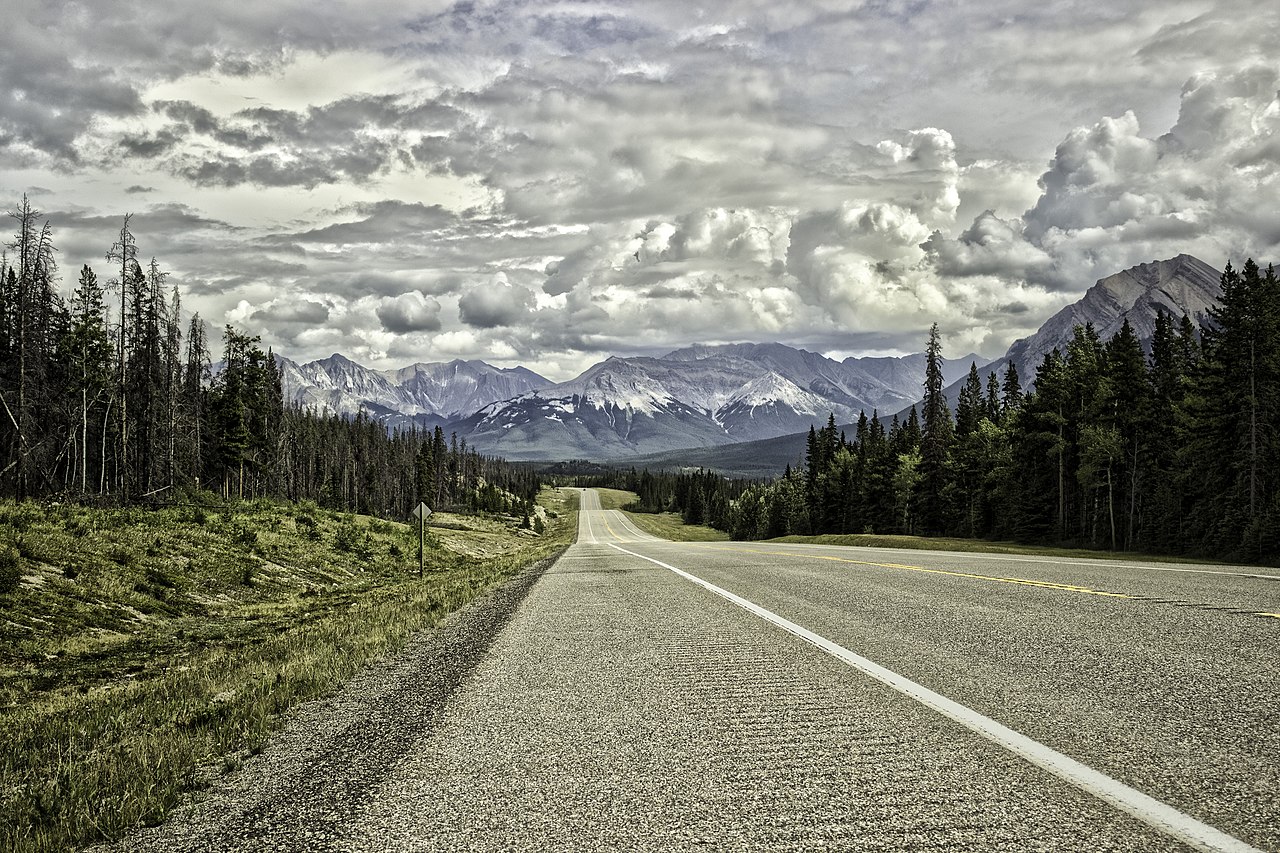
Mountain passes are where driving stops being mere transport and becomes something closer to an experience. The air thins, the road narrows, the views expand until the horizon feels infinite, and every hairpin bend brings either a gasp or a grin. Some of these passes are bucket-list drives known to every petrolhead. Others are remote, rough, and rarely attempted. All of them will remind you why you learned to drive in the first place.
We have compiled the 15 most epic mountain passes on the planet, spanning four continents and altitudes from 2,000 to over 5,000 metres. Whether you want smooth Alpine tarmac or unpaved Himalayan switchbacks, there is a pass here calling your name.
The European Titans
1. Stelvio Pass, Italy (2,757 m)
The Stelvio is the poster child of mountain passes: 48 numbered hairpin bends on the north side alone, each one tighter and more dramatic than the last. Located in the Italian Alps near the Swiss and Austrian borders, it is the second-highest paved pass in the Alps and arguably the most photogenic road on Earth.
- Best approach: From Bormio (east side) for drama, or Prato allo Stelvio (north side) for the famous hairpins.
- Open: Typically June to October, depending on snowfall.
- Drive time: About 1 hour from Bormio to the summit, longer if you stop at every bend (you will).
Base yourself in Bolzano for easy access to both the Stelvio and several other world-class passes. Plan this trip.
2. Furka Pass, Switzerland (2,429 m)
Made famous by the James Bond film Goldfinger, the Furka Pass connects the cantons of Uri and Valais across a landscape that feels almost Icelandic in its stark beauty. The Rhone Glacier sits just below the summit, and the road itself is a flowing ribbon of perfect tarmac.
- Combine with: The Grimsel, Susten, and Gotthard passes for one of the greatest single-day driving loops in the world.
- Open: June to October.
3. Col du Galibier, France (2,642 m)
A legendary climb in the Tour de France, the Galibier is equally thrilling by car. The road rises from the Maurienne Valley through alpine meadows dotted with wildflowers (in summer) or snowfields (in early season), culminating in views that stretch to Mont Blanc on a clear day.
- Best paired with: The Col du Telegraphe and Col du Lautaret for a full day of alpine passes.
- Open: Late May to November, weather permitting.
4. Trollstigen, Norway (858 m)
The altitude is modest by alpine standards, but Trollstigen (the Troll's Ladder) compensates with sheer audacity. Eleven hairpin bends climb a near-vertical mountainside with the Stigfossen waterfall plunging 320 metres beside the road. A cantilevered viewing platform at the top lets you look straight down the cliff face.
- Open: Late May to October.
- Combine with: The Atlantic Road and Geiranger for Norway's ultimate driving trilogy.
5. Transfagarasan Highway, Romania (2,042 m)
Built by the Romanian military in the 1970s, this road carves through the Fagaras Mountains with a combination of tunnels, viaducts, and switchbacks that feels like driving through an action film. The scenery transitions from dense forest to bare alpine rock, with the glacial Balea Lake at the summit.
- Open: Late June to late October (the high section).
- Warning: Traffic can be heavy in July and August. Visit in September for the best balance of open road and autumn colour.
The Asian Giants
6. Khardung La, India (5,359 m)
One of the highest motorable passes in the world, Khardung La sits on the road from Leh to the Nubra Valley in Ladakh. The air is thin enough to make you dizzy, the views stretch across the Karakoram Range, and the sense of achievement at the top is unmatched.
- Essential preparation: Acclimatise in Leh for at least two days before attempting the pass. Altitude sickness is a real risk above 4,000 metres.
- Permits: Indian nationals need an Inner Line Permit; foreign nationals need a Protected Area Permit.
- Road surface: A mix of tarmac and gravel. A sturdy vehicle with good clearance is essential.
Start from Leh and give yourself at least a week to explore the Ladakh region. Plan this trip.
7. Karakoram Highway, Pakistan/China (4,693 m at Khunjerab Pass)
The highest paved international border crossing in the world, the Karakoram Highway (KKH) runs from Islamabad to Kashgar through some of the most extreme mountain scenery imaginable. Glaciers tumble toward the road, the Hunza Valley opens up like a hidden kingdom, and the scale of the surrounding peaks is simply overwhelming.
- Length: Approximately 1,300 kilometres end to end.
- Best season: May to October, with June to September being optimal.
- Highlights: Hunza Valley, Attabad Lake (formed by a 2010 landslide), and the Passu Cones.
8. Rohtang Pass, India (3,978 m)
The gateway from the Kullu Valley to the Lahaul and Spiti valleys, Rohtang is a rite of passage for Indian road trippers. The approach from Manali winds through pine forests before breaking above the treeline into a moonscape of snow and scree. A new tunnel (the Atal Tunnel) now bypasses the pass, but the old road remains open for those who want the full experience.
The African and South American Challenges
9. Sani Pass, South Africa/Lesotho (2,876 m)
Sani Pass is an unpaved zigzag that climbs the Drakensberg escarpment from KwaZulu-Natal into the mountain kingdom of Lesotho. A 4x4 is mandatory. The gradient reaches 1-in-3 in places, loose rocks demand careful tyre placement, and the views from the top are worth every white-knuckle moment.
- Reward at the top: The highest pub in Africa, where you can toast your achievement with a beer at 2,874 metres.
- Permits: You need a passport, as you are crossing an international border.
Access the pass from the Cape Town side via a multi-day road trip through the Drakensberg region. Plan this trip.
10. Paso de los Libertadores (Los Caracoles), Chile/Argentina (3,200 m)
The road connecting Santiago to Mendoza crosses the Andes through a series of 29 switchbacks known as Los Caracoles (the Snails). Each hairpin is numbered, and the exposed mountain road has no guardrails in many sections. The views of Aconcagua, the highest peak in the Americas, make it unforgettable.
11. Abra del Acay, Argentina (4,895 m)
The highest pass on Argentina's Ruta 40, Abra del Acay is a remote, unpaved crossing through the Puna desert landscape of Salta province. Few tourists make it here, which is part of the appeal. The road is rough, the altitude punishing, and the solitude absolute.
Honourable Mentions
12. Grossglockner High Alpine Road, Austria (2,504 m)
Austria's most famous toll road, with 36 bends, a detour to the Kaiser-Franz-Josefs-Hohe viewpoint overlooking the Pasterze Glacier, and the country's highest mountain, the Grossglockner (3,798 m), looming above.
13. Tizi n'Tichka, Morocco (2,260 m)
The main road from Marrakech to Ouarzazate crosses the High Atlas through a pass that transitions from green valleys to arid, red-rock desert in under two hours.
14. Milford Road, New Zealand (940 m)
Low altitude but high drama: the road to Milford Sound passes through rainforest, mirror lakes, and the Homer Tunnel, a raw-rock bore punched through a mountain.
15. Going-to-the-Sun Road, USA (2,026 m)
Montana's Glacier National Park contains one of the most scenic roads in North America. The road crosses the Continental Divide at Logan Pass, with precipitous drops, glacial lakes, and mountain goats on the roadside.
Essential Tips for Driving Mountain Passes
- Check opening dates: Many high passes are seasonal. Verify conditions within a week of your trip, not just when you book.
- Start early: Mountain weather deteriorates in the afternoon. Morning light is also better for photography.
- Use low gear on descents: Engine braking saves your brake pads and reduces the risk of brake fade on long descents.
- Carry essentials: Water, snacks, a warm layer, and a full tank of fuel. Petrol stations are rare above 2,000 metres.
- Respect the altitude: Above 3,500 metres, altitude sickness can affect anyone. Acclimatise gradually and know the symptoms.
- Give way to uphill traffic: On narrow mountain roads, the vehicle going uphill has priority. It is safer and easier for the descending vehicle to reverse to a passing point.
Pro tip: Bring a dashcam or mount your phone on the windscreen. You will want to relive these drives, and it is far safer than trying to film while navigating hairpin bends.
Frequently Asked Questions
What is the most dangerous mountain pass to drive?
Khardung La in India and the Karakoram Highway in Pakistan are among the most challenging due to extreme altitude, unpredictable weather, and rough road surfaces. In South America, Bolivia's North Yungas Road (Death Road) holds a grim reputation, though most of the traffic now uses a newer bypass. The danger on any pass increases dramatically in poor weather, so timing and preparation matter more than the pass itself.
Do I need a special vehicle for mountain passes?
For paved European passes like the Stelvio, Furka, and Galibier, any well-maintained car will do. For unpaved passes like Sani Pass, Abra del Acay, and Khardung La, a 4x4 with good ground clearance is essential. Always check specific vehicle requirements before setting out, as some passes have restrictions on vehicle size or type.
When is the best time of year to drive mountain passes?
For European passes, July to September offers the longest opening windows and the most reliable weather. For Himalayan passes, June to September is the primary season, though some remain open longer. South American and African passes are generally accessible year-round at lower altitudes, but the highest crossings may be snow-blocked in winter (June to August in the Southern Hemisphere). Always check current conditions before attempting any high-altitude pass.