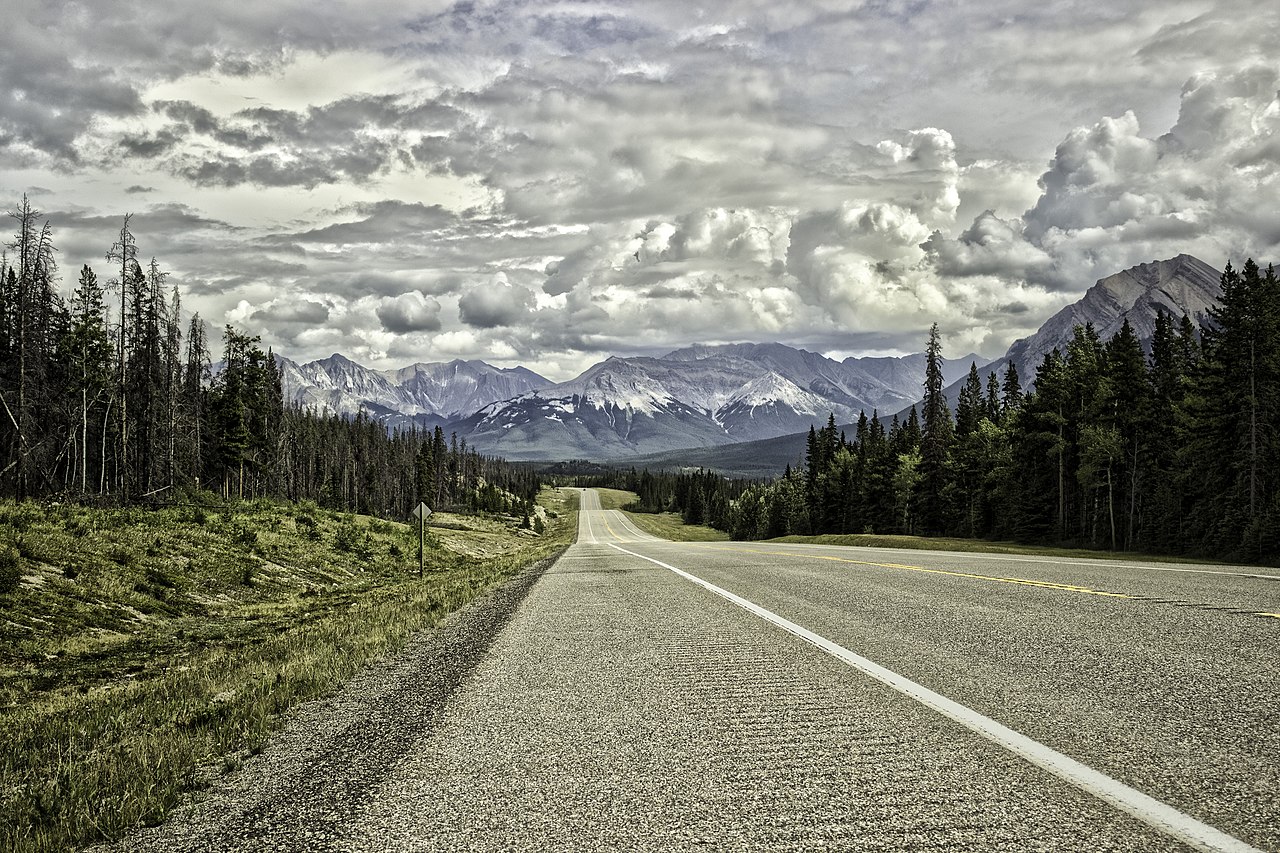
Islands have a unique advantage when it comes to road trips: you can never go too far wrong. The ocean is always close, the scenery changes constantly within a compact area, and there is a natural sense of completeness in circling an island by car. Some islands offer alpine passes and volcanic landscapes. Others deliver endless coastal curves with the sea glittering below. A few manage both.
These ten island drives span the globe, from the North Atlantic to the South Pacific. Each one is worth booking a flight for, renting a car, and spending a week or more exploring at your own pace.
1. Iceland Ring Road (Route 1)
Iceland's Ring Road is the ultimate island drive: 1,322 kilometres of paved road circling the entire country through a landscape that looks like another planet. Glaciers, volcanos, black sand beaches, geysers, waterfalls, and hot springs follow each other in relentless succession. No other drive on Earth packs this much geological drama into a single loop.
Section-by-section highlights
- South Coast (Reykjavik to Vik): Seljalandsfoss and Skogafoss waterfalls, the Solheimajokull glacier tongue, and the black sand beach at Reynisfjara.
- Southeast (Vik to Hofn): Jokulsarlon glacial lagoon, the Diamond Beach where icebergs wash ashore, and Vatnajokull, Europe's largest glacier.
- East Fjords (Hofn to Egilsstadir): Narrow fjords, fishing villages, and some of the quietest roads on the island.
- North (Akureyri region): Godafoss waterfall, the Myvatn geothermal area, and whale watching from Husavik.
- West (Akureyri to Reykjavik): The Snaefellsnes peninsula detour adds a day but delivers dramatic coastline and the glacier that inspired Jules Verne.
Pro tip: Allow at least 10 days for the Ring Road. Seven is possible but rushed. If driving in winter, a 4x4 is essential and some sections may close without warning. Summer (June to August) offers 24-hour daylight and the easiest conditions.
Start and finish in Reykjavik. Plan this trip and add the Golden Circle as a warm-up day.
2. Corsica, France
Napoleon's birthplace is a mountain rising from the Mediterranean, and the roads that cross it are among the most thrilling in Europe. Corsica combines Alpine-style passes with coastal drives that rival the Amalfi Coast, all on an island small enough to cross in a few hours.
Must-drive routes
- D80 (West Coast): From Ajaccio to Calvi, this road hugs red granite cliffs above turquoise water. The Calanques de Piana, a UNESCO World Heritage Site, features surreal red rock formations.
- D268 (Bavella Pass): A mountain road through the Bavella Needles, jagged granite spires that pierce the skyline at 1,218 metres.
- Cap Corse: A narrow peninsula at the island's northern tip, with a single-lane road winding through fishing villages and Genoese watchtowers.
- D84 (Scala di Santa Regina): A gorge road carved into vertical rock walls, following a river through the island's wild interior.
Fly into Ajaccio and give yourself at least a week to explore the island. Plan this trip.
3. Tasmania, Australia
Tasmania is Australia's overlooked island state, and it is a paradise for road trippers. Dense temperate rainforest, empty beaches, colonial heritage towns, and a food-and-wine scene that punches well above its weight. The island is compact enough to drive in a week but rich enough to fill three.
Route suggestions
- East Coast (Hobart to Launceston via Freycinet): Wineglass Bay, the Bay of Fires with its orange-lichen boulders, and the Tarkine rainforest.
- West Coast: The ghost-town mining heritage of Queenstown, Strahan, and the Gordon River cruise through ancient Huon pine forests.
- Cradle Mountain: A detour to Tasmania's most iconic national park, with walking tracks through alpine moorland and buttongrass plains.
- Bruny Island: A sub-island accessible by ferry from Hobart, with a famous isthmus, a lighthouse, and exceptional oysters.
Pro tip: Tasmanian roads are narrower than mainland Australian highways, and wildlife is everywhere after dark. Wombats, wallabies, and Tasmanian devils are most active at dusk and dawn, so plan your driving hours accordingly and watch the road edges carefully.
Start from Hobart and loop the island clockwise. Plan this trip.
4. Crete, Greece
Greece's largest island has a road network that ranges from smooth coastal highways to goat-track mountain roads accessible only by the brave or the foolish. The south coast, in particular, remains wonderfully undeveloped, with beaches you can only reach by dirt road or boat.
Driving highlights
- North coast highway: Heraklion to Chania, with detours to Knossos (the Minoan palace) and Rethymno (Venetian harbour).
- Samaria Gorge approach: The road from Chania climbs into the White Mountains before dropping to the gorge trailhead at Omalos.
- South coast: The road from Hora Sfakion to Frangokastello is narrow, cliff-hugging, and spectacularly scenic.
- Lasithi Plateau: A high plain surrounded by mountains, reached by a winding road lined with ruined windmills.
5. Madeira, Portugal
Madeira is a volcanic island in the Atlantic that feels like a tropical version of Switzerland. The roads climb from sea level to nearly 1,900 metres in just a few kilometres, passing through laurel forests, terraced vineyards, and cloud-piercing mountain ridges. The engineering is extraordinary: tunnels, bridges, and viaducts thread through terrain that seems impossible to build on.
- ER110 to Pico do Arieiro: A road that climbs above the clouds to the island's third-highest peak, with sunrise views that are worth the early alarm.
- Sao Vicente to Porto Moniz: A coastal road with lava-pool natural swimming pools at the end.
- Ponta de Sao Lourenco: The easternmost peninsula, arid and volcanic, a dramatic contrast to the lush interior.
6. South Island, New Zealand
New Zealand's South Island is large enough to offer extraordinary variety: glaciers, fiords, alpine passes, rainforest, and golden beaches all within a few days' driving. The roads are well-maintained, the traffic is light, and the scenery is relentless.
- Milford Road (Te Anau to Milford Sound): Mirror lakes, moss-draped rainforest, and the Homer Tunnel leading to the fiord.
- Crown Range Road: New Zealand's highest sealed road, connecting Queenstown and Wanaka over a ridge with panoramic views.
- West Coast: Franz Josef and Fox Glaciers, Punakaiki's Pancake Rocks, and the wild Haast Pass.
7. Sardinia, Italy
Sardinia's interior is a forgotten world of cork oak forests, granite mountains, and villages that have barely changed in centuries. The east coast delivers some of the Mediterranean's most beautiful beaches, while the mountain roads of the Gennargentu range offer challenging driving with zero traffic.
- SS125 (Orientale Sarda): A winding road through the Ogliastra region with views over the Tyrrhenian Sea and limestone gorges.
- Costa Smeralda to Alghero: From glamorous beaches to a Catalan-influenced medieval town.
- Gorropu Gorge approach: A dirt road and hike to Europe's deepest gorge.
8. Sri Lanka
Not always thought of as an island drive, but Sri Lanka's compact size (roughly the area of Ireland) makes it ideal for a road trip. The hill country roads between Kandy and Ella wind through tea plantations on terraced hillsides, past waterfalls and colonial-era railway bridges.
- Kandy to Ella: The A5 and connecting roads through Nuwara Eliya, passing through the heart of Ceylon tea country.
- Southern coastal road: From Galle's Dutch fort to Mirissa's whale-watching boats and Yala National Park's leopards.
9. Lofoten Islands, Norway
Connected by bridges and tunnels, the Lofoten Islands can be driven as a single continuous route above the Arctic Circle. Dramatic peaks rise directly from the sea, fishing villages cling to rocky shorelines, and in summer the midnight sun means you can drive at 2 AM in broad daylight.
- E10 from Svolvaer to A: The main route through the islands, roughly 170 kilometres of bridges, tunnels, and jaw-dropping scenery.
- Reine: Widely photographed fishing village backed by sharp granite peaks.
- Haukland and Uttakleiv beaches: Arctic beaches with white sand and turquoise water.
10. Reunion Island, France
A French overseas department in the Indian Ocean, Reunion is a volcanic island with roads that would make a Swiss engineer weep with pride. The Route des Laves crosses fresh lava fields from the Piton de la Fournaise volcano, while the Route Forestiere climbs through tropical forest to the rim of the Cirque de Mafate, an inhabited caldera accessible only on foot or by helicopter.
- Route des Laves: A road across hardened lava flows, periodically resurfaced when the volcano erupts.
- Cirque de Cilaos: A road with over 400 bends descending into an ancient collapsed volcanic crater.
- Route du Littoral: A coastal road below towering cliffs, sometimes closed by rockfall.
Tips for Island Road Trips
- Book your rental car early: Island car rental fleets are limited. In peak season (especially in Iceland, Corsica, and Crete), popular vehicle types sell out months in advance.
- Check ferry schedules: If your island requires a ferry crossing, book in advance. Summer ferries to Corsica, Sardinia, and Tasmania fill up fast.
- Fuel up frequently: Smaller islands may have few petrol stations, and opening hours can be limited on weekends and holidays.
- Expect narrow roads: Island roads are often single-track with passing places. Learn the etiquette: pull into the nearest passing place and signal to oncoming traffic.
- Slow down: The point of an island drive is not to cover distance but to soak in the scenery. Build in time for spontaneous stops, swimming, and roadside cafes.
Frequently Asked Questions
What is the best island road trip for beginners?
Tasmania and New Zealand's South Island are excellent choices for first-time island road trippers. Both have well-maintained roads, clear signage in English, left-hand driving (which suits UK, Australian, and Japanese drivers), reliable mobile coverage, and a strong tourism infrastructure. Crete and Corsica are also approachable, though the mountain roads demand more confident driving.
How long do I need for an island road trip?
A minimum of one week is recommended for most of these islands. Iceland's Ring Road needs 10 days minimum, Tasmania and Corsica suit 7 to 10 days, and smaller islands like Madeira and Lofoten can be explored in 4 to 5 days. The more time you allow, the more hidden corners you will discover and the less rushed you will feel.
Should I rent a 4x4 for island driving?
For Iceland (especially the Ring Road in winter or any F-roads), a 4x4 is essential. For Crete's south coast dirt roads and Reunion's mountain tracks, higher clearance is helpful. For Tasmania, Corsica, Madeira, and most other paved island routes, a standard compact car is perfectly adequate and easier to park on narrow village streets.