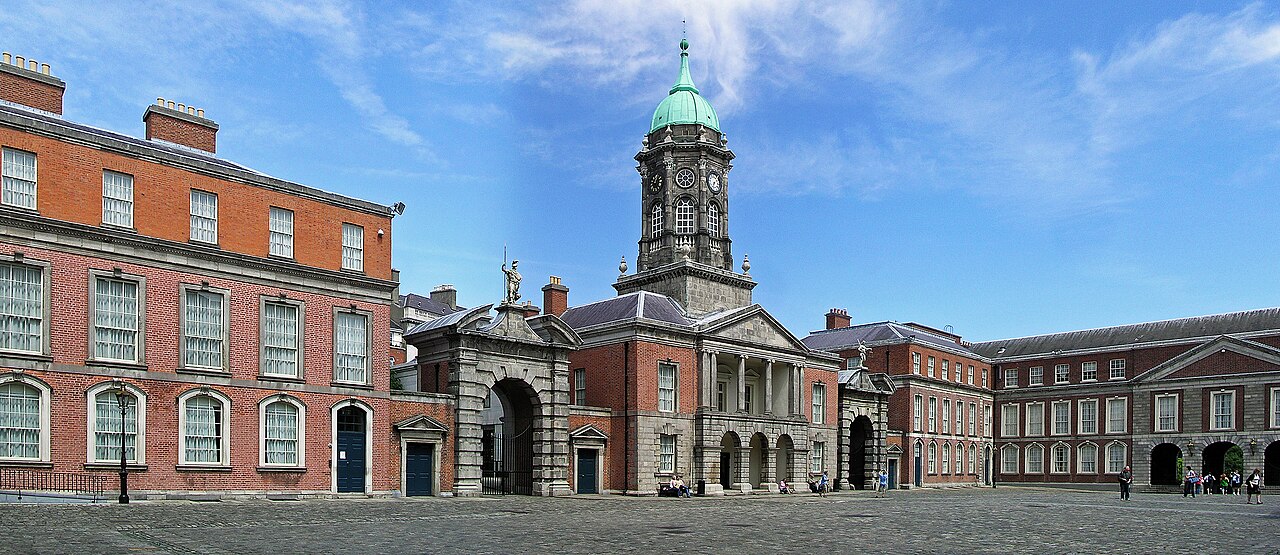
cathedral
St Patrick's Cathedral
Ireland's largest cathedral and national cathedral of the Church of Ireland, once led by Jonathan Swift.
2 km · about 5 min drive
Leinster, Ireland · Europe
Dublin works well as a base: 21km from Powerscourt Waterfall.
Dublin is a major city located in Leinster, Ireland. With a population of 1,024,027, it is one of the largest urban centers in Europe.
On a road trip, Dublin sits in Ireland, where you drive on the left. It's in the Europe/Dublin time zone. Below you'll find where to stay, things to do nearby, and everything you need to add Dublin to your route.
The Lordship of Ireland, also referred to as the English lordship in Ireland or Anglo-Norman Ireland, was the part of Ireland ruled by the King of England (styled as "Lord of Ireland") and controlled by loyal Anglo-Norman lords from 1177 to 1542. The lordship was a dependency of England, created following theRead more
Anglo-Norman invasion of Ireland. As the Lord of Ireland was also the King of England, he was represented locally by a governor, variously known as the Justiciar, Lieutenant, or Lord Deputy.
In 1170 and 1171, Anglo-Norman lords conquered swathes of territory from the Gaelic Irish. King Henry II of England arrived in Ireland with a large army in 1171. The Anglo-Norman lords, several Irish kings, and the Irish church leadership submitted to him. Pope Adrian IV had allegedly issued a papal bull, Laudabiliter, granting Henry the right to invade Ireland to enforce the Gregorian Reform. The 1175 Treaty of Windsor acknowledged Henry as overlord of the conquered lands, and the High King of Ireland, Ruaidrí Ua Conchobair, as overlord of the rest of Ireland. However, in 1177 Henry made his son John "Lord of Ireland" and encouraged his subordinates to conquer more land. Thereafter, the kings of England claimed lordship over the whole island, but in reality the king's rule only ever extended to parts of the island. The rest of Ireland – later referred to as Gaelic Ireland – remained under the control of various Gaelic Irish kingdoms or chiefdoms, who were often at war with the Anglo-Normans.
The area under English rule and law grew and shrank over time, reaching its greatest extent in the late 13th and early 14th centuries. The English lordship then went into decline, brought on by a Scottish invasion in 1315–1318, a concurrent famine, and the Black Death of the 1340s. The fluid political situation and Norman feudal system allowed a great deal of autonomy for the Anglo-Norman lords in Ireland, who carved out earldoms for themselves and had almost as much authority as some of the native Gaelic kings. Some Anglo-Normans became Gaelicised and rebelled against the English administration. The English attempted to curb this by passing the Statutes of Kilkenny (1366), which forbade English settlers from taking up Irish law, language, custom and dress. From the 15th century, direct English rule in Ireland was limited to an area on the east coast called the English Pale. The period ended with the creation of the Kingdom of Ireland in 1542.
Compare prices across Booking.com, Airbnb, Expedia, and more. Select your dates to see availability.
Pick your must-haves once: provider links open pre-filtered. Each filter lists which sites it applies to.
Compare before you book!
Prices can vary significantly between platforms. We recommend checking at least 2-3 sites to find the best deal for your stay in Dublin.
Discover famous landmarks, scenic roads, and more near Dublin.
Dublin offers many attractions including tourist sites, museums, parks, and local restaurants. Explore famous landmarks, scenic roads, and natural wonders on our interactive map and plan your visit.
Plan your road trip to Dublin with Plan Your Road Trips! Add Dublin as a destination, and we'll help you find the best route and discover more amazing places along the way.
Dublin is located in Leinster, Ireland, Europe. The coordinates are 53.3331 latitude, -6.2489 longitude.
Dublin has a population of approximately 1,024,027 people, making it a major city in Ireland.
Add to your itinerary
Start planning your road trip with Dublin as a destination. Create a custom route and discover more amazing places along the way.
Start Road TripDiscover destinations like Tinder
Swipe through stunning destinations near Dublin. Save your favourites and add them to your trip.
8 notable places within an hour's drive.
cathedral
Ireland's largest cathedral and national cathedral of the Church of Ireland, once led by Jonathan Swift.
2 km · about 5 min drive
landmark
Ireland's largest zoo in Phoenix Park, one of the oldest zoos in Europe, home to over 400 animals.
4 km · about 10 min drive
scenic viewpoint
A looped cliff path around Howth Head with views to Ireland's Eye and the Wicklow mountains, easily reached from Dublin.
13 km · about 25 min drive
waterfall
Ireland's highest waterfall at 121 metres, cascading down a rock face in the beautiful Powerscourt Estate in the Wicklow Mountains.
21 km · about 25 min drive
mountain pass
A high crossroads pass over the Wicklow Mountains amid blanket bog, with the famous Military Road running through.
22 km · about 25 min drive
scenic viewpoint
A dark lake with a pale sand beach at one end, viewed from the R759 above; used as the Viking village in the series Vikings.
25 km · about 30 min drive
waterfall
A waterfall spilling off the plateau beside the Military Road in the Wicklow Mountains, with parking right at the top.
30 km · about 35 min drive
racetrack
Ireland's only permanent motorsport circuit, located in County Kildare and the home of Irish national racing since 1968.
34 km · about 40 min drive
April to October
Other places to explore near Dublin.
Create your perfect itinerary with our calendar-based planner. Add stops, discover attractions along the way, and share your trip with friends.
Start Planning