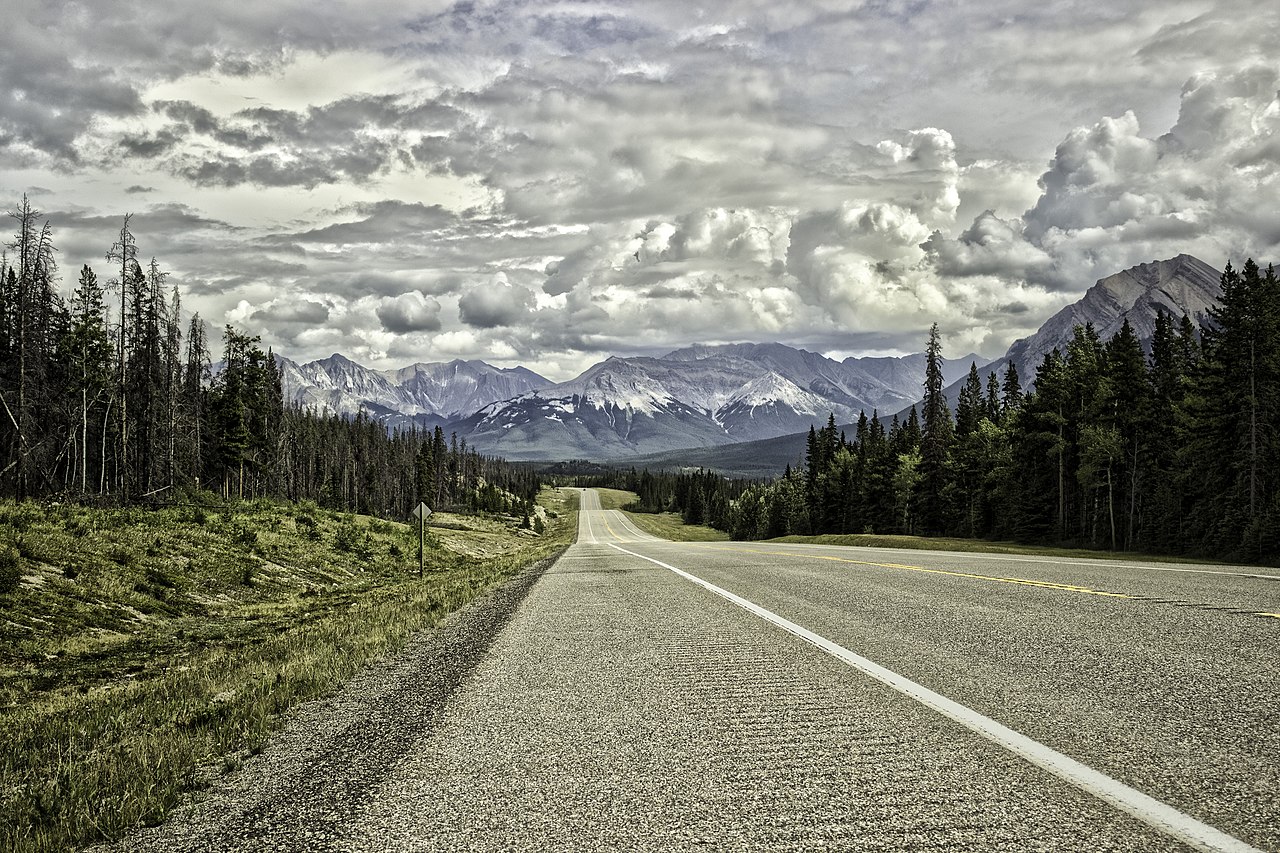
America was built for the car. Vast interstate highways, drive-through everything, and distances that make European road trips look like commutes. For European visitors, driving in the USA is the best way to experience the country's extraordinary diversity, from the Pacific Coast Highway to the Blue Ridge Parkway, from New England's autumn foliage to the desert highways of the Southwest.
But American driving culture has its own rules, quirks, and surprises. Right on red, four-way stops, speed limits that change by state, and a completely different approach to motorway driving can catch Europeans off guard. This guide explains everything you need to know.
Licence Requirements for European Drivers
The good news: driving in the USA as a European tourist is straightforward.
What You Need
- EU/EEA driving licence: Valid in all 50 states for tourist stays (typically up to 90 days on a visa waiver). No International Driving Permit (IDP) is legally required at the federal level.
- IDP recommended: Although not legally required in most states, an IDP is recommended if your licence is not in English. Some rental companies may request one, and it can help during police interactions. Georgia and a few other states technically require an IDP for foreign drivers.
- UK driving licence: Accepted in all states. The photocard licence is sufficient; you do not need the old paper counterpart.
- Minimum age: You must be at least 21 to rent a car from most companies (some allow 18-20 with a surcharge). Drivers under 25 typically pay a "young driver" surcharge of USD 20-30 per day.
Carry your passport alongside your driving licence at all times. American police do not carry identity databases for foreign licences, and your passport confirms your tourist status and identity.
Insurance: Do Not Skip This
Car insurance in the USA works differently from Europe, and getting it wrong can be financially devastating.
Types of Cover
- Liability insurance: Covers damage you cause to other people and their property. This is legally required in almost every state, and rental companies include a basic level. However, the minimum is often very low (as little as USD 15,000 in some states), which is inadequate given American medical costs.
- CDW/LDW (Collision Damage Waiver / Loss Damage Waiver): Covers damage to the rental car itself. Not technically insurance, but a waiver of the rental company's right to charge you for damage. Costs USD 15-30 per day.
- SLI (Supplemental Liability Insurance): Increases your liability coverage, usually to USD 1,000,000. Costs USD 10-15 per day. Strongly recommended.
- Personal accident insurance: Covers medical costs for you and your passengers. European visitors should check whether their travel insurance already covers this.
Check your credit card benefits before booking. Many premium European credit cards (Amex Gold, Visa Premier, Mastercard Gold) include CDW cover for rental cars. If yours does, you can decline the rental company's CDW and save USD 300-500 on a two-week trip. Always confirm the cover extends to the USA and includes the vehicle type you are renting.
American Road Rules That Surprise Europeans
Right on Red
In most states, you may turn right at a red traffic light after coming to a complete stop, provided the way is clear and there is no sign prohibiting it. This is one of the most confusing rules for European drivers. Key points:
- You must come to a full stop first, just as you would at a stop sign.
- Yield to all pedestrians and cross-traffic.
- In New York City, right on red is prohibited unless a sign specifically permits it (the opposite of everywhere else).
- Some intersections have a "No Turn on Red" sign. Always check.
Four-Way Stops
At intersections with stop signs on all four approaches, the first vehicle to arrive goes first. If two vehicles arrive simultaneously, the one on the right has priority. This system is rare in Europe and takes practice. The key is to be decisive: hesitation causes confusion.
School Buses
When an American school bus stops and extends its red stop sign, all traffic in both directions must stop, even on a divided highway in some states. Do not pass a stopped school bus. Fines range from USD 250 to USD 1,000, and some states impose licence points or suspension.
Speed Limits Vary by State
There is no national speed limit. Each state sets its own limits, and they vary dramatically:
- Interstate highways: 55 mph (89 km/h) in some northeastern states to 85 mph (137 km/h) on one stretch of Texas highway (SH 130). Most states set interstates at 65-75 mph.
- Urban freeways: Typically 55-65 mph.
- Rural two-lane roads: Usually 55 mph.
- Residential areas: 25-35 mph.
- School zones: 15-25 mph when children are present. Fines are doubled in school zones.
The Highway System Explained
America's road numbering system is logical once you understand it.
Interstate Highways
- Odd numbers (I-5, I-95) run north-south. Numbers increase from west to east.
- Even numbers (I-10, I-90) run east-west. Numbers increase from south to north.
- Three-digit numbers (I-405, I-295) are loops or spurs off the main interstate. If the first digit is even, the road loops back to the main interstate; if odd, it is a spur that does not return.
US Routes and State Routes
- US Routes (US-1, US-66) are the older highway system. They often pass through town centres and offer a more scenic alternative to interstates.
- State routes vary in quality from motorway-standard divided highways to narrow two-lane roads.
Fuel, Rest Stops & Practicalities
Fuel
- Price: American fuel is vastly cheaper than European fuel. Expect USD 3.00-5.00 per US gallon (roughly EUR 0.70-1.15 per litre). California and Hawaii are the most expensive; southern and midwestern states are cheapest.
- Payment at the pump: Many pumps ask for a US ZIP code when paying by card. If your European card is declined, go inside and pre-pay at the counter ("Twenty dollars on pump five, please").
- Fuel types: "Regular" (87 octane) is fine for rental cars. Do not be confused by the lower octane numbers compared to Europe; America uses a different rating system (AKI vs RON). American 87 is roughly equivalent to European 95.
Rest Stops and Services
- Interstate rest areas provide free toilets, water, and parking but no fuel or food (in most states).
- "Truck stops" (Love's, Pilot Flying J) are open 24/7 with fuel, food, showers, and large parking areas. They are excellent for road trippers.
- Drive-through restaurants and pharmacies are everywhere. You do not need to leave your car.
Top Routes for European Visitors
- Pacific Coast Highway (CA-1): Big Sur, cliffs, redwoods, and the California coastline. Los Angeles to San Francisco is the classic stretch. Plan this trip.
- Route 66 (Chicago to LA): The original American road trip. 3,940 km of diners, motels, desert, and Americana. Allow at least 2 weeks.
- Blue Ridge Parkway (Virginia to North Carolina): 755 km of mountain driving through the Appalachian Mountains. No commercial traffic allowed. Spectacular in October during autumn foliage.
- Florida Keys Overseas Highway (US-1): Island-hop from Miami to Key West across 42 bridges over turquoise water.
- Utah's Mighty Five: A loop connecting all five Utah national parks (Zion, Bryce Canyon, Capitol Reef, Canyonlands, Arches). Allow 7-10 days.
Start planning from New York or explore cross-country options with our trip planner.
Frequently Asked Questions
Do I need an International Driving Permit to drive in the USA?
For most European visitors, no. Your national EU or UK driving licence is legally valid in all 50 states for tourist stays. However, an IDP is inexpensive (GBP 5.50 in the UK, EUR 15-20 in most EU countries) and recommended as a safety net, particularly if your licence does not include an English translation. Some car rental desks may request one, and it can smooth interactions with police officers unfamiliar with foreign licences.
Why are American speed limits so much lower than in Europe?
American speed limits reflect different road design, enforcement culture, and history. Suburban roads with frequent driveways and intersections justify lower limits. Enforcement is more aggressive than in many European countries, with police patrols using radar guns and unmarked vehicles. On rural interstates, limits of 70-80 mph (113-129 km/h) are common, which is comparable to European motorway speeds. The real difference is that American limits are more strictly enforced, and exceeding them by even 10 mph can result in a fine.
How do I handle being pulled over by American police?
Pull over to the right side of the road as soon as it is safe. Stay in the car with your hands visible on the steering wheel. Do not reach for your licence or documents until the officer asks for them. Be polite and calm. Explain that you are a tourist if asked. American police stops are routine and nothing to be alarmed about, but officers take safety seriously and expect you to follow their instructions precisely. You can contest the ticket later through the court system or by mail.