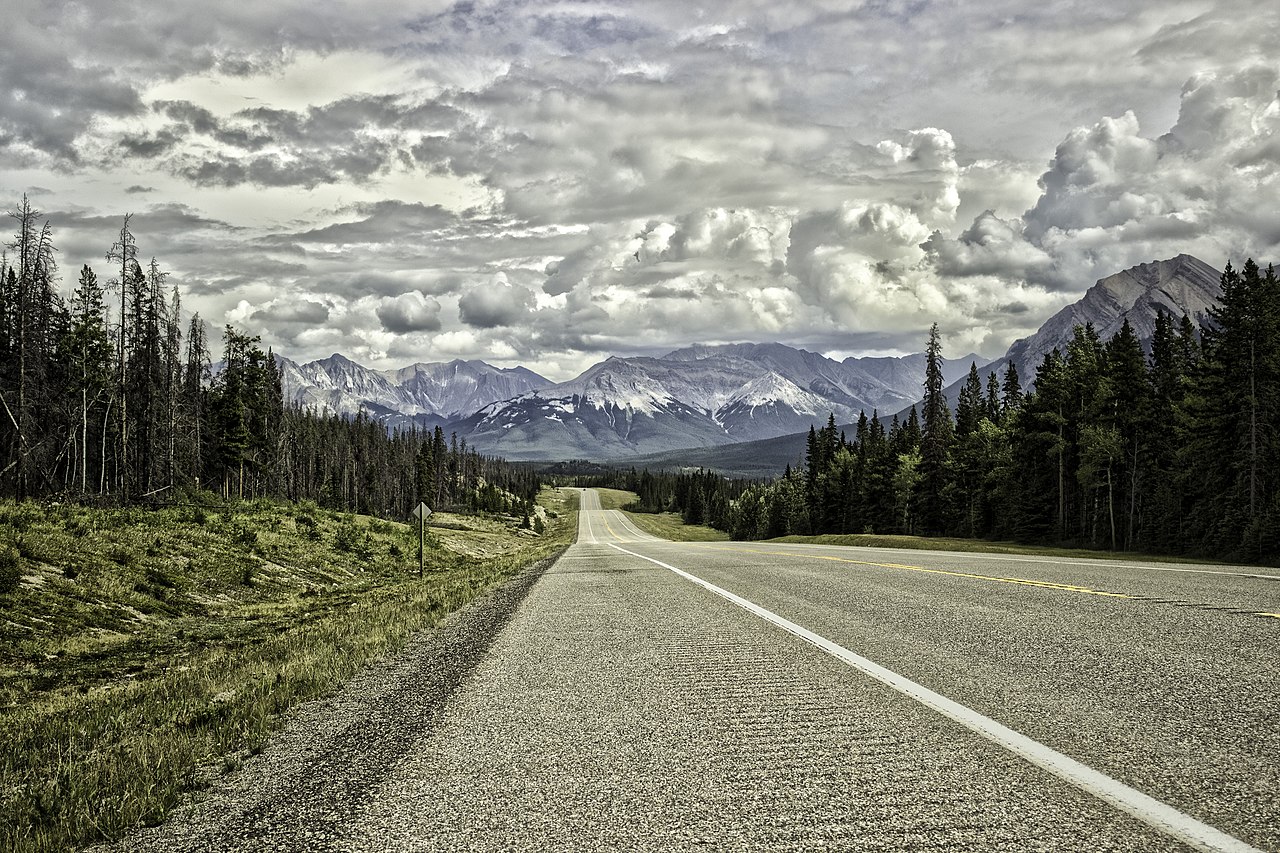
Scotland packs an extraordinary diversity of landscape into a country roughly the size of South Carolina. From the volcanic drama of Edinburgh's skyline to the Arctic-feeling emptiness of Sutherland, from the whisky-soaked valleys of Speyside to the Norse-influenced islands of the far north, driving is the only way to truly grasp the scale and variety of this place. The roads themselves are part of the experience: single-track lanes threading between mountains, sweeping coastal highways with Atlantic spray on the windscreen, and high mountain passes that would feel at home in the Alps.
Here are five of the greatest road trips Scotland has to offer, from the world-famous NC500 to lesser-known routes that deserve far more attention.
1. The North Coast 500
The NC500 has earned its reputation as one of Europe's great driving routes, and the hype is entirely justified. This 516-mile loop starting and finishing at Inverness traces the coastline of the Scottish Highlands through landscapes that shift from gentle pastoral valleys to some of the most ancient and elemental terrain in the British Isles. The Lewisian gneiss rock along the northwest coast is among the oldest on the planet, formed roughly three billion years ago, and you can feel that primordial age in the stark, treeless expanses of Assynt and Sutherland.
The route divides naturally into distinct sections, each with its own character. The east coast from Inverness to John o'Groats is relatively gentle, passing through farming country and the whisky town of Brora. The north coast from Thurso to Durness is wind-scoured and wild, with vast empty beaches of white sand that could be Caribbean were it not for the water temperature. The west coast, from Durness south through Lochinver, Ullapool, and Torridon, is where the NC500 reaches its zenith: mountains rising directly from the sea, sea lochs cutting deep into the land, and a road that twists and climbs relentlessly.
The Bealach na Ba
The single greatest driving experience on the NC500, and arguably in the entire UK, is the Bealach na Ba (Pass of the Cattle). This road climbs from sea level at Kishorn to 626 metres in just a few miles, with Alpine-grade hairpin bends, sheer drops, and views that, on a clear day, stretch across to the Outer Hebrides. At the summit, the road descends steeply to the remote village of Applecross, where the Applecross Inn serves some of the best langoustines in Scotland.
NC500 planning essentials
- Duration: Five to seven days minimum. Rushing the NC500 defeats the purpose entirely.
- Direction: Drive clockwise (east coast first) to be on the seaward side for the spectacular west coast section.
- Fuel: On the west coast, petrol stations can be over 60 miles apart. Fill up at every opportunity and never let your tank drop below a quarter.
- Season: Late May to early June for long daylight (up to 18 hours), fewer midges, and manageable crowds. September for autumn colour and solitude.
- Single-track etiquette: Use passing places on your left. Pull over for faster traffic. Never park in a passing place.
Pro tip: Book the Kylesku Hotel for at least one night. It sits at the junction where the road crosses the sea loch via a graceful curving bridge, and the restaurant serves seafood landed from the loch that morning. The langoustines are extraordinary.
Plan this trip from Inverness, the natural start and finish point for the NC500.
2. Isle of Skye Circuit
Skye is connected to the mainland by a bridge from Kyle of Lochalsh, and the roughly 130-mile circuit of the island delivers some of Scotland's most otherworldly scenery. The island's geology is volcanic rather than the ancient gneiss of the northwest mainland, and the resulting landscapes are dramatically different: jagged black peaks, bizarre rock formations, and an ever-changing quality of light that has drawn artists and photographers for centuries.
The Trotternish Peninsula in the north is the main draw. The Old Man of Storr, a 50-metre rock pinnacle visible for miles, stands above a field of collapsed rock towers that looks like a ruined city. Further north, the Quiraing is a landslip landscape of pinnacles, hidden plateaux, and vertiginous cliffs that feels genuinely alien. The road along the eastern side of Trotternish offers views across to the mainland that are best appreciated in the golden hour light of a summer evening.
Skye highlights beyond the famous spots
- Fairy Pools, Glen Brittle: A series of crystal-clear pools beneath the Black Cuillins. Arrive early morning to avoid crowds.
- Neist Point: The westernmost point of Skye, with a lighthouse perched on dramatic basalt cliffs and frequent whale sightings.
- Talisker Distillery: The only single malt distillery on Skye, producing a distinctive peaty, maritime whisky since 1830.
- Elgol: A tiny village at the end of a narrow road with views across Loch Scavaig to the full sweep of the Cuillin ridge.
- Coral Beach, Dunvegan: Not actually coral but bleached maerl algae, creating a startlingly white beach against turquoise water.
Pro tip: Skye in peak summer (July-August) can be overwhelmingly busy, with car parks full by 9am at popular spots. Visit in late September or early October for dramatic autumn colours, fewer visitors, and a better chance of atmospheric cloud effects over the mountains.
Reach Skye from Edinburgh via the A9 and A87, a stunning five-hour drive through the heart of the Highlands. Plan this trip to map the complete route.
3. Cairngorms and Speyside Loop
The Cairngorms National Park is Britain's largest national park, covering an area of 1,748 square miles that includes four of Scotland's five highest mountains. A driving loop through the park and the adjacent Speyside whisky region combines mountain grandeur with one of the most concentrated collections of whisky distilleries anywhere in the world.
Start in Edinburgh and head north on the A9 to Aviemore, the main gateway to the Cairngorms. The Cairngorm Mountain Road climbs to the UK's highest car park at 1,097 metres, with views across the Cairngorm plateau, an Arctic landscape of granite tors and snow patches that persist well into summer. From Aviemore, head east into Speyside, where the River Spey winds through gentle valleys studded with distilleries: Glenfiddich, Macallan, Aberlour, Glenlivet, and dozens more within a short drive of each other.
Suggested 4-day Cairngorms itinerary
- Day 1: Edinburgh to Aviemore via the A9. Stop at the House of Bruar and Blair Castle en route. Evening walk around Loch an Eilein.
- Day 2: Cairngorm Mountain, funicular railway, and Rothiemurchus Forest. Drive the Snow Roads scenic route over the Lecht pass to Tomintoul.
- Day 3: Speyside distillery trail. Visit two or three distilleries (Glenfiddich, Macallan, and Balvenie are the standouts). Walk the Speyside Way along the river.
- Day 4: Return south via Royal Deeside, passing Balmoral Castle and Braemar before rejoining the A9 at Pitlochry.
Pro tip: The Snow Roads Scenic Route between Blairgowrie and Grantown-on-Spey crosses two of the highest public roads in the UK: the Cairnwell Pass (670m) and the Lecht (637m). In autumn, the heather turns the hillsides purple, creating some of the most photogenic driving in Scotland.
4. The Scottish Borders
The Borders are Scotland's forgotten corner, overshadowed by the Highlands but hiding a landscape of rolling green hills, ruined abbeys, and some of the finest driving roads in the country. This region stretching south from Edinburgh to the English border was historically the most contested territory in Britain, and the remnants of that violent past, abbeys sacked by invading armies, tower houses built for defence, are everywhere.
A three-day loop from Edinburgh takes in the four great Border Abbeys (Melrose, Jedburgh, Kelso, and Dryburgh), the tweed mills and book shops of the pretty towns along the Tweed, and the wild, empty moorland of the Cheviot Hills along the English border. The A708 from Selkirk to Moffat, passing over the Grey Mare's Tail waterfall and alongside St Mary's Loch, is one of the finest B-roads in Scotland: smooth tarmac, sweeping bends, and barely a car in sight.
Borders essentials
- Melrose Abbey: The finest of the four great abbeys, with exquisite stone carving including a bagpipe-playing pig on the roof.
- Scott's View: A panoramic viewpoint over the Eildon Hills and the Tweed valley, said to be Sir Walter Scott's favourite view. His funeral cortege paused here on the way to Dryburgh Abbey.
- Abbotsford: Scott's magnificent baronial mansion on the banks of the Tweed, crammed with historical curiosities including Rob Roy's gun and a lock of Bonnie Prince Charlie's hair.
- Floors Castle: Scotland's largest inhabited castle, with gardens overlooking the Tweed and the distant Cheviot Hills.
The Borders are an easy day trip or weekend from Edinburgh. Plan this trip to explore this underrated region.
5. Argyll Coastal Route
The Argyll Coastal Route runs from Glasgow along the west coast through some of Scotland's most beautiful fjord-like sea lochs and forested peninsulas. This is a landscape of dark water, wooded shores, and castle ruins, with a softer, more lush character than the bare mountains of the Highlands further north. The route covers roughly 129 miles along the A83 and connecting roads, passing through Inveraray, along the shore of Loch Fyne, and on to the Kintyre Peninsula.
The highlight is the section known as the Rest and Be Thankful, a mountain pass on the A83 that climbs through Glen Croe with spectacular views back down the valley. The name comes from a stone at the summit placed by soldiers who built the original military road in 1753, inviting weary travellers to rest after the steep climb. On the descent, the road follows the shore of Loch Fyne, home to some of the finest oysters and smoked salmon in Scotland.
Argyll food and drink highlights
- Loch Fyne Oyster Bar: The original Loch Fyne restaurant at the head of the loch, serving oysters, mussels, and smoked fish since 1978.
- Inveraray Castle: The stunning neo-Gothic seat of the Duke of Argyll, with beautiful grounds and an armoury hall displaying over 1,300 weapons.
- George Hotel, Inveraray: Scotland's oldest inn, dating from 1776, with a cosy bar and excellent pub food.
- Springbank Distillery, Campbeltown: One of only three remaining distilleries in a town that once had over 30, producing highly sought-after single malts.
Pro tip: Extend the Argyll route by taking the ferry from Kennacraig to Islay, the whisky island. Islay has eight working distilleries producing some of the world's most distinctive peated single malts, and the ferry crossing itself, through the Sound of Jura, is stunning.
Start this route from Glasgow, Scotland's largest city and a cultural powerhouse in its own right. Plan this trip to map out the complete Argyll Coastal Route.
Practical Tips for Driving in Scotland
Scotland's roads are generally well-maintained, but they present some unique challenges that visitors should prepare for.
- Single-track roads are common throughout the Highlands and Islands. Use passing places correctly: pull into the one on your left, or stop opposite one on your right. Wave a thank-you when someone lets you pass.
- Weather changes rapidly. Scotland can experience all four seasons in a single day. Pack layers, waterproofs, and expect rain even in summer. Clear skies can appear without warning, rewarding patience.
- Midges are Scotland's tiny biting insects, worst from late June through August in still, damp conditions. Carry midge repellent (Smidge is the local favourite) and a head net for walks.
- Wild camping is legal in Scotland under the Land Reform Act 2003, with certain restrictions near roads and buildings. Leave no trace.
- Road closures are possible in winter, especially on high passes like the Bealach na Ba and the A93 Cairnwell Pass. Check Traffic Scotland for live updates before setting out.
Frequently Asked Questions
What is the best time of year to drive the NC500?
Late May to early June offers the ideal combination of very long daylight hours (up to 18 hours of usable light), generally drier weather, and manageable tourist numbers. The midges have not yet reached their peak, and the landscape is bright with spring wildflowers. September and early October are excellent alternatives, with autumn colours, emptier roads, and midge-free conditions, though daylight hours shorten significantly. Winter driving is possible but challenging, with some accommodation closed and the Bealach na Ba potentially impassable in snow.
How many days do I need for a road trip in Scotland?
For the NC500 alone, allow five to seven days. The Isle of Skye deserves two to three days. The Cairngorms and Speyside loop works well over three to four days. The Borders can be explored in a weekend. If you want to combine routes, a two-week trip covering the NC500, Skye, and either the Cairngorms or Argyll gives you a comprehensive Scottish driving experience without feeling rushed. Whatever you do, resist the temptation to cram too much in. Scotland rewards slow travel.
Do I need a 4x4 for driving in Scotland?
No. All the routes described in this article are on public roads accessible to any standard car. Some single-track roads in the Highlands are narrow and have passing places, but they are paved and maintained. A smaller car is actually an advantage on narrow Highland roads, as passing oncoming vehicles and navigating tight bends is easier. If you are visiting in winter and plan to drive over high passes, winter tyres or all-season tyres are advisable, but a standard front-wheel-drive car with appropriate tyres will handle everything Scotland's roads can throw at it.