museum
In Flanders Fields Museum
Set in Ypres' rebuilt Cloth Hall, this museum tells the harrowing story of the WWI Western Front trenches.
27 km · about 30 min drive
Hauts-de-France, France · Europe
Lille is worth a stop: 5 minutes from Saint-André-lez-Lille, 27km from In Flanders Fields Museum.
Lille is a city located in Hauts-de-France, France. With a population of 238,695, it is an important destination in Europe.
On a road trip, Lille sits in France, where you drive on the right. It's in the Europe/Paris time zone. Below you'll find where to stay, things to do nearby, and everything you need to add Lille to your route.
Lille ( LEEL; French: [lil] ; Dutch: Rijsel [ˈrɛisəl] ; Picard: Lile; West Flemish: Rysel) is a city in the northern part of France, within French Flanders. Positioned along the Deûle river, near France's border with Belgium, it is the capital of the Hauts-de-France region, the prefecture of the Nord department, andRead more
the main city of the European Metropolis of Lille. It is also the seat of the European Union Customs Authority.
The city of Lille proper had a population of 238,246 in 2023 within its small municipal territory of 35 km2 (14 sq mi), but together with its French suburbs and exurbs the Lille metropolitan area (French part only), which extends over 1,666 km2 (643 sq mi), had a population of 1,530,624 (2023), the fourth most populated in France after Paris, Lyon, and Marseille. The city of Lille and 94 suburban French municipalities have formed since 2015 the European Metropolis of Lille, an indirectly elected metropolitan authority now in charge of wider metropolitan issues, with a population of 1,195,234 (2023).
More broadly, Lille belongs to a vast conurbation formed with the Belgian cities of Mouscron, Kortrijk, Tournai and Menin, which gave birth in January 2008 to the Eurometropolis Lille–Kortrijk–Tournai, the first European Grouping of Territorial Cooperation (EGTC), which has more than 2.1 million inhabitants. At the national level, the European Metropolis of Lille ranks second only to the Île-de-France region for its concentration of international corporate headquarters.
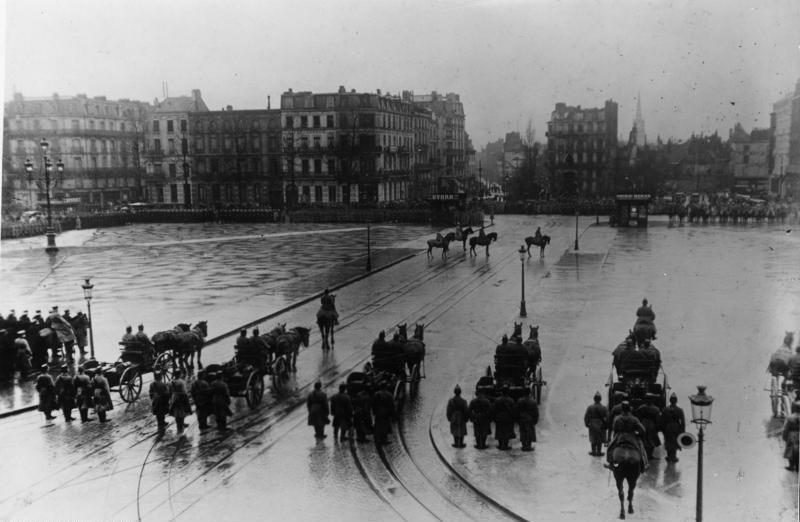
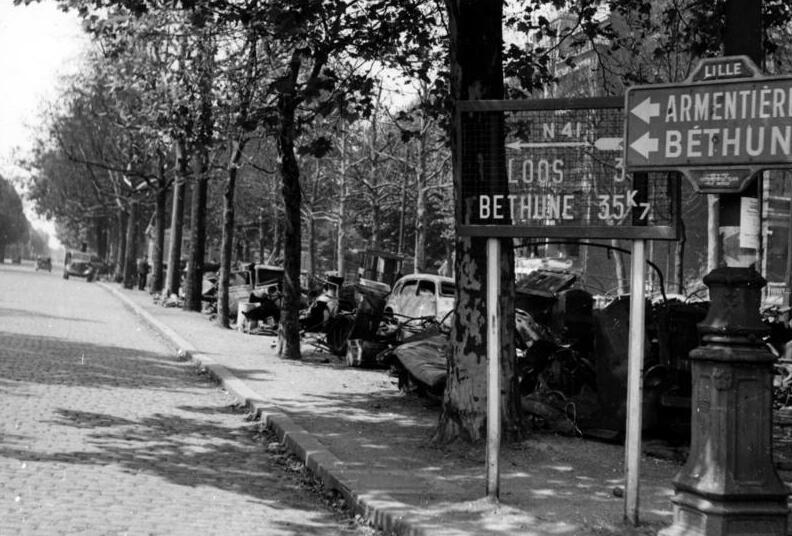
Nicknamed in France the "Capital of Flanders", Lille and its surroundings belong to the historical region of Romance Flanders, a former territory of the county of Flanders that is not part of the linguistic area of West Flanders. A garrison town (as evidenced by its Citadel), Lille has had an eventful history from the Middle Ages to the French Revolution. Very often besieged during its history, it belonged successively to the Kingdom of France, the Burgundian State, the Holy Roman Empire of Germany and the Spanish Netherlands before being definitively attached to the France of Louis XIV following the War of Spanish Succession along with the entire territory making up the historic province of French Flanders. Lille was again under siege in 1792 during the Franco-Austrian War, and in 1914 and 1940. It was severely tested by the two world wars of the 20th century during which it was occupied and suffered destruction.
A merchant city since its origins and a manufacturing city since the 16th century, the Industrial Revolution made it a great industrial capital, mainly around the textile and mechanical industries. Their decline, from the 1960s onwards, led to a long period of crisis and it was not until the 1990s that the conversion to the tertiary sector and the rehabilitation of the disaster-stricken districts gave the city a different face. Today, the historic center, Old Lille, is characterized by its 17th-century red brick town houses, its paved pedestrian streets and its central Grand'Place. The belfry of the Hôtel de Ville (City Hall) is one of the 23 belfries in the Nord-Pas-de-Calais and Somme regions that were classified as UNESCO World Heritage Sites in July 2005, in recognition of their architecture and importance to the rise of municipal power in Europe.
The construction of the brand-new Euralille business district in 1988 (now the third largest in France) and the arrival of the TGV and then the Eurostar in 1994 made the city easily accessible from major European cities. The development of its international airport, annual events such as the Braderie de Lille in early September (attracting three million visitors), the development of a student and university center (with more than 110,000 students in colleges and schools of the University of Lille and the Catholic University of Lille, the third largest in France behind Paris and Lyon), its ranking as a European Capital of Culture in 2004 and the events of Lille 2004 (European Capital of Culture) and Lille 3000 are the main symbols of this revival. The European metropolis of Lille was awarded the "World Design Capital 2020".
Compare prices across Booking.com, Airbnb, Expedia, and more. Select your dates to see availability.
Pick your must-haves once: provider links open pre-filtered. Each filter lists which sites it applies to.
Compare before you book!
Prices can vary significantly between platforms. We recommend checking at least 2-3 sites to find the best deal for your stay in Lille.
Discover famous landmarks, scenic roads, and more near Lille.
Lille offers many attractions including tourist sites, museums, parks, and local restaurants. Explore famous landmarks, scenic roads, and natural wonders on our interactive map and plan your visit.
Plan your road trip to Lille with Plan Your Road Trips! Add Lille as a destination, and we'll help you find the best route and discover more amazing places along the way.
Lille is located in Hauts-de-France, France, Europe. The coordinates are 50.6339 latitude, 3.0551 longitude.
Lille has a population of approximately 238,695 people, making it a city in France.
Add to your itinerary
Start planning your road trip with Lille as a destination. Create a custom route and discover more amazing places along the way.
Start Road TripDiscover destinations like Tinder
Swipe through stunning destinations near Lille. Save your favourites and add them to your trip.
Essential numbers in France
Carrying a warning triangle and hi-vis vest in your vehicle is mandatory. Motorway emergency phones connect to official breakdown services only.
Full driving guide for France6 notable places within an hour's drive.
museum
Set in Ypres' rebuilt Cloth Hall, this museum tells the harrowing story of the WWI Western Front trenches.
27 km · about 30 min drive
landmark
A vast memorial arch bearing 54,000 names of the missing, where the Last Post sounds every evening at eight.
27 km · about 30 min drive
museum
A luminous glass-and-steel satellite of the Louvre rising from a former coal-mining town.
29 km · about 35 min drive
landmark
Twin soaring pylons crown a WWI battlefield of preserved trenches and craters above the Douai plain.
35 km · about 40 min drive
cafe
The abbey café opposite Saint-Sixtus monastery in Westvleteren: effectively the only place on earth to reliably drink Westvleteren 12, long rated the world's best beer, at the source with a slab of abbey cheese.
37 km · about 45 min drive
landmark
Belgium's most-visited attraction: a 75-hectare animal park built around a former Cistercian abbey in Hainaut, with full-scale Chinese, Indonesian and Middle Kingdom gardens housing giant pandas, gorillas and elephants.
59 km · about 70 min drive
3 named roads, passes and coastal drives within 150km.
April to October
Other places to explore near Lille.
Create your perfect itinerary with our calendar-based planner. Add stops, discover attractions along the way, and share your trip with friends.
Start Planning